Blocked drains cleared in Botany 2019
Botany's ground is behind a lot of its blocked drains. The suburb sits on the Botany Sands, flat and low near the bay, and old clay sewers laid in it settle and dip, so waste sits in the low spot and the drain blocks again and again. Many of the older cottages, semis and terraces either side of Botany Road still have their original clay sewers, some running under the house or the neighbour's yard, and roots find the old joints. In newer townhouses and apartments, it's more often grease and wipes. We come over from Matraville and sort out which it is.
Drains we clear in Botany
Kitchen sinks
Grease and food blockages jetted out of kitchen lines.
Showers and floor wastes
Hair, soap and sand cleared from bathroom drains.
Toilets
Blocked toilets cleared, and the line checked if it keeps happening.
Sewer lines
Roots and blockages cleared from cottage sewers.
Unit block branches
Your unit's branch drains cleared before they join the stack.
Stormwater
Blocked pits and downpipes cleared around houses and blocks.
Signs of a blocked drain
- Water draining slowly from a sink, shower or bath.
- Gurgling from the toilet or a floor waste.
- Water rising in the shower when the toilet is flushed.
- A bad smell from a drain.
- The overflow gully outside spilling or full of sand.
- The same drain blocking again and again in the same spot.
Why drains block in Botany
Sewers that have dipped in the sand
Botany is built on the Botany Sands, deep sand with groundwater close to the surface. Old clay sewer pipes laid in it can settle over the years and form a dip. Waste and water sit in the low spot, and the drain blocks again and again in the same place.
Grease in kitchen lines
Kitchen drains carry fat and oil that cool and stick to the pipe. Over time they narrow the line until it blocks, often in the horizontal section under the floor or at the base of the stack.
Roots in old clay sewers
The workers' cottages, semis and post-war brick houses in Botany's older streets were connected with clay sewer pipe, often in long runs to the street. The joints have opened over the decades, and roots from gardens and street trees grow in.
Sand in drains
Sand from gardens, paths and yards washes into gullies, floor wastes and stormwater pits, and gets into cracked pipes. It settles in the low points and narrows the line until it blocks.
Wipes and grease
Wet wipes don't break down, even the flushable ones, and fat from cooking sets in the pipe. In apartment buildings, wipes and grease from many homes end up in the same stack.
Botany homes and their drains
| Home type | Typical drains | Common blockages |
|---|---|---|
| Workers' cottages | Long clay sewer to the street, outside laundry | Roots, sand, dipped sections |
| Semis | Part of the sewer shared with next door | Roots, blockages affecting both homes |
| Post-war brick houses | Clay sewer with later additions | Roots, failed junctions, grease |
| Newer townhouses and apartments | PVC branches and shared lines | Grease, wipes, hair |
How we clear drains
- Find where the blockage is: in your fixture, your branch, the stack or the sewer.
- Clear it with the right tool, usually high-pressure jetting, which scours the pipe rather than punching a hole.
- Camera it if it keeps happening or a fault is suspected.
- Explain what we found and give you options with a fixed price.
- Test it by running water through and checking every fixture drains.
Your drain or the building's?
| What you notice | Likely yours | Likely shared |
|---|---|---|
| Only your kitchen sink is slow | Yes | No |
| Your whole unit is slow | Possibly your branch | Possibly the stack |
| The ground floor floods when upstairs use water | No | Yes, the stack or line at the bottom |
| Neighbours have the same problem | No | Yes |
| A cottage gully is spilling | Yes, your sewer | No |
What affects the cost
- Where the blockage is and how hard it is to reach.
- What it's made of: grease and roots take longer than hair.
- Whether a camera inspection is needed.
- Access in unit blocks.
- Any repair that's needed afterwards.
You get a fixed price before any work starts.
Stormwater on low-lying Botany blocks
Near Botany Bay, many blocks are flat and low-lying, so stormwater drains slowly and pits fill with silt and sand. In heavy rain, a blocked pit or broken pipe means water pools against the house or under the floor. We clear the pits and pipes, find any breaks, and fix the cause. See stormwater in Botany and our Botany CCTV drain inspection page.
Who's responsible?
- You: the drains serving only your home.
- Unit blocks: the stack, shared lines and common property are usually the owners corporation's.
- Sydney Water: the sewer main. If a manhole overflows, call them.
Quick checks you can do
- Is it one fixture or several? One points to a local blockage.
- In a unit, ask your neighbours if their drains are slow.
- For a cottage, lift the overflow gully grate outside.
- Don't use chemical drain cleaners. They don't clear roots and can damage pipes.
- Stop using water if sewage is coming up, and call us.
See our blocked drains guide.
Signs it's urgent and when it can wait
- Call straight away if sewage is coming up inside or the gully is overflowing.
- Call soon if drains are slow and gurgling.
- Book a time if a single drain is a little slow.
A recent blocked sewer job in Botany
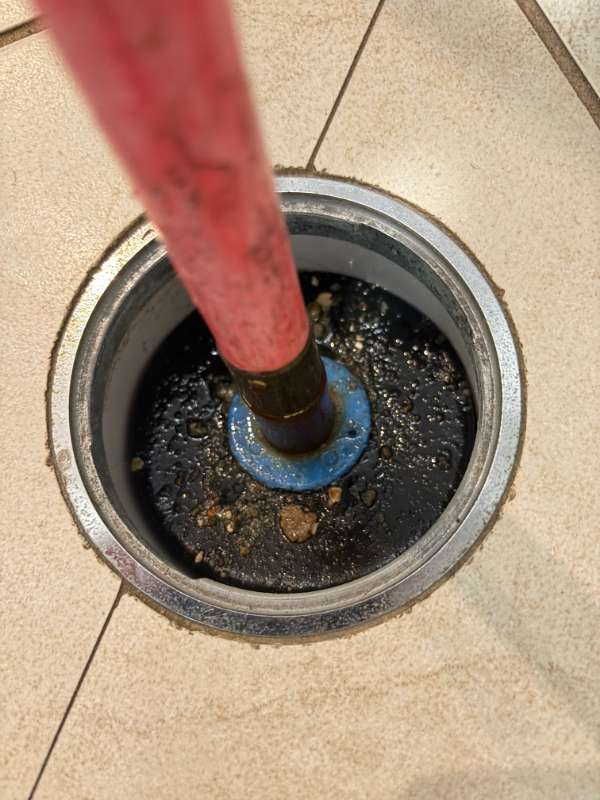
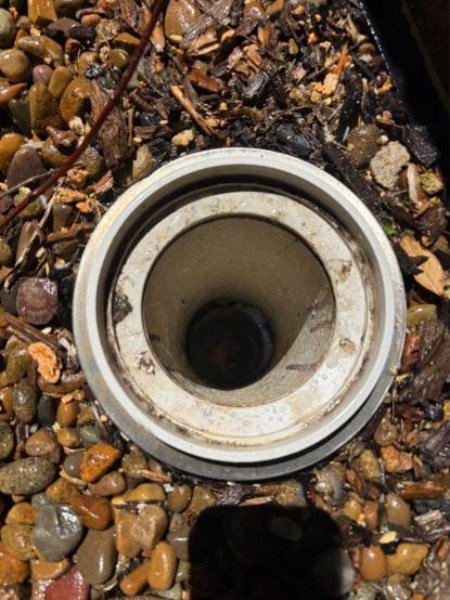
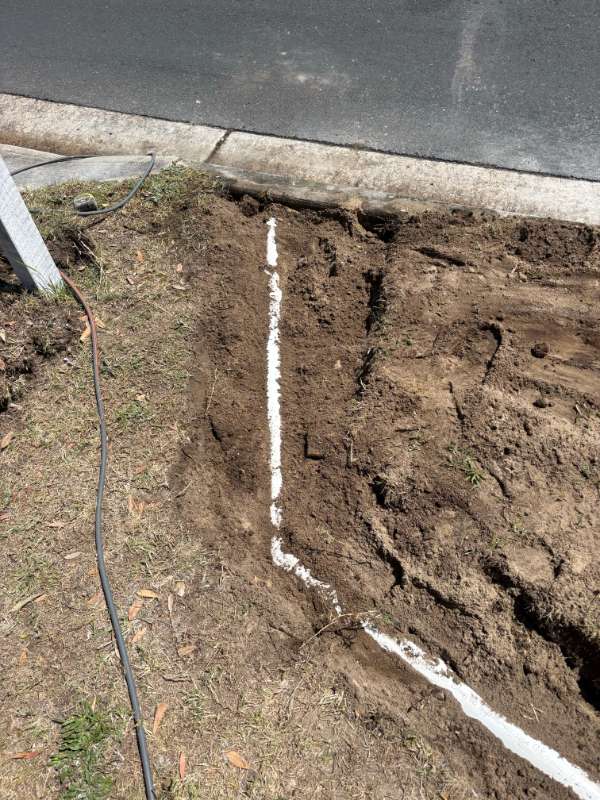
Here's a recent blocked sewer job in Botany, where there was no inspection opening to get into the line.
Blocked sewer cleared and inspection opening fitted, Botany
The problem: a Botany home had a blocked sewer backing up in the downstairs bathroom, and there was no inspection opening to get into the line.
What we did: we found the pipe with our drain camera and locating equipment to confirm exactly where it ran and how deep it was. We dug down beside the house to the old 150 mm earthenware sewer pipe, cut in a new PVC inspection opening and raised it to ground level with a screw-down cap. Then we cut the tree roots out of the line with the root-cutting head on our high-pressure jetter.
The result: the sewer is flowing freely again, the hole is backfilled and the grass put back. The new opening means any future blockage can be cleared quickly without digging.
More local work is on our recent projects page.
“Best plumber in Matraville. Unblocked my drains efficiently!”
C S, Matraville (Google review)
Drains across Botany
- Either side of Botany Road: the oldest clay sewers, often with outside laundry branches.
- Terrace and semi streets around St Matthew's: lines under houses and shared sections.
- Towards the bay and Sir Joseph Banks Park: the flattest, sandiest ground, where sags and sand are common.
- The Pagewood and Eastgardens sides: post-war homes with clay or early PVC and root problems.
- Newer townhouses and apartments: shared PVC lines and kitchen grease.
Blocks that keep coming back
If your Botany drain blocks in the same spot every few months, the cause is usually a dip in the pipe where it has sunk in the sand, roots at an open joint, or both. Jetting clears it for now, but the dip stays. A camera inspection shows exactly where it is and how bad it is. Repairing or relining that section stops the repeat blockages. See pipe relining.
Grease and kitchen sinks
Grease is the most common cause of a blocked kitchen sink in Botany units. Wipe pans with paper towel before washing, scrape plates into the bin, and run hot water after the dishwasher. Don't pour oil down the sink, even with hot water; it sets further down the line.
Roots in cottage sewers
If your cottage sewer blocks every few months, roots are the likely cause. Jetting clears them, but they grow back through the same cracked joints. A camera inspection shows how many joints are affected, and relining them stops the roots for good. See pipe relining.
Looking after your drains
- Flush only toilet paper.
- Keep fat out of the sink.
- Use a strainer in the kitchen sink and a hair catcher in the shower.
- Rinse sandy gear outside.
- Run water into floor wastes that aren't used much so they don't dry out.
Drain words explained
- Stack: the vertical drain in a unit block.
- Branch: the drain from your fixtures to the stack or sewer.
- Jetting: clearing a drain with a high-pressure water jet.
- CCTV inspection: a camera pushed through the drain.
- Overflow relief gully: the grated outlet outside a house.
- Floor waste: the drain in a bathroom or laundry floor.
How a unit block's drains work
It helps to picture the system. In a Botany cottage, the kitchen, bathroom, toilet and laundry drain into branch pipes that join one sewer line, which runs under the house or yard to the boundary trap and the connection to Sydney Water's main. In an apartment building, each unit's fixtures drain into short branch pipes that join a vertical stack, which runs down to the ground and out under the building to the sewer connection. A vent at the top of the system lets air in so water flows smoothly and traps don't get sucked dry.
Because everything joins up, a blockage low in the system shows up first in the lowest units, and a blockage high in a branch shows up only in the unit above it. Knowing where you are in the building, and which fixtures are affected, usually tells us where to start.
Clearing a drain, step by step
- We ask which fixtures are slow and whether neighbours are affected.
- We protect the floor and remove the trap or open the nearest access point to the blockage.
- For a kitchen or bathroom branch, we use a small high-pressure jetter or a drain machine to clear grease, hair or debris.
- For a cottage sewer, we jet from the overflow gully or an inspection opening towards the main, cutting roots as we go.
- We run water through every fixture to check the flow.
- If the drain has blocked before, we put a camera through to see why.
Why a camera inspection is worth it
A drain that blocks once might just be an unlucky wipe. A drain that blocks again usually has a reason: roots at a clay joint, a sag, a damaged junction, or grease catching on a step in a pipe. A CCTV camera shows exactly what's going on and where, so you can decide whether to keep clearing it or fix it properly. In a unit block, footage of a shared line also gives the owners corporation clear information to act on.
Stormwater around Botany homes
When it rains hard on Botany's low, flat blocks, stormwater has little fall to the street. Blocked pits, sand in the lines and disconnected downpipes leave water pooling in driveways, back yards and around the house. We clear the system, camera the pipe if it's slow, and tell you what's needed. A larger pit, an ag drain or a silt pit ahead of the drain often helps. See stormwater.
Blocked toilets
A blocked toilet in a Botany unit is often a single blockage in the pan or the short pipe below it, from too much paper or something that shouldn't have been flushed. If the toilet blocks again and again, or other fixtures in the unit are also slow, the branch or stack is the more likely problem. We clear the toilet first, then check the line. See blocked toilet.
Floor wastes and smells
Floor wastes in bathrooms and laundries have a water-filled trap that stops sewer smells coming in. In a unit where a shower or laundry is rarely used, the water evaporates and smells come through. Pour a bucket of water in every few weeks. If a floor waste is slow, hair and soap are the usual cause, and a quick clean fixes it.
Overflow gullies at cottages
Every house should have an overflow relief gully outside, a grated outlet near the kitchen or laundry. If the sewer blocks, sewage spills there instead of inside. It only works if it's uncovered and lower than every floor waste in the house. If yours is buried under paving or a garden bed, or sits higher than the bathroom floor, it should be fixed before the next blockage.
Outside laundries in older cottages
Botany's older cottages often have an outside laundry with its own drain joining the sewer at the back of the yard. Lint, sand and detergent build up in these lines, and the junction with the main sewer is a common place for roots. If the laundry tub or the gully next to it backs up, the problem is usually at that junction or further down the line.
Drains in newer apartments
Botany's newer townhouses and apartments have modern PVC drainage. Blockages there are usually grease in kitchen branches, hair in showers and wipes in toilets. In a big building, report any blockage that affects more than your own unit to the building manager straight away. We clear what's inside your unit and tell you if the blockage is in a shared pipe.
What not to put down the drain
- Wet wipes, including the flushable ones.
- Fat, oil and grease from cooking.
- Paper towel, tissues and sanitary products.
- Coffee grounds and food scraps.
- Sand from beach gear or work boots.
- Paint, grout or cement from home projects.
Signs a drain problem is getting worse
Most drain blockages build slowly. The early signs are a sink that takes a little longer to empty, a gurgle from the toilet when the shower drains, or a faint smell from a floor waste. Acting then usually means a quick clear. Waiting until water backs up across the floor means a bigger clean-up. In a unit block, early action also stops a small problem in your branch becoming a building-wide one.
New kitchens and old drains
When a new kitchen or bathroom goes into an older Botany home, the new fixtures are often connected to old drains in the floor. If the new kitchen sink drains slowly from day one, the old branch may be partly blocked or have too little fall. It's worth having the drain checked and cleared while the cabinets are out.
Drains and the Botany Sands
Botany's sandy ground and high water table mean pipes can settle over time. A sewer that has dropped in one spot holds water and waste there, and blockages keep forming at the same point. The camera shows it as a section where water sits. Clearing it helps for a while; relining or relaying that section at the right fall fixes it.
Our approach
We clear the blockage, tell you what caused it, and give you honest advice about whether it's likely to happen again. If it's a one-off, we'll say so. If there's an underlying fault, we'll show you on camera and give you a fixed price to fix it. You decide what to do.
On the day
We give you a time window and let you know when we're on the way. In unit blocks, tell us about parking, building access and which floor you're on. We protect floors, clear the drain, test every fixture and clean up. If the problem turns out to be in a shared part of the building, we'll tell you and give you a short report for the owners corporation.
Laundry drains
Laundry tubs and washing machines in Botany homes often share a single drain. Lint, sand and detergent build-up narrow it over time, and a washing machine pumping out a full load can overwhelm a partly blocked line, sending water across the floor. Cleaning the lint filter on the machine, shaking sand out of clothes outside and running hot water down the tub now and then all help. If the floor waste or gully overflows when the machine empties, the drain needs clearing.
Shower drains
Hair and soap scum are the usual cause of a slow shower in Botany units. A hair catcher over the grate stops most of it. If the shower drains slowly even after the grate and trap are cleaned, the blockage is further along the branch, and it's worth having it cleared before water starts pooling over the shower hob.
Cottage drains under paths and extensions
Many of Botany's cottages have had back rooms, paths and patios added over the original sewer. When a blockage sits under one of these, clearing it from the overflow gully or an inspection opening still works. If the camera then shows damage under the new work, relining usually fixes it without breaking anything up. See pipe relining.
Booking a regular clean
If your cottage sewer has roots or your block's kitchen stack collects grease, a regular jet clean every 12 months or so can keep it flowing until a permanent repair is done. It's usually cheaper than dealing with a full blockage and the mess that comes with it.
When the problem is the main
If several homes in a street have blocked drains at the same time, or sewage is coming out of a manhole, the blockage may be in Sydney Water's main rather than any private pipe. Call Sydney Water. If we're already there, we'll camera your line to the connection to confirm your pipe is clear, and give you the footage to show them.
Questions to ask any plumber
- Will you find out where the blockage is before clearing it?
- Will you use a jetter or just a cable?
- If it keeps blocking, will you camera it?
- Is the price fixed before you start?
- What warranty comes with the work? We give a lifetime labour warranty.
Drains after heavy rain
If your cottage's overflow gully spills mainly when it rains, stormwater is probably getting into the sewer: a downpipe connected to it, a broken inspection cap or cracked pipe in saturated sand. It's not allowed and it overloads the sewer. We find it and move it to the stormwater. See downpipes into the sewer.
Grease traps and bigger kitchens
Most Botany homes don't have a grease arrestor, so everything that goes down the kitchen sink ends up in the drain. Families who cook a lot of fried or oily food tend to see kitchen blockages more often, especially in older lines with rough joints. A sink strainer, wiping pans before washing, and a bin for used oil make the biggest difference. If your kitchen line blocks more than once a year even with good habits, a camera inspection will usually show a joint or sag where the grease is catching, and that can be fixed.
More help in Botany: stormwater, pipe relining and sewer repairs.
What happens when you call
Tell us what's going on
Call or send a quick form. A photo of the problem helps us come prepared. No call-out fee.
Options and a fixed price first
We find the cause, explain your options and give you a fixed price for each before any work starts.
Fixed, tested and backed
We do the work, test it, clean up, and back our workmanship with a lifetime labour warranty.
Jobs we finished recently
Why Botany homeowners call us
- Based in Matraville, a short drive away in Matraville
- Rated 5.0 from 110 Google reviews
- Free quotes, with options and a fixed price before any work starts
- Lifetime labour warranty on our workmanship
- Licensed plumbers, drainers and gasfitters (Lic. 398171C)
Blocked drain questions from Botany homeowners
Why does my Botany drain keep blocking?
Usually roots in cracked joints of old clay sewer pipes. A camera inspection shows exactly where.
Why does my yard flood in heavy rain?
On low-lying blocks, blocked pits or broken stormwater pipes stop water getting away. We find and fix the cause.
Can you clear both sewer and stormwater?
Yes. We clear both and check the pipes with a camera.
Will you need to dig?
Not usually. Most blockages clear with jetting, and many damaged pipes can be relined.
What if my sewer has no inspection opening?
Many older Botany homes don't have one. We locate the pipe with a camera and locator, dig a small hole and install a new inspection opening. It makes this blockage, and any future one, quicker and cheaper to clear.
Why is there sand in my drains?
Sand from gardens and paths washes into gullies and floor wastes, and into cracked pipes. Jetting clears it.
Can you clear roots from my sewer?
Yes, with a jetter and root cutter, then a camera to check the joints.
How do I know if the blockage is mine or the building's?
If only your unit is affected, it's usually your branch. If several units are, it's likely the shared stack.
Why does my kitchen sink keep blocking?
Usually grease building up in the line. We jet it clear and check for a sag or rough joint.
Should I use chemical drain cleaner?
We don't recommend it. It rarely clears the blockage and can damage old pipes.
Water comes up my shower when the toilet is flushed. Why?
There's a blockage further down the line. Stop using water and call us.
How long does it take to clear a drain?
Most blockages take an hour or two.
More plumbing in Botany: our Botany plumber page, sewer repairs, pipe relining, stormwater and toilet repair. Nearby: blocked drains in Pagewood, Eastgardens and Mascot. Guides: Botany CCTV drain inspection, blocked drains guide, sewer responsibility and tree roots in pipes.