Sewer repairs in Botany 2019
Botany's sewers have a harder job than most. The ground is flat, so pipes run with very little slope. It's sandy, so pipes settle and sand finds its way into every open joint. And in the older streets near Botany Road, many sewers run right under the house, or are shared between two semis before they reach the main. When they fail, the signs are familiar: gurgling toilets, slow showers, a gully that rises when the washing machine empties. What sets Botany apart is how you reach and fix the pipe.
Signs your sewer has a problem
- The toilet, shower and basin all slow at the same time.
- Gurgling in the toilet or floor waste when other fixtures drain.
- The overflow gully in the courtyard or yard filling up or spilling.
- Water rising in the shower when the toilet is flushed.
- A sewage smell in the hallway, under the floor or near an inspection opening.
- A blockage that keeps coming back every few months.
If only one fixture is slow, it's usually a local blockage. Several at once points to the main line. See gurgling drains and toilet water rising.
What goes wrong with Botany sewers
Clay pipes and roots
Botany's older homes were connected with glazed clay pipe in short lengths. The joints open over time, and roots from street trees and garden trees get in and form mats that catch waste. Clearing roots from old clay lines is one of the most common sewer jobs in the suburb.
Very little fall
On flat ground, sewers were laid with only just enough slope. Any settlement in the sand can flatten a section further or create a dip. Waste moves slowly, solids drop out, and the line blocks at the same spot again and again.
Sand in the line
Open joints let sand in from the surrounding ground. It settles in the bottom of the pipe and reduces the flow. On a camera it looks like a beach in the pipe.
Sewers under the house
Terraces and many semis have no side passage, so the sewer runs from the back of the house, under the floor, to the street. When it fails under the house, you can't simply dig a trench. Relining from inspection openings at each end, or a careful repair from the subfloor, is usually the answer.
Shared lines
Some Botany semis and terraces share a private sewer before it reaches the main. A fault in the shared section affects both homes and is usually the shared responsibility of both owners.
Outside toilets and laundries
Older Botany homes often still have an outside laundry or toilet at the back, on its own clay branch. These branches are some of the oldest pipes on the property and a common place for roots and cracks.
Rainwater getting in
If your gully spills mostly in heavy rain, stormwater is likely getting into the sewer, through a connected downpipe, a courtyard pit plumbed to the sewer, a broken inspection cap or cracked pipe in saturated sand. See downpipes into the sewer.
Botany homes and their sewers
| Home type | Typical sewer | What we often find |
|---|---|---|
| Terraces | Clay line under the house, gully in the rear courtyard | Roots, sand and cracks under the floor |
| Semis | Shared private line before the main | Faults in the shared section, unclear responsibility |
| Cottages near Botany Road | Clay to a main at the front or rear, outside laundry branch | Root entry, old junctions, cracked branches |
| Post-war brick homes | Clay or early PVC along the side | Roots, sags in sand, old gullies |
| Townhouses and apartments | PVC, often shared runs | Blockages in shared lines, grease from kitchens |
How we repair a sewer
- Clear the line with a high-pressure jetter so the home can be used again.
- Camera inspection, recorded, with faults located from above and depths measured.
- Work out whose it is: yours, shared with a neighbour, or Sydney Water's main.
- Give you options with fixed prices: maintenance clearing, patch relining, a full-length reline, or a dig-up repair.
- Repair it: relining for cracks and joints, PVC replacement at the best possible fall for sags and collapses.
- Camera it again and test with water.
Sewer blockages
Cleared with high-pressure jetting that cuts roots and flushes sand.
CCTV inspections
Recorded footage showing the fault and where it is. See our Botany CCTV inspection post.
Relining under houses
Lines under terraces and semis relined from each end without lifting floors.
Dig-up repairs
Collapsed or sagging sections replaced with PVC at the right fall.
Junction and branch repairs
Old outside laundry branches and junctions repaired.
Gullies and openings
Overflow gullies fixed and inspection openings added for future access.
Clear, reline or dig?
| What the camera shows | Short-term | Long-term fix |
|---|---|---|
| Roots at a few joints | Jet them out | Patch reline each joint |
| Sand lying in the pipe | Jet it out | Seal the joints letting it in |
| A sag holding water | Jet the build-up | Dig up and relay the section |
| Cracks under the house | Jet and monitor | Reline from each end |
| A collapsed section | Not really an option | Dig up and replace |
| A broken outside laundry branch | Clear it | Reline or replace the branch |
What affects the cost
- The fault and how many places need work.
- Where it is: under lawn, a courtyard, a slab or the house.
- Depth and ground conditions.
- The method: relining avoids lifting floors and concrete.
- Access: terraces with no side passage need more planning.
- Shared lines, where two owners split the cost.
- Making good afterwards.
You get a fixed price for each option before any work starts.
Who's responsible?
- You: the private sewer pipes on your property out to the connection with Sydney Water's main, and the overflow gully.
- Shared lines: where two or more homes share a private pipe before the main, the owners usually share responsibility for that section.
- Sydney Water: the sewer mains and access chambers. If a manhole is overflowing, call Sydney Water.
- Townhouses and apartments: pipes serving only your home are usually yours; shared lines are the owners' together.
See our sewer responsibility guide and sewer party line page.
The overflow gully
The overflow relief gully is the grated outlet outside, often in a Botany rear courtyard near the laundry. If the sewer blocks, sewage overflows there rather than through a shower or toilet inside. It only works if it's uncovered and lower than every drain in the house. In small courtyards we often find gullies tiled over, buried under pot plants, or sitting higher than a newer bathroom. If yours is hidden or too high, fix it before the next blockage.
Quick checks you can do
- Find the overflow gully and lift the grate. The water should sit low.
- Run the washing machine or empty a laundry tub and look again. Rising water means a restriction.
- Find your inspection openings and check the caps are on.
- Note which drains are slow and when.
- If sewage is overflowing, stop using water and keep children and pets away.
Avoid chemical drain cleaners. They won't clear roots and can damage old pipes. See chemical drain cleaners.
Signs it's urgent and when it can wait
- Call straight away if sewage is coming up inside, the gully is overflowing, or nothing drains.
- Call soon if drains are slow and gurgling but working.
- Plan the repair if a camera has shown roots or cracks but the line still flows.
A recent drain job nearby
Here's a recent drain job nearby in Maroubra.
Drains and floor wastes jetted clear, Maroubra (nearby)
The problem: slow, blocked drains and floor wastes in a Maroubra home.
What we did: we laid a protective mat, cleared the drains and floor wastes with high-pressure jetting, and repaired some leaking taps in the same visit.
The result: everything drains freely again and the owners didn't need a second visit.
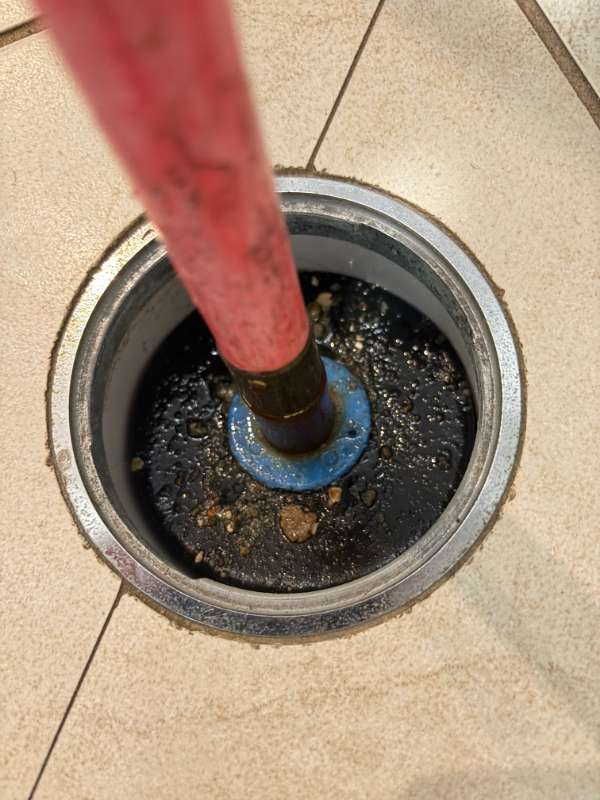
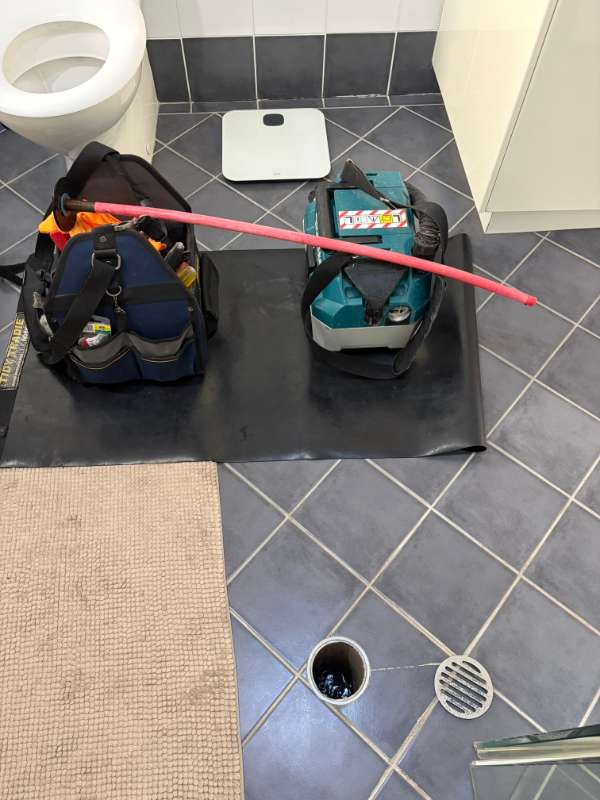
More local work is on our recent projects page.
“Best plumber in Matraville. Unblocked my drains efficiently!”
C S, Matraville (Google review)
Sewers across Botany, area by area
- Either side of Botany Road: the oldest clay sewers, often with outside laundry branches.
- Terrace and semi streets: lines under houses and shared sections.
- Towards the bay and Sir Joseph Banks Park: the flattest, sandiest ground, where sags and sand are common.
- The Mascot and Pagewood sides: post-war homes with clay or early PVC and root problems.
- Newer townhouses and apartments: shared PVC lines and kitchen grease.
Sewers under terraces: how we reach them
With a sewer running under a terrace, the access points are the key. Most have an overflow gully or inspection opening in the rear courtyard, and some have one near the front boundary. From those we can jet, camera and, in most cases, reline the whole length without touching the floor. If there's no front opening, adding one at the boundary is a small job and makes every future clean easier. Where a section under the house has collapsed and can't be relined, a repair from the subfloor or through a small section of floor may be needed, and we'll explain exactly what that involves before anything is opened.
Shared sewers between semis
If you're in a semi and your neighbour's drains block at the same time as yours, you probably share a line. Shared lines are common in older parts of Botany. We trace the line with the camera and a locator, mark where each home joins and where the fault is, and show both owners the footage. That usually settles who is responsible without argument, and we can give a single fixed price for the shared section.
Grease in terrace kitchens
Terrace kitchens are usually at the very back of the house, with a long run of pipe to the sewer. Grease from washing up cools and coats the inside of that pipe, narrowing it year by year. Jetting scours it clean. To keep it clear, wipe pans out with paper towel before washing, scrape plates into the bin, and run hot water after the dishwasher.
Planning to build or extend?
Before you extend, rebuild a courtyard or add a granny flat, find out where your sewer runs and whether a Sydney Water main crosses the block. There are rules about building over or near a main, and an old clay line under a new slab is hard to reach later. A camera inspection with the line marked gives your designer the facts.
Buying an older home in Botany?
A building inspection doesn't usually look inside the sewer. On an older Botany cottage or terrace, a camera inspection before you exchange tells you the pipe material, its condition, whether it runs under the house, and whether it's shared. That's useful to know before you commit.
A sewer care calendar
- Late winter: check the gully grate and inspection caps.
- Spring: roots grow fastest. If your line has had them, book a maintenance jet.
- Before storm season: make sure courtyard pits and downpipes go to stormwater, not the sewer.
- Before building: locate the line and any Sydney Water main.
- Whenever a drain slows: call early.
Sewer smells without a blockage
A smell in a Botany terrace hallway or under the floor doesn't always mean a blockage. A cracked pipe under the house can leak sewer gas into the subfloor. Floor wastes that are rarely used can dry out. A loose inspection cap or a cracked vent pipe on the outside wall can let smells out. We check each of these. See sewer vent pipes.
Sewer words explained
- House drain: your private sewer from the house to the connection.
- Sewer main: Sydney Water's pipe collecting from a row of homes.
- Party line: a private sewer shared by two or more homes.
- Fall: the slope a pipe needs for waste to flow.
- Inspection opening: a capped access point for clearing and cameras.
- Overflow relief gully: the grated outlet outside that lets sewage overflow outside.
- Sag: a dip in a pipe where waste collects.
A typical terrace sewer job, step by step
- The owner calls because the shower floods when the toilet is flushed, and the courtyard gully is full.
- We jet from the courtyard gully towards the street. Roots and a lot of sand come back.
- The camera goes in. It shows a clay line running under the house, roots at three joints and a crack under the hallway.
- We locate each fault from inside the house with the locator and mark the floor lightly with tape so the owner can see where they are.
- There's no opening at the front, so the options are: keep jetting, add a front opening and patch reline the faults, or add a front opening and reline the whole run.
- The owner chooses the full reline. We add the front opening in the garden, line the pipe from end to end, and camera it again.
- The floor was never touched.
Boundary traps in older Botany homes
Some of Botany's older homes still have a boundary trap: a water-filled bend in the sewer near the front boundary, put in long ago to stop gases coming back from the main. Boundary traps catch paper, roots and debris and are a common blockage point. If your home has one, we clear it as part of the job and can talk you through whether it should stay or be removed, which in many cases improves the flow.
When the problem is the main
Sometimes the camera shows your line is fine all the way to the junction, and the blockage is in Sydney Water's main beyond it. Clues are neighbours having trouble at the same time, or sewage coming out of a manhole in the street or a backyard. If that's the case, we show you the footage and you can report it to Sydney Water. You shouldn't pay for work on their main.
Sewers in apartments and townhouses
In Botany's newer apartments and townhouses, the drains from each home usually join a shared stack or a shared line before reaching the main. A blockage in your kitchen or bathroom branch is yours to fix; one in the shared stack or line is usually the owners corporation's. The giveaway is whether other homes are affected. We'll clear what's in your home and tell you clearly if the problem is in a shared section.
On the day
We give you a time window and let you know when we're on the way. If something is overflowing, we clear it first so the house can be used. Then the camera goes in and you can watch the footage with us. We explain what we found, what each option fixes, and the fixed price for each. Inside, floors are protected with mats. In courtyards, we keep the mess contained and clean and disinfect the area when we're done. If a repair needs digging, we mark it out and explain exactly what will be lifted and how it will be put back before we start.
Why we camera before we quote
On old clay lines, the blockage you can see is often a symptom. Without a camera, there's no way to know if the line has one bad joint or a dozen, whether there's a sag that will keep collecting waste, or whether the problem is even on your property. A short inspection after clearing tells you whether to monitor, maintain or repair. It also prevents work you don't need. A line that looks bad from the courtyard gully can turn out to need a single patch near the house.
Low fall and what it means for repairs
Because Botany is so flat, any section of sewer we dig up and replace has to be relaid with care. The new pipe must fall towards the main at least as well as the old pipe did, and ideally better, but it's limited by the depth at each end. We measure the levels before digging and set the new pipe on a sand bed at a consistent fall. A replacement that's just a little flatter than it should be would block again, so this step matters more here than in hillier suburbs.
Outside laundries and toilets
If your Botany home still has a laundry or toilet in a separate room out the back, its drain is probably a long clay branch joining the main house line. These branches tend to be the first part of the system to block, because they're old, lightly used and often run under a courtyard or garden bed with roots nearby. If the back toilet or laundry tub drains slowly while the house is fine, that branch is the first place we look.
Looking after your sewer
- Flush only toilet paper. No wipes, paper towel or sanitary products.
- Wipe fat out of pans before washing up.
- Keep trees and large shrubs away from the sewer line.
- Keep the gully uncovered and below the floor wastes.
- Run water into rarely used floor wastes every few weeks so the traps stay full.
- If you've had roots before, book a yearly jet and camera check.
What happens when you call
Tell us what's going on
Call or send a quick form. A photo of the problem helps us come prepared. No call-out fee.
Options and a fixed price first
We find the cause, explain your options and give you a fixed price for each before any work starts.
Fixed, tested and backed
We do the work, test it, clean up, and back our workmanship with a lifetime labour warranty.
Jobs we finished recently
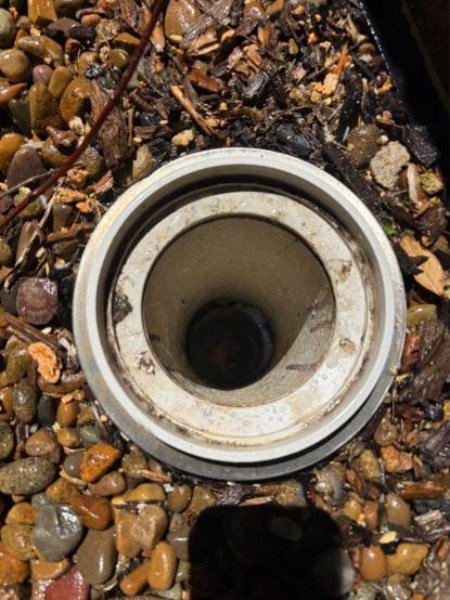
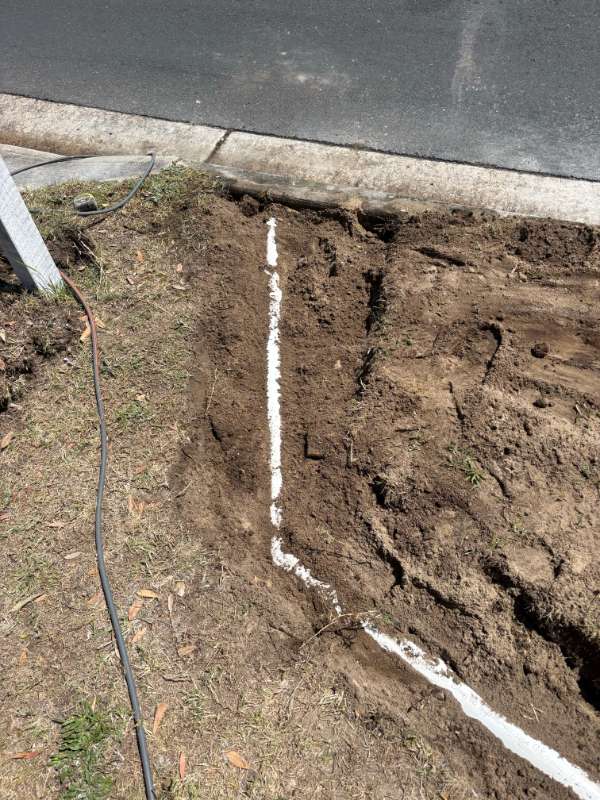
Why Botany homeowners call us
- Based in Matraville, next door to Botany
- Rated 5.0 from 110 Google reviews
- Free quotes, with options and a fixed price before any work starts
- Lifetime labour warranty on our workmanship
- Licensed plumbers, drainers and gasfitters (Lic. 398171C)
Sewer questions from Botany homeowners
Why does my sewer keep blocking?
Usually roots through open joints, sand in the pipe or a sag. A camera inspection finds the cause.
My sewer runs under the house. Do you have to lift the floor?
Usually not. We can often reline it from openings at each end.
Do I share my sewer with next door?
Many Botany semis and terraces do. The camera shows where each home joins and whether a section is shared.
Who pays for a shared line?
Usually both owners share the cost of the shared section.
Who is responsible for the sewer in my yard?
You are, out to the connection with Sydney Water's main. They look after the main and its manholes.
Can roots be stopped for good?
Sealing the joint with a reline or replacing the pipe stops them. Cutting only clears it for a while.
Why does my gully overflow when it rains?
Rainwater is probably getting into the sewer through a downpipe, courtyard pit or cracked pipe. We find and fix it.
What is the grated pipe in my courtyard?
The overflow relief gully. Keep it uncovered and below your floor wastes.
Is a camera inspection worth it?
Yes, for repeat blockages, before buying an older home, or before building.
What should I do if sewage is overflowing?
Stop using water, keep people and pets away and call us. If it's from a manhole, call Sydney Water.
Can you add an inspection opening?
Yes. It makes future cleaning and inspections much easier.
Can I build over my sewer?
Building over or near a Sydney Water main has rules. Check before you design.
More plumbing in Botany: our Botany plumber page, blocked drains, pipe relining, stormwater and leak detection. Nearby: sewer repairs in Pagewood and Matraville. Guides: CCTV drain inspection in Botany, sewer responsibility and tree roots in pipes.