Pipe relining in Eastlakes 2018
Eastlakes sits on the Botany Sands, close to the water table, and its red-brick houses and walk-ups were connected with clay sewer pipe from the 1960s. In sand, old clay pipes can sink and dip over the years, the joints open, and roots and sand get in. The same drain blocks again and again. Relining seals the damaged joints from the inside, without digging up driveways or the ground under a block. We're a few minutes away in Matraville, and we camera the line and show you exactly what's needed.
How relining works
Relining puts a new, jointless pipe inside the old one. We jet the line clean and cut out roots, then position a flexible liner soaked in resin across the damaged section through an existing access point. The liner is inflated so it presses against the old pipe wall, and the resin cures hard. Cracks, open joints and root entry points end up sealed behind a smooth lining. The old pipe becomes the outer casing for the new one.
A patch reline seals one short section, typically a joint where roots or sand get in. A full-length reline lines the whole run between two access points, for pipe that's damaged along most of its length. Many Eastlakes jobs are a mix: patches at the two or three worst joints of a line that's otherwise sound.
When relining is worth considering
- The same drain blocks every few months despite being cleared.
- A camera has shown cracks or open joints but the pipe still holds its shape.
- The pipe runs under the house, a back laundry, a driveway or a walk-up building.
- The damage is under a courtyard, slab or driveway you don't want broken up.
- A stormwater pit keeps filling with sand, which means cracked pipe is letting the ground in.
- There's no side access for an excavator or even a wheelbarrow.
Why Eastlakes pipes need relining
Old clay under old homes
The brick houses in Eastlakes' older streets were connected with glazed clay sewer pipe, laid in short lengths with mortar joints. The clay outlasts the joints. Over the decades the joints open, letting in roots and sand.
Sand and settling
Eastlakes is built on the Botany Sands, close to the water table. Old pipes laid in it can settle over the years, and where a section sinks, the joints either side open up. A camera inspection shows whether a sewer has dipped and where the joints have opened.
Sand washing in
Sand washes in through any opening in a pipe and settles where the flow is slow, which on Eastlakes' flat ground is a lot of places. Sealing the open joints stops sand getting in and keeps the line clear.
Roots from street and garden trees
Street trees along Eastlakes' older streets and established trees in backyards send roots towards moisture in the sewer. Fine roots get through a hairline crack and grow into a mat inside the pipe.
Old meeting new
Where a house has been extended, or a block rebuilt as apartments, new PVC drains often join the original clay sewer at a junction that was never designed for it. The camera often shows the damage right at that join.
Eastlakes homes and relining
| Home type | What the camera often shows | How relining fits |
|---|---|---|
| Brick houses | Clay sewer, roots and sand at joints, dipped sections | Patches at the worst joints, or a full-length reline |
| 1960s and 70s walk-ups | Shared clay lines under or beside the building | Relining from an access point outside the building |
| Brick houses with extensions | Clay under later paths and back rooms | Reline from openings each end, no slab breaking |
| Newer apartments near Evans Avenue | New PVC joined to an old clay junction | A short patch at the junction |
Our relining process
- Clear the line with a high-pressure jetter to cut roots and flush sand.
- Camera inspection, recorded, with each fault located from above and its depth measured.
- Options and fixed prices for patch relining, full-length relining, or a dig-up repair where a section has collapsed.
- Prepare the pipe so the liner bonds to clean pipe.
- Install the liner through the access point and inflate it against the pipe wall.
- Cure and check with the camera again, and flush with water.
- Hand over the before and after footage and a compliance certificate.
Sewer patch relining
Cracked and root-damaged joints sealed from inside.
Full-length relining
Whole runs relined where damage runs along the pipe.
Under-house sewers
Lines under houses, back laundries and walk-up buildings relined without digging.
Stormwater relining
Cracked stormwater pipes sealed so sand stops washing in.
Junction repairs
Damaged junctions where new drains meet old.
CCTV inspections
Recorded footage so decisions are based on what's actually there.
Reline or dig?
| What the camera shows | Relining | Digging |
|---|---|---|
| Roots at one or two joints | A patch at each | Only if access is very easy |
| Cracks along most of the run | A full-length reline | A full trench |
| Pipe under the house | Avoids lifting floors | Means opening floors or a slab |
| A collapsed section | Not suitable | Dig up and replace that section |
| A deep sag holding water | Won't level it | Relay the section at the right fall |
| Pipe under open lawn | Still an option | Can be just as practical |
We'll tell you when relining isn't right. A section that has dipped badly in the sand may need relaying at the right fall rather than lining. Our post on a CCTV drain inspection shows what a camera inspection involves, and our relining vs digging post goes through the trade-offs.
What affects the cost
- How many patches or metres of liner are needed.
- Pipe size, bends and junctions in the section.
- Access: whether there's an inspection opening at each end, or one has to be added.
- Preparation: heavy roots or scale take longer to remove.
- Any digging for a collapsed or sagging section.
You get a fixed price for each option before any work starts.
Who's responsible?
- You (the homeowner): the private sewer pipes on your property out to the connection with Sydney Water's sewer, and your stormwater pipes out to the kerb.
- Sydney Water: the sewer main and its access chambers. If the fault is in their main, they fix it.
- Bayside Council: street gutters and public stormwater.
- Walk-up blocks: shared lines under or beside the building are usually the owners corporation's.
See our sewer responsibility guide.
A quick check you can do
- Find the overflow relief gully outside and lift the grate. The water should sit low.
- Run a full laundry tub, then look again. Rising water means a restriction downstream.
- Find your inspection openings, often in a rear courtyard or at the front near the street.
- Look in stormwater pits for sand that returns within months.
- Note when the drain blocks. Roots grow fastest in spring.
Signs it's urgent and when it can wait
- Call straight away if sewage is overflowing inside or in the courtyard.
- Call soon if drains are slow and gurgling.
- Plan it in if a camera has shown roots or cracks but the line still runs.
A recent drain job nearby
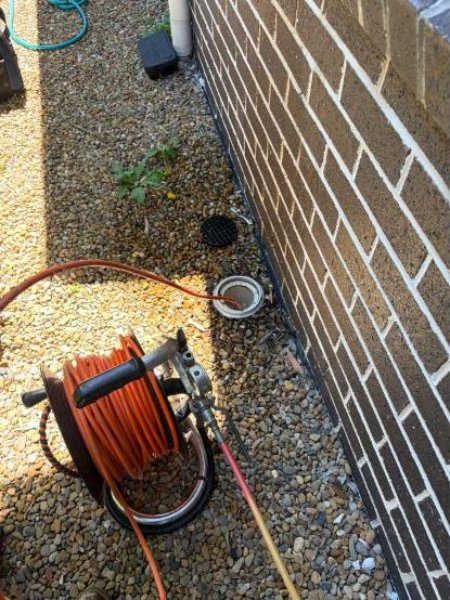
Here's a recent drain job nearby in Little Bay. Relining always starts with clearing the line properly so the camera can see the pipe.
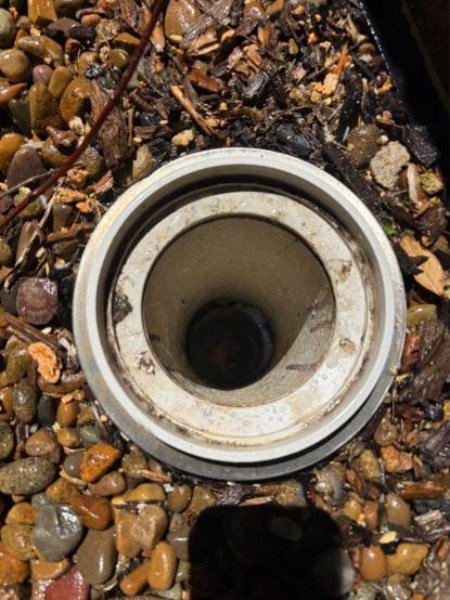
Grease blockage jetted from a kitchen line, Little Bay (nearby)
The problem: a blocked kitchen sink in a Little Bay home was pushing dirty water back into the dishwasher.
What we did: the overflow gully outside the kitchen window was spilling, so we knew the blockage was further down the line. It was grease built up inside the pipe. We cleared it with the high-pressure jetter, which broke the grease up and flushed it away.
The result: we filled both sink bowls and released them together to flush the line and confirm it all ran freely.
More local work is on our recent projects page.
“Best plumber in Matraville. Unblocked my drains efficiently!”
C S, Matraville (Google review)
Relining across Eastlakes, area by area
- The brick house streets: clay sewers with roots and dipped sections.
- The walk-up unit streets: shared lines under and beside 1960s and 70s blocks.
- Near The Lakes Golf Club: low, sandy ground where pipes settle and sand gets in.
- Around the Evans Avenue shops: new drains joined to old junctions.
- Towards Rosebery and Daceyville: older homes with roots at the joints.
Relining under a house
A typical Eastlakes house sewer runs from the back of the house, often past a back laundry and under a path or patio, to the street. The usual access points are an inspection opening or gully at the back and another near the front boundary. With those two openings, the whole length can be cameraed and relined from end to end without touching what's in between. If there's no front opening, we can often install one at the boundary with a small excavation in the front garden or path. Being able to reline under the house is often the difference between a one-day job and a week of disruption.
Relining under walk-up blocks
In Eastlakes' 1960s and 70s walk-ups, shared sewer lines often run under or beside the building. Digging under a building is rarely an option. Relining from an access point outside lets us repair the damaged sections without disturbing the units. Shared lines are usually the owners corporation's responsibility, and we can provide camera footage and a report showing what we found.
Stormwater relining and sand
Cracked stormwater pipes are one of the main reasons Eastlakes pits fill with sand. Every time it rains, water flowing through the pipe draws sand in through the broken joints and drops it in the pit or the flattest section of the line. Relining seals those joints so the line stays clear. It suits stormwater pipes running under driveways, courtyards and paths to the kerb. See stormwater.
Before you build or buy
If you're planning a back room, a new patio or a driveway, have the drains underneath checked first. Relining an old clay line before new concrete goes down is straightforward. Reaching it afterwards is not. And if you're buying an older Eastlakes home, a camera inspection before you exchange is one of the best things you can do, because a building inspection usually doesn't look inside the drains.
Looking after relined pipes
- Flush only toilet paper.
- Wipe fat and oil out of pans before washing up.
- Keep the overflow gully clear and below the house drains.
- Keep new trees well away from the sewer line.
- If a drain slows, call early for a jet and camera check.
Relining words explained
- Patch reline: a short liner sealing one damaged section.
- Full-length reline: a liner along the whole run between access points.
- Resin: the material that soaks the liner and cures hard.
- CCTV inspection: a camera pushed through the pipe to record its condition.
- Inspection opening: a capped access point on the drain.
- Dip or sag: a low section of pipe where waste and water collect.
- Junction: where one pipe joins another.
Reading the camera footage
| What you'll see | What it means | Usual fix |
|---|---|---|
| Hair-like roots at a joint | Roots getting in through an open joint | Cut out, then patch reline |
| A step where two pipes meet | An offset joint from ground movement | Patch reline if the step is small |
| A crack running along the top | Load from above, or pipe resting on a high point | Patch or full-length reline |
| Sand lying in the bottom | Sand washing in through joints upstream | Seal the joints letting it in |
| Water pooled in one spot | A sag where the pipe has dropped | Dig and relay that section |
| Pipe broken in, out of shape | A collapse | Dig and replace that section |
Each fault is measured from the access point, so we can mark it on the ground above and you can see exactly where it is.
A relining day at an Eastlakes house
We arrive in your time window and set up in the rear courtyard, usually at the overflow gully or an inspection opening. We'll ask everyone to hold off using water. The line is jetted clean and the camera goes through to the front to confirm the sections we're lining. The liner is measured and cut, soaked in resin on a ground sheet in the courtyard, then fed into the pipe and inflated. While it cures, the house stays quiet. Once it's hard, we remove the inflation bladder, camera the line again and show you the result, then flush it with water. We pack up, hose down the courtyard and let you know when everything can be used normally. Nobody needs to move furniture, and the floor stays exactly as it was.
Courtyard drains and pits
Back yards in Eastlakes brick houses often have a single small pit or gully that takes both the downpipes and any surface water. When the pipe from that pit cracks, sand gets in, the pit fills, and the yard floods in a storm. Relining the stormwater line from the pit to the street, and enlarging the pit or adding a silt pit if needed, usually fixes it without lifting the paving. If the pit is connected to the sewer instead of the stormwater, which happens in some older homes, it needs to be separated. See downpipes into the sewer.
When a dipped section needs more than a liner
Relining follows the shape of the old pipe. If a section has sunk only slightly, a liner seals the joints and the line usually runs well. If it has dropped enough to hold a pool of water, lining it will seal it but the dip will still collect waste. In that case, the better fix is to dig and relay that short section at the right fall, then reline the rest of the line from the access points if it needs it. The camera shows how deep the dip is, so we can tell you which approach suits before you decide.
Questions worth asking
- Will I see the footage before and after, and can I keep it?
- Which faults suit relining, and is any section better dug up?
- Exactly how many patches or metres of liner, and where?
- Is the price fixed, including any new access point?
- Is the damage in my pipe, a shared pipe or the main?
- What warranty and paperwork come with the work? We give a lifetime labour warranty and a compliance certificate.
A drain care calendar for older Eastlakes homes
- Late winter: check the gully grate is clear and below the house drains, and the inspection caps are on.
- Spring: if your line has had roots and isn't relined, book a maintenance jet before they grow.
- Before storm season: clean courtyard and yard pits, and check the kerb outlet.
- Before any building work: camera the line and mark where it runs.
- Whenever a drain slows: call early, before it overflows.
If a relined drain slows down later
A liner is a long-term repair, but the rest of the drain keeps ageing. If a relined line starts to slow, the usual causes are roots at a joint outside the relined section, grease or wipes, a problem at a branch junction, or a blockage in Sydney Water's main. We camera it and show you. If it's anything to do with our workmanship, our lifetime labour warranty covers it.
Why the camera comes first
Without a camera, choosing between relining and digging is guesswork. A line that looks terrible from the gully might have a single bad joint near the house. One that seems fine might have a long crack under the floor that's about to let go. The footage tells us what's there and where, so the fix matches the fault. It also means you pay for the repair you need, not one sized for the worst case. On a house where the pipe runs under the house, that difference can be large.
Sewer smells in older houses
Some older Eastlakes houses have a sewer smell in the hallway or under the floor even when the drains run freely. A cracked clay pipe under the house can leak sewer gas into the subfloor, especially where it passes under a timber floor with poor ventilation. Relining seals the crack and the smell with it. Before assuming it's the pipe, we also check floor wastes that have dried out, loose inspection caps and the vent pipe on the outside wall.
Adding an inspection opening
Older Eastlakes homes often have only one access point on the sewer, usually the overflow gully at the back. To camera and reline a line properly, we sometimes need a second opening, typically near the front boundary. Adding one means a small excavation down to the pipe, a new fitting cut into the line and a capped riser brought up to the surface, finished flush with the garden or path. It's a modest job, and it pays off: every future clean, camera check or repair can be done from there without breaking in. If we need one, it's included in the fixed price we give you.
What happens when you call
Tell us what's going on
Call or send a quick form. A photo of the problem helps us come prepared. No call-out fee.
Options and a fixed price first
We find the cause, explain your options and give you a fixed price for each before any work starts.
Fixed, tested and backed
We do the work, test it, clean up, and back our workmanship with a lifetime labour warranty.
Jobs we finished recently
Why Eastlakes homeowners call us
- Based in Matraville, a few minutes from Eastlakes
- Rated 5.0 from 110 Google reviews
- Free quotes, with options and a fixed price before any work starts
- Lifetime labour warranty on our workmanship
- Licensed plumbers, drainers and gasfitters (Lic. 398171C)
Pipe relining questions from Eastlakes homeowners
Can a sewer under my house be relined?
Usually, yes, from inspection openings at each end, without lifting the floor.
Will relining stop roots?
For the relined section, yes. The liner has no joints for roots to get through.
Do you need to dig?
Usually not. If there's no access point, we may need to add one with a small hole.
What if my pipe has collapsed?
That section usually needs digging. The rest of the line can often still be relined.
How long does relining take?
A patch reline is often a few hours. A full-length reline may take a day.
Can I use the drains during the work?
Not while the liner cures. We'll tell you when it's fine again.
Does the liner reduce flow?
Slightly narrower but smooth and jointless, so it usually flows at least as well.
Can you reline under a walk-up building?
Yes, often from an access point outside the building.
What if the problem is in Sydney Water's main?
It's theirs to fix. We'll show you the footage so you can report it.
Can stormwater pipes be relined?
Yes. It stops sand washing in through cracked joints.
What paperwork do I get?
Before and after footage and a compliance certificate.
Is relining always better than digging?
No. Collapsed pipe and deep sags need digging. For cracks and roots, especially under houses and concrete, relining is usually better.
More plumbing in Eastlakes: our Eastlakes plumber page, blocked drains, leak detection and hot water. Nearby: pipe relining in Mascot and Rosebery. Guides: pipe relining guide and tree roots in pipes.