Sewer repairs in Coogee 2034
Most of Coogee's older homes, from Federation semis and cottages to the Art Deco and interwar flats on the hills above the beach, still run on clay sewer pipe. On Coogee's steep blocks those pipes run downhill under steps, along retaining walls and beneath courtyards, and the joints crack and shift as the ground moves. Roots find the gaps, and close to the beach, sand washed off feet and swimmers in the shower settles in the low points. We come over from Matraville, camera the line and show you exactly what's wrong before we fix it.
Sewer repairs we do in Coogee
Cracked clay sewers
Cracked and broken joints found on camera and repaired, relined or replaced.
Root damage
Roots cut out and the joints sealed so they can't grow back in.
Sand in the line
Sand and grit jetted out of low points and dips in the pipe.
Displaced joints
Joints that have shifted on the slope realigned, relined or replaced.
Overflow gullies
Gullies that spill or sit low found, cleared and fixed.
Inspection openings
New access points added where there's no way into the line.
Signs of a sewer problem
- The same drain keeps blocking, even after it's been cleared.
- The overflow gully spills or the water in it sits high.
- Gurgling from the toilet, shower or basin when another fixture drains.
- The toilet rises close to the rim before slowly going down.
- A sewer smell inside or in the yard.
- Soggy ground or a lush patch of lawn downhill of the sewer line.
- Several fixtures drain slowly at once.
Why sewers fail in Coogee
Old clay pipe
Most homes built before the 1970s were connected with clay pipe in short lengths, joined with mortar or rubber rings. After decades in the ground, joints open up, mortar crumbles and the pipe cracks. Every joint is a weak point, and an older Coogee line can have dozens of them between the house and the sewer main.
Steep blocks and moving ground
On Coogee's slopes the sewer runs downhill under steps, terraced gardens and retaining walls. Over the years the soil creeps, walls lean and the pipe moves with them. A joint that shifts even a little leaves a step inside the pipe that catches paper and grit, and that is where blockages start.
Roots
Street trees, Norfolk pines near the beach and backyard trees all send fine roots looking for water. They get in through cracked joints, grow into a mat and catch everything that comes down the pipe. Clearing them gives relief, but they come back unless the joint is sealed.
Sand from the beach
Close to the beach, sand comes into the house on feet, towels and wetsuits and goes down the shower and the laundry tub. Most of it washes through, but some settles in dips, displaced joints and sags in the line. Over time it builds up and narrows the pipe, and a heavy flush can't get past.
Lines under homes and flats
In semis, cottages and the Art Deco and interwar blocks, the sewer often runs under the building, under a courtyard or along a narrow side path, and in some cases it's shared. That makes access harder and is why camera work and relining suit so many Coogee jobs.
Coogee homes and sewers
| Home type | Typical sewer | Common faults |
|---|---|---|
| Federation semis and cottages | Clay line under the house or along the side path | Roots, cracked joints, shared lines |
| Art Deco and interwar flats | Shared lines under and beside the building | Blockages, sand, joints under courtyards |
| Houses on the slope | Long clay line downhill under steps and walls | Displaced joints, roots, hard access |
| Homes near the beach | Short lines, showers and laundries used often | Sand build-up, slow drains |
| Newer homes and units | PVC pipe joined to old clay near the boundary | Faults where new meets old |
How we repair a sewer
- Talk it through: which fixtures are affected, how often it happens and what's been done before.
- Find a way in: an inspection opening, the gully or the boundary trap.
- Clear the line with a high-pressure jetter to remove roots, sand and debris.
- Camera inspection: we record the pipe and show you exactly what's wrong.
- Give you options, each with a fixed price, before any work starts.
- Do the repair: patch, reline or dig and replace the damaged section.
- Camera again so you can see the finished repair.
Which repair suits?
| Problem | Usual fix |
|---|---|
| One cracked or root-filled joint | Patch relining |
| Many damaged joints along the line | Full-length relining |
| Joint shifted on the slope | Patch reline or replace the section |
| Sand built up in a sag | Jet clear, then camera to check the sag |
| Collapsed pipe | Dig and replace the section |
| No access point | Fit an inspection opening |
Where the pipe runs under steps, a courtyard or the house, relining can avoid digging. See pipe relining in Coogee.
What affects the cost
- How much pipe needs repair, and how deep it is.
- Access: whether there's an inspection opening, and what's on top of the pipe.
- The type of repair: patch, full reline or dig and replace.
- Steep or narrow blocks and tight parking.
- How much clearing is needed first.
You get a fixed price for each option before any work starts.
Who's responsible?
- You: the private sewer from your home to the point where it joins Sydney Water's main.
- Owners corporation: shared sewer lines in a block of flats.
- Sydney Water: the sewer main and, in many cases, the connection to it.
Where a line is shared with a neighbour, a sewer service diagram and the camera footage help show which part is which. See our sewer responsibility guide.
Quick checks you can do
- Find your overflow gully. If it's spilling or the water sits high, there's a blockage downstream.
- Run a tap and listen for gurgling in other fixtures.
- Watch the toilet: does the water rise high before draining?
- Walk the line downhill and look for soggy ground or a strong smell.
- Note how often it happens and which fixtures are affected.
Signs it's urgent and when it can wait
- Call straight away if sewage is coming up through the gully, a floor waste or the toilet.
- Call soon if drains are slow everywhere, or the gully keeps filling.
- Book a time if a drain blocks every few months, or you'd like a camera check before buying.
A recent drain job nearby
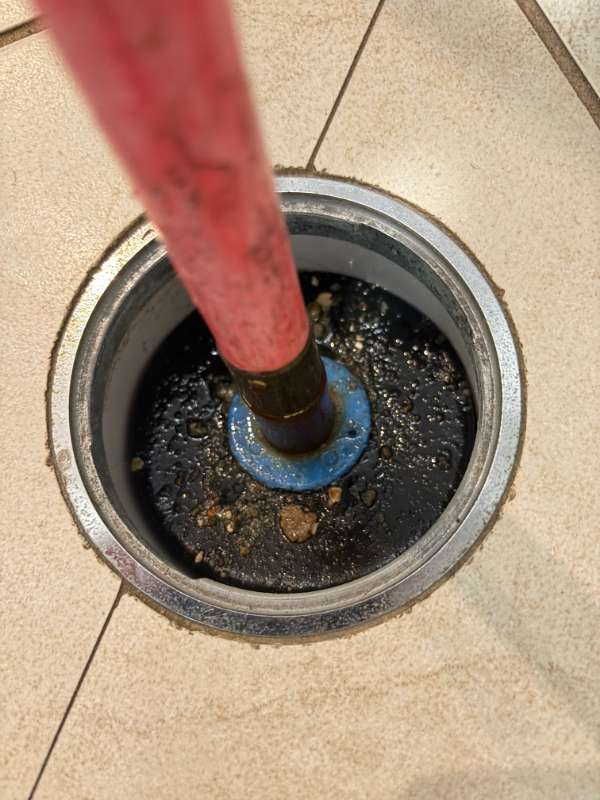
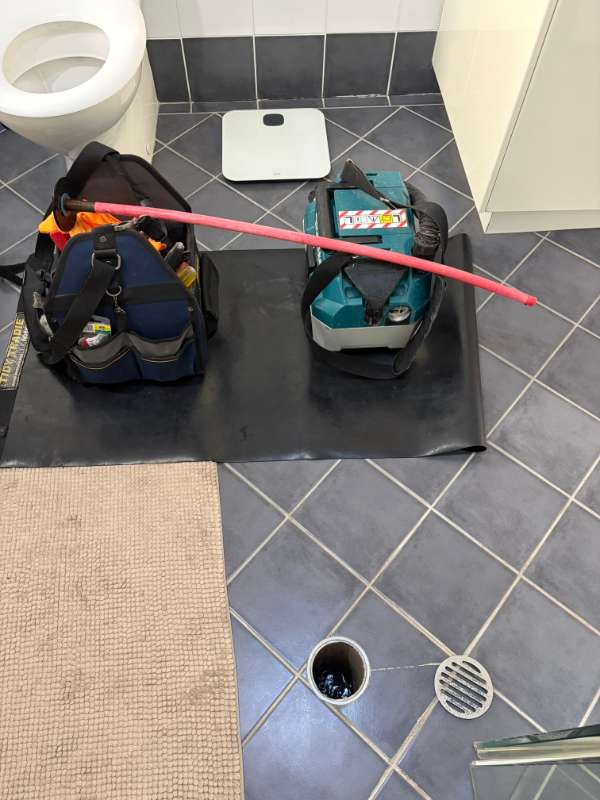
Here's a recent drain job nearby in Maroubra, just down the coast, where slow, blocked drains and floor wastes were jetted clear in one visit.
Blocked drains and floor wastes jetted clear, Maroubra (nearby)
The problem: a Maroubra home had slow, blocked drains and floor wastes, and some leaking taps.
What we did: we laid a protective mat to keep the floor clean, cleared the drains and floor wastes with high-pressure jetting, and repaired the leaking taps in the same visit.
The result: the drains flow freely again and the owners didn't need a second call-out.
More local work is on our recent projects page.
“Best plumber in Matraville. Unblocked my drains efficiently!”
C S, Matraville (Google review)
Sewer repairs across Coogee
- Near the beach and Arden Street: flats and houses where sand settles in the line.
- On the hillside streets towards Randwick: long clay sewers running downhill under steps and walls.
- Towards Clovelly and Gordons Bay: homes on sandstone where pipes sit shallow over rock.
- Towards South Coogee: interwar flats with shared lines under the building.
- Around the parks and reserves: big trees whose roots find old joints.
Sewers on steep blocks
A sewer on a steep block has plenty of fall, so water moves fast, but that isn't the whole story. The pipe often changes direction to follow steps and terraces, and every bend is a place where paper and grit can lodge. Where the ground has crept downhill over the years, joints pull apart or drop, leaving a lip inside the pipe. A camera shows exactly where these spots are. Many can be patch relined from the nearest access point, which saves digging up steps, paths or a garden built into the slope.
Your overflow gully: the early warning
The overflow gully is the grated outlet in your yard, usually near the kitchen, bathroom or laundry. It sits lower than the floor wastes inside, so if the sewer blocks, sewage spills outside in the yard rather than inside the house. If the gully is spilling, smells, or the water in it sits higher than usual, there's a blockage downstream. Keep it clear of pot plants and leaves, and never cover it with paving. On some older Coogee homes the gully was raised or covered during past work, and we can bring it back to the right height.
Boundary traps
Many older Coogee homes have a boundary trap near the front of the property, where the private sewer connects to the line heading to Sydney Water's main. It has a water seal that stops sewer gases coming back up the line, and an access point with a cap. Boundary traps are a common place for blockages, because roots get in around them and the bend catches debris. Where the cap is missing or broken, sand and soil can get in too. We clear the trap, check it on camera and replace a damaged cap.
Adding an inspection opening
An inspection opening is a capped access point on the sewer. Without one, the only way in is through a toilet, the gully or the boundary trap, which makes clearing slower and the camera work harder. If your home has had repeat blockages, adding an inspection opening in an easy spot makes the next clear quicker and gives us a way in for relining. See sewer inspection openings.
Sewer smells in older homes
A sewer smell inside an older Coogee home usually comes from a dry trap in a floor waste or a basin that's rarely used, a leaking toilet pan connector, a blocked or broken vent pipe, or a cracked pipe under the floor. In flats and semis with lines under the building, a cracked pipe below the floor can smell long before it causes a blockage. We test the traps and vents, check the pan connector, and use a camera or a smoke test to find a cracked pipe if the smell keeps coming back.
Grease and wipes
Fat and oil from cooking go down the sink as a liquid, cool in the pipe and set on the walls. Over time, the coating builds up and catches food scraps until the line blocks. Wet wipes, even the ones labelled flushable, don't break down like toilet paper and snag on roots and rough joints. In flats, where several homes share a line, a little from each adds up quickly. We jet the line clear and camera it, and we can tell you if the grease has built up around a damaged joint that needs repair.
Digging when it's needed
Some pipes are too far gone to reline. A collapsed section, a pipe crushed by a retaining wall or a sag that holds water and sand all need digging and replacing. On Coogee's steep and narrow blocks, we plan the dig carefully, keep the area tidy, work around steps, walls and garden beds where we can, and put back what we disturb. You'll know the plan and the fixed price before we start.
When the problem is Sydney Water's
If the blockage is in Sydney Water's main, or at the connection where it's their responsibility, we'll show you the footage and give you the details so you can report it to them. Signs it may be the main include neighbours having problems at the same time, or the camera showing your line is clear right up to the connection.
Reading the camera footage
The camera shows the inside of the pipe on a screen as we push it along the line. We point out what we see as we go: open joints, cracks, roots, sand, sags that hold water, and where the pipe changes direction or material. The camera tells us how far along the line each fault is, so we know exactly where to reline or dig. We'll share the footage with you, so you can see what we found and keep it for your records.
Before you buy in Coogee
Many Coogee homes are old, sit on slopes and have sewers running under steps, courtyards and the building itself. A pre-purchase sewer camera inspection shows the condition of the private line before you commit. We'll camera the line, record the footage and tell you what we found and what it would take to fix, so you can factor it into your decision. See our CCTV drain inspection page.
Sewers in walk-up flats
Coogee's Art Deco and interwar walk-ups usually have one or two sewer lines serving several flats, running under or beside the building. A blockage in a shared line can affect every flat downstream, often showing first in the ground-floor units. Shared lines are usually the owners corporation's responsibility, but if you live on the ground floor and your gully or toilet is backing up, we can find the blockage and give you a note to pass on if the fault is in the shared line.
Why we camera before quoting
Two sewers that block in the same way can need completely different repairs. One might have a few roots at a single joint; another might have a collapsed section under the steps. Without a camera, any price is a guess. We camera first so the options and the fixed price are based on what's actually in the ground.
Roots and the trees you want to keep
Trees are part of what makes Coogee's streets and gardens so good, and most of the time you don't need to remove a tree to fix a root problem. Roots get into a sewer through gaps in the joints. Relining seals those gaps, so the roots can't get back in, while the tree stays where it is. See tree roots in pipes.
Shared houses and holiday stays
In a Coogee house with several people, or one that has a steady stream of guests over summer, the sewer works harder than it was designed for. More showers mean more sand, more laundry means more lint, and guests don't always know what not to flush. If the line is old and already has a few weak joints, blockages get more frequent. A camera check shows whether it's just a clean that's needed or a repair.
Older homes with additions
Many older Coogee homes have had a bathroom or laundry added at the back over the years. The new plumbing is usually PVC, joined to the original clay line. These joins are a common fault point, especially where the new line meets the old at an awkward angle. We camera the whole line, from the newest fixture to the boundary, so nothing is missed.
A sewer you can forget about
Once a damaged sewer is relined or replaced, it shouldn't need any more attention than a new pipe. The joints are sealed, roots can't get in, and the pipe is smooth inside. Our workmanship carries a lifetime labour warranty.
Why Coogee homeowners call us
We come over from Matraville and know how Coogee's old clay pipes, steep blocks, sand and big trees treat a sewer. We camera before we quote, explain your options in plain language and back our workmanship with a lifetime labour warranty.
Looking after your sewer
- Don't put fats, oils or grease down the sink.
- Only flush toilet paper; wipes cause blockages.
- Rinse sand off outside before showering inside.
- Keep your overflow gully clear and easy to see.
- Keep inspection openings clear and easy to find.
- Have older lines cameraed every few years.
What to expect on the day
We arrive in the window we agreed, introduce ourselves and ask what's been happening. We put down protective mats inside and find the best access point. We clear the line, camera it and show you the footage. You get your options and a fixed price for each. If you're happy to go ahead, we do the work and camera the line again so you can see the result. We clean up before we leave.
Sewers on sandstone
Much of Coogee sits on sandstone, and on some blocks the sewer was laid in a shallow trench cut into rock. Pipes on rock can crack where they rest on a hard edge, and digging to replace them is slow and costly. Relining is often the better choice here, because it repairs the pipe from the inside without breaking rock.
Sewer words explained
- Overflow gully: the grated outlet in the yard that lets sewage out outside if the sewer blocks.
- Boundary trap: the fitting near the front boundary where many older sewers connect.
- Inspection opening: a capped access point on the sewer.
- Displaced joint: where two pipe lengths have moved out of line.
- Sag: a dip in the pipe that holds water and debris.
- Relining: a resin liner that forms a new pipe inside the old one.
- Sewer service diagram: a plan showing where the private sewer runs.
What happens when you call
Tell us what's going on
Call or send a quick form. A photo of the problem helps us come prepared. No call-out fee.
Options and a fixed price first
We find the cause, explain your options and give you a fixed price for each before any work starts.
Fixed, tested and backed
We do the work, test it, clean up, and back our workmanship with a lifetime labour warranty.
Jobs we finished recently
Why Coogee homeowners call us
- Based in Matraville, a short drive from Matraville
- Rated 5.0 from 110 Google reviews
- Free quotes, with options and a fixed price before any work starts
- Lifetime labour warranty on our workmanship
- Licensed plumbers, drainers and gasfitters (Lic. 398171C)
Sewer questions from Coogee homeowners
How do I know if my sewer is damaged?
Repeat blockages, gurgling, smells and an overflowing gully are common signs. A camera confirms it.
My sewer runs under steps and a retaining wall. Can it be fixed without digging?
Usually, by relining from an access point.
Why is there sand in my sewer?
Sand comes in from the beach on feet and towels and settles in dips and shifted joints. We jet it out and camera the line.
My sewer is shared with next door. Who pays?
It depends on how the line is set up, which a sewer service diagram helps show. We'll camera it and show you which part is which.
My home has no inspection opening. Is that a problem?
It makes clearing harder. We can fit one.
Can roots be stopped for good?
Yes, by sealing the joints with relining.
What is an overflow gully?
A grated outlet in the yard that lets sewage out outside, not inside, if the sewer blocks.
Why does my flat smell of sewage?
Often a dry trap, a leaking pan connector, a vent problem or a cracked pipe under the floor.
Who fixes the sewer in a block of flats?
Shared lines are usually the owners corporation's.
Is the sewer main my responsibility?
No. Sydney Water looks after the main.
Can you check a sewer before I buy?
Yes. A CCTV inspection shows its condition.
What warranty do I get?
Our workmanship carries a lifetime labour warranty.
More plumbing in Coogee: our Coogee plumber page, blocked drains, pipe relining and stormwater. Nearby: sewer repairs in Randwick and Maroubra. Guides: sewer responsibility, sewer inspection openings and tree roots in pipes.