Sewer repairs in Daceyville 2032
Most Daceyville homes still drain through the original clay sewers laid when the garden suburb was built, and the big street trees planted at the same time have had a century to find the joints. Many semis share a line, and few homes have an easy inspection opening. We're a few minutes away in Matraville, and we camera the sewer before recommending anything so you only pay to fix what's actually wrong.
Sewer repairs we do in Daceyville
Root damage
Roots cut out and the joints sealed so they can't grow back in.
Cracked clay sewers
Cracked and broken joints found on camera and repaired, relined or replaced.
Long cottage lines
Sewers down the side or under the house repaired from access points.
Shared lines
Lines shared with next door cameraed so you know whose section is whose.
Inspection openings
New access points added where there's no easy way into the line.
Overflow gullies
Gullies that spill, smell or sit low found, cleared and fixed.
Signs of a sewer problem
- The same drain keeps blocking, even after it's been cleared.
- The overflow gully spills or the water in it sits high.
- Gurgling from the toilet, shower or basin when another fixture drains.
- The toilet rises close to the rim before slowly going down.
- A sewer smell inside, under the house or in the yard.
- A lush patch of lawn or soggy ground along the sewer line.
- Several fixtures drain slowly at once.
Why sewers fail in Daceyville
Old clay pipe
Most homes built before the 1970s were connected with clay pipe in short lengths, joined with mortar or rubber rings. After many decades in the ground, the joints open up, the mortar crumbles and the pipe cracks. An older Daceyville line can have dozens of joints between the house and the sewer main.
Roots from street trees
Daceyville's street trees and established back gardens send fine roots towards any source of water. They find open joints in a century-old clay sewer, grow inside and form a mat that catches paper and waste. Clearing them gives relief, but they come back unless the joint is sealed.
Long lines down the side
Daceyville's cottages were built to a plan, and many have the kitchen, bathroom and outside laundry at the back, with a long sewer line running down the side or back of the house to the boundary trap at the front. On flat ground, with little fall, waste moves slowly, and anything that catches tends to build up.
No inspection opening
Many older Daceyville homes were never fitted with a proper inspection opening. Without one, the only way into the line is through a toilet, the gully or the boundary trap, which makes every clear slower and camera work harder.
Shared lines
Many Daceyville semi-detached pairs share a sewer line, with one half draining through the other before reaching the main. A blockage in the shared section affects both homes, and it often shows first in the lower or downstream half.
Daceyville homes and sewers
| Home type | Typical sewer | Common faults |
|---|---|---|
| Brick cottages | Century-old clay line down the side, outside laundry branch | Roots, cracked joints, no access |
| Semi-detached pairs | Clay line with later additions | Roots, displaced joints, faults where new meets old |
| Homes in heritage areas | Lines under established gardens and paths | Roots, buried or missing inspection openings |
| Homes with back extensions | Newer PVC joined to the original clay | Failed old-to-new joints, roots |
How we repair a sewer
- Talk it through: which fixtures are affected, how often it happens and what's been done before.
- Find a way in: an inspection opening, the gully or the boundary trap.
- Clear the line with a high-pressure jetter and root cutter.
- Camera inspection: we record the pipe and show you exactly what's wrong.
- Give you options, each with a fixed price, before any work starts.
- Do the repair: patch, reline or dig and replace the damaged section.
- Camera again so you can see the finished repair.
Which repair suits?
| Problem | Usual fix |
|---|---|
| One or two root-filled joints | Patch relining |
| Many damaged joints along the line | Full-length relining |
| Line under the house or side passage | Reline from an access point |
| Collapsed pipe | Dig and replace the section |
| No access point | Fit an inspection opening |
| Shared line blocked | Clear and camera, then repair the damaged section |
Where the pipe runs under the house, a side passage or a courtyard, relining can avoid digging. See pipe relining in Daceyville.
What affects the cost
- How much pipe needs repair, and how deep it is.
- Access: whether there's an inspection opening, and what's on top of the pipe.
- The type of repair: patch, full reline or dig and replace.
- How heavy the roots are and how much clearing is needed first.
- Long lines and access down the side.
You get a fixed price for each option before any work starts.
Who's responsible?
- You: the private sewer from your home to the point where it joins Sydney Water's main.
- Neighbours in a semi pair: where one sewer serves both halves, both owners usually share responsibility for the shared section.
- Sydney Water: the sewer main and, in many cases, the connection to it.
Where a line is shared with a neighbour, a sewer service diagram and the camera footage help show which part is which. See our sewer responsibility guide.
Quick checks you can do
- Find your overflow gully. If it's spilling or the water sits high, there's a blockage downstream.
- Run a tap and listen for gurgling in other fixtures.
- Watch the toilet: does the water rise high before draining?
- Look for street trees near where the sewer runs.
- Note how often it happens and which fixtures are affected.
Signs it's urgent and when it can wait
- Call straight away if sewage is coming up through the gully, a floor waste or the toilet.
- Call soon if drains are slow everywhere, or the gully keeps filling.
- Book a time if a drain blocks every few months, or you'd like a camera check before buying.
A recent drain job nearby
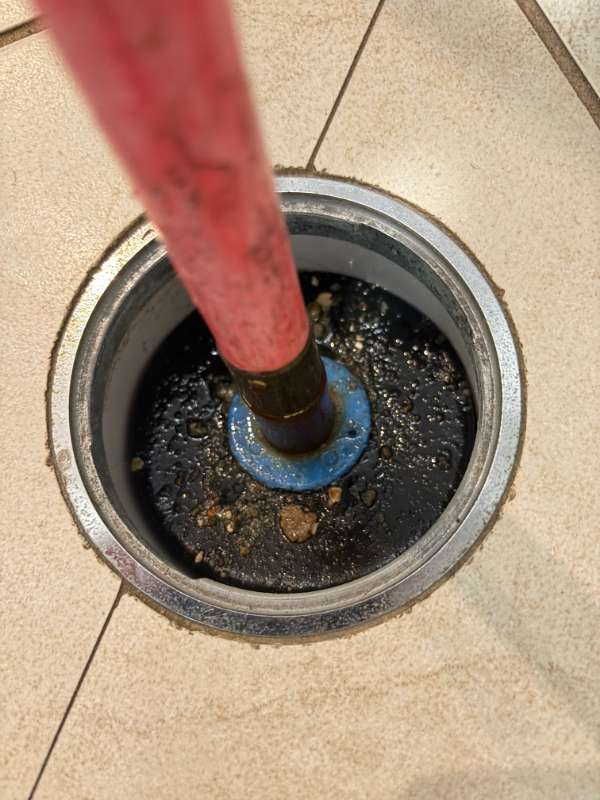
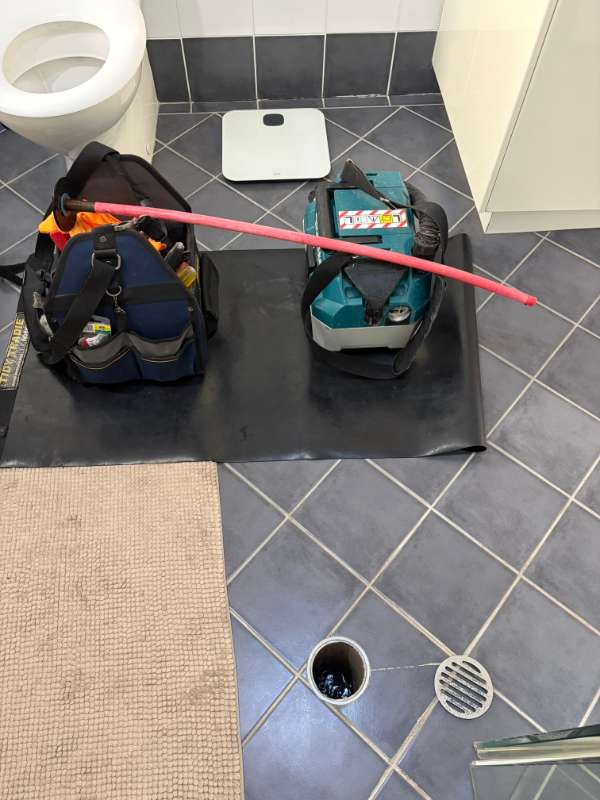
Here's a recent drain job nearby in Maroubra, where slow, blocked drains and floor wastes were jetted clear in one visit.
Blocked drains and floor wastes jetted clear, Maroubra (nearby)
The problem: a Maroubra home had slow, blocked drains and floor wastes, and some leaking taps.
What we did: we laid a protective mat to keep the floor clean, cleared the drains and floor wastes with high-pressure jetting, and repaired the leaking taps in the same visit.
The result: the drains flow freely again and the owners didn't need a second call-out.
More local work is on our recent projects page.
“Best plumber in Matraville. Unblocked my drains efficiently!”
C S, Matraville (Google review)
Sewer repairs across Daceyville
- The curving garden-suburb streets: brick cottages and semis with century-old clay sewers.
- Throughout the heritage area: lines under gardens and front paths.
- Homes with back extensions: newer pipe joined to the original clay sewer.
- Towards Kingsford: homes under big street trees.
- On the flattest streets: long lines with little fall.
Cottage sewers
A Daceyville cottage sewer often starts at a bathroom or outside laundry at the back, runs down the side of the house or under a back path and reaches the boundary trap at the front. Along the way it may pass under paving, garden beds and a front path. When it blocks, getting to it is the first problem. We find the best access point, clear the line and camera it. Many of these sewers can be repaired by relining from the front or back without lifting anything. Where there's no good access point, adding an inspection opening in an easy spot pays for itself in quicker clears later.
Your overflow gully: the early warning
The overflow gully is the grated outlet in your yard, usually near the kitchen, bathroom or laundry. It sits lower than the floor wastes inside, so if the sewer blocks, sewage spills outside in the yard rather than inside the house. If the gully is spilling, smells, or the water in it sits higher than usual, there's a blockage downstream. Keep it clear of pot plants and leaves, and never cover it with paving. In some older Daceyville cottages, the gully was raised or covered when a yard was paved, and we can bring it back to the right height.
Boundary traps
Many older Daceyville homes have a boundary trap near the front fence, where the private sewer connects to the line heading for the main. It has a water seal that stops sewer gases coming back up the line, and an access point with a cap. Roots often get in around the trap, and the bend catches debris. Where the cap is cracked or missing, soil and leaves get in from the top too. We clear the trap, check it on camera and replace a damaged cap.
Adding an inspection opening
An inspection opening is a capped access point on the sewer. Without one, clearing is slower and camera work is harder. If your home has had repeat blockages, adding an inspection opening makes the next clear quicker and gives us a way in for relining. See sewer inspection openings.
Sewer smells in older homes
A sewer smell inside an older Daceyville home usually comes from a dry trap in a floor waste or a basin that's rarely used, a leaking toilet pan connector, a blocked or broken vent pipe, or a cracked pipe under the floor. In cottages with suspended timber floors, a cracked sewer under the house can smell long before it blocks. We test the traps and vents, check the pan connector, and use a camera or a smoke test to find a cracked pipe if the smell keeps coming back.
Grease and wipes
Fat and oil go down the sink as a liquid, cool in the pipe and set on the walls, catching food scraps until the line blocks. Wet wipes, even the ones labelled flushable, don't break down like toilet paper and snag on roots and rough joints. In a busy household, or a semi pair sharing one line, a little from each home adds up quickly. We jet the line clear and camera it, and tell you if the grease has built up around a damaged joint that needs repair.
Digging when it's needed
Some pipes are too far gone to reline. A collapsed section, a pipe crushed by roots or a badly sagging line may need digging and replacing. On long, narrow blocks, we plan the dig carefully, work around paths, garden beds and trees where we can, and put back what we disturb. You'll know the plan and the fixed price before we start.
When the problem is Sydney Water's
If the blockage is in Sydney Water's main, or at the connection where it's their responsibility, we'll show you the footage and give you the details so you can report it to them. Signs it may be the main include neighbours having problems at the same time, or the camera showing your line is clear right up to the connection.
Reading the camera footage
The camera shows the inside of the pipe on a screen as we push it along the line. We point out what we see: open joints, cracks, roots, sags that hold water, and where the pipe changes direction or material. The camera tells us how far along the line each fault is, so we know exactly where to reline or dig. We share the footage with you to keep.
Before you buy in Daceyville
Many Daceyville homes are old, with clay sewers under street trees and lines under the house. A pre-purchase sewer camera inspection shows the condition of the private line before you commit. We camera the line, record the footage and tell you what we found and what it would take to fix. See our CCTV drain inspection page.
Sewers shared between semi-detached pairs
In a Daceyville semi pair, the sewer from one half often runs past or under the other before heading to the street. A blockage in the shared section can back up into either home, and it's usually the downstream half that sees the gully overflow first. We find the blockage, camera the line to show exactly where the fault is, and give you footage and a note to share with your neighbour so the repair can be sorted fairly.
Why we camera before quoting
Two sewers that block the same way can need completely different repairs. One might have a few roots at a single joint; another might have a cracked section under the house. Without a camera, any price is a guess. We camera first so the options and the fixed price are based on what's actually in the ground.
Roots and the trees you want to keep
You rarely need to remove a tree to fix a root problem. Roots get into a sewer through gaps in the joints. Relining seals those gaps, so the roots can't get back in, while the tree stays where it is. See tree roots in pipes.
Sewers in the heritage conservation area
The whole of Daceyville is a heritage conservation area, and owners want front gardens, original paths and fences left as they are. Most sewer work happens through the gully, an inspection opening or the boundary trap, and relining repairs damaged joints from the inside, so nothing at the front needs to change. If a new inspection opening is needed, we put it where it's least visible and finish it neatly.
Older homes with additions
Many Daceyville cottages have had a bathroom or laundry added at the back. The new plumbing is usually PVC, joined to the original clay line. These joins are a common fault point. We camera the whole line, from the newest fixture to the boundary, so nothing is missed.
A sewer you can forget about
Once a damaged sewer is relined or replaced, it shouldn't need any more attention than a new pipe. The joints are sealed, roots can't get in, and the pipe is smooth inside. Our workmanship carries a lifetime labour warranty.
Why Daceyville homeowners call us
We come up from Matraville and know Daceyville's old clay sewers, street trees and long, narrow blocks. We camera before we quote, explain your options in plain language and back our workmanship with a lifetime labour warranty.
Looking after your sewer
- Don't put fats, oils or grease down the sink.
- Only flush toilet paper; wipes cause blockages.
- Keep your overflow gully clear and easy to see.
- Keep inspection openings clear and easy to find.
- Have older lines cameraed every few years, especially under street trees.
What to expect on the day
We arrive in the window we agreed, introduce ourselves and ask what's been happening. We put down protective mats inside and find the best access point. We clear the line, camera it and show you the footage. You get your options and a fixed price for each. If you're happy to go ahead, we do the work and camera the line again so you can see the result. We clean up before we leave.
Cast iron under the floor
Some older Daceyville homes have cast iron sewer pipe under the floor near bathrooms. Cast iron corrodes from the inside, building up rough scale that catches waste, and can eventually rust through. After cleaning, it can often be relined without lifting the floor.
Root cutting versus relining
When roots block a sewer, the first step is always to clear them, usually with a high-pressure jetter and a root cutting head. That restores the flow, often within an hour or two. But the joints the roots came through are still open, and the roots will grow back, typically within months. If the camera shows only one or two affected joints, patch relining them stops the cycle for good. If most of the joints are open, a full-length reline is the long-term fix. Some owners choose to clear the line now and plan the relining later; we'll give you both options and the fixed price for each.
Sewer problems after heavy rain
If your gully overflows or the toilet gurgles only after heavy rain, stormwater may be getting into the sewer. Common causes are a downpipe or courtyard drain connected to the sewer, a cracked pipe letting groundwater in, or a broken gully that fills from the surface. We find the cause, reconnect any downpipes to the stormwater and seal the cracks. See stormwater in Daceyville.
Sewer words explained
- Overflow gully: the grated outlet in the yard that lets sewage out outside if the sewer blocks.
- Boundary trap: the fitting near the front boundary where many older sewers connect.
- Inspection opening: a capped access point on the sewer.
- Displaced joint: where two pipe lengths have moved out of line.
- Sag: a dip in the pipe that holds water and debris.
- Relining: a resin liner that forms a new pipe inside the old one.
- Sewer service diagram: a plan showing where the private sewer runs.
What happens when you call
Tell us what's going on
Call or send a quick form. A photo of the problem helps us come prepared. No call-out fee.
Options and a fixed price first
We find the cause, explain your options and give you a fixed price for each before any work starts.
Fixed, tested and backed
We do the work, test it, clean up, and back our workmanship with a lifetime labour warranty.
Jobs we finished recently
Why Daceyville homeowners call us
- Based in Matraville, a few minutes from Daceyville
- Rated 5.0 from 110 Google reviews
- Free quotes, with options and a fixed price before any work starts
- Lifetime labour warranty on our workmanship
- Licensed plumbers, drainers and gasfitters (Lic. 398171C)
Sewer questions from Daceyville homeowners
How do I know if my sewer is damaged?
Repeat blockages, gurgling, smells and an overflowing gully are common signs. A camera confirms it.
My sewer runs under a back path. Can it be fixed without digging?
Usually, by relining from an access point.
My sewer is shared with next door. Who pays?
It depends on how the line is set up, which a sewer service diagram helps show. We'll camera it and show you which part is which.
My home has no inspection opening. Is that a problem?
It makes clearing harder. We can fit one.
Can roots be stopped for good?
Yes, by sealing the joints with relining.
Do I need to remove the tree?
Usually not. Relining seals the joints so the tree can stay.
What is an overflow gully?
A grated outlet in the yard that lets sewage out outside, not inside, if the sewer blocks.
Why does my house smell of sewage?
Often a dry trap, a leaking pan connector, a vent problem or a cracked pipe under the floor.
Who fixes a sewer shared between two semis?
Usually both owners share the shared section. We give you camera footage to show your neighbour.
Is the sewer main my responsibility?
No. Sydney Water looks after the main.
Can you check a sewer before I buy?
Yes. A CCTV inspection shows its condition.
What warranty do I get?
Our workmanship carries a lifetime labour warranty.
More plumbing in Daceyville: our Daceyville plumber page, blocked drains, pipe relining and stormwater. Nearby: sewer repairs in Kingsford and Pagewood. Guides: tree roots in pipes and pipe relining guide.