Stormwater plumbing in La Perouse 2036
Storms come straight off Botany Bay and the Tasman Sea onto the La Perouse headland. Rain is driven sideways against walls, wind blows leaves and sand into every gutter and pit, and a lot of water lands in a short time. If the stormwater system can't carry it away, water pools in the yard, sits against the house or finds its way under the floor. Older homes here often still have the original stormwater pipes, which crack, rust and fill with sand. We're a short drive away in Matraville and fix stormwater problems across La Perouse.
Stormwater jobs we do in La Perouse
Pooling yards
New pits, grated drains and pipes to get water off yards and away from the house.
Sand-filled pits
Pits cleaned out, and the cracked pipes letting sand in sealed or replaced.
Blocked downpipes
Downpipes cleared from gutter to pit, and broken connections repaired.
Corroded downpipe connections
Rusted steel and corroded fittings replaced at ground level.
Cracked stormwater pipes
Old clay, concrete and steel lines inspected by camera and repaired or relined.
Kerb outlets
Blocked, rusted or crushed outlets replaced so water reaches the gutter.
Signs your stormwater isn't working
- Water pools in the yard or on paths for hours after rain.
- Water sits against the house or comes under a door in a storm.
- Downpipes overflow at the bottom or spill at the gutter.
- Pits fill with sand or leaves, or stay full of water.
- Damp under the floor after storms.
- The kerb outlet doesn't flow when it rains.
- Sand washes across paths or ground sinks along a pipe line.
- Gutters overflow even when they look clean.
Why stormwater fails in La Perouse
Wind-driven rain
On an exposed headland, storms push rain sideways against walls and windows. A lot of water hits the house and the ground beside it at once. Gutters, downpipes and pits have to work at full capacity, and any weak point shows up quickly.
Sand and leaves
Wind blows sand and leaves into gutters, downpipes and pits. Sand settles in pits and pipes and gradually fills them. Leaves pack into the bend at the bottom of downpipes.
Old pipes
Older stormwater lines are often clay, concrete or galvanised steel. Clay cracks at the joints, concrete breaks down, and steel rusts through, faster in salty air. A broken pipe can't carry the full flow.
Corrosion at ground level
Steel downpipes and the connections where they meet the underground pipe corrode at ground level, where damp and salt sit. A corroded connection lets water spill against the wall instead of entering the pipe.
Sloping and sandy blocks
Some La Perouse blocks slope towards the house or the street, and sand doesn't always hold water the way you'd expect. Water can run across the surface in storms, or soak in and wash sand away under paths.
La Perouse homes and stormwater
| What we see | Common faults | What helps |
|---|---|---|
| Older homes | Cracked or rusted original lines, crushed kerb outlets | Camera, relining or replacing lines, new outlets |
| Homes facing the water | Corroded downpipes and connections | Replacing corroded sections with suitable materials |
| Exposed yards | Sand and leaves in pits, wind-driven pooling | Pits with sumps, grated drains, regular cleaning |
| Extended homes | More roof area on old lines | Upgrading the line to suit |
How we fix stormwater problems
- Talk it through: where water pools, when it happens, and what's been done before.
- Walk the property and follow the water from the gutters to the street.
- Test the downpipes and pits with a hose.
- Camera the pipes where needed to find cracks, sand or collapses.
- Give you options, each with a fixed price, before any work starts.
- Do the work: clear, repair, reline, replace or add drainage.
- Test it with water so you can see it flowing.
Repair, reline or replace?
| Problem | Usual fix |
|---|---|
| Sand in pits and pipes | Clean out, then seal the cracks letting sand in |
| Cracked clay joints | Patch relining or replace the section |
| Rusted steel pipe | Replace with PVC |
| Corroded downpipe connection | Replace the connection and lower section |
| Crushed kerb outlet | Replace the outlet |
| Yard with no drainage | Add pits and grated drains |
Where a pipe runs under a deck or paving, relining can avoid digging. See pipe relining in La Perouse.
What affects the cost
- How much pipe needs work, and how deep it is.
- What's on top: lawn, paving, decking or concrete.
- Access for digging or equipment.
- New pits or grated drains needed.
- Kerb work where an outlet is replaced.
You get a fixed price for each option before any work starts.
Who's responsible?
- You: gutters, downpipes, pits and pipes on your property, and usually the line to the kerb outlet.
- Randwick City Council: the street gutter and council pits and pipes.
See our stormwater rules guide.
Quick checks you can do
- Watch in the rain: where does water pool, and where do downpipes overflow?
- Lift pit grates and look for sand, leaves or standing water.
- Run a hose into a downpipe and check it comes out at the kerb.
- Check the base of each downpipe for rust or a broken connection.
- Look under the house after rain for water or damp.
Signs it's urgent and when it can wait
- Call straight away if water is coming into the house.
- Call soon if water sits against walls or under the floor after rain.
- Book a time if the yard pools but drains within a few hours, or pits are filling with sand.
A recent stormwater job nearby
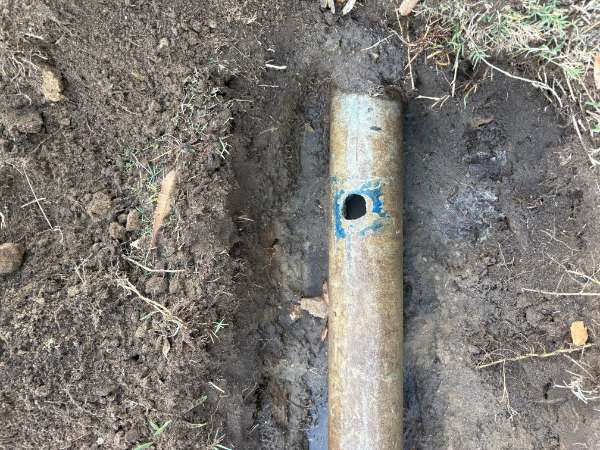
Here's a recent stormwater job nearby in Maroubra, where an old steel pipe had rusted through.
Flooding fixed with a new line and kerb outlet, Maroubra (nearby)
The problem: water built up against a Maroubra home and flooded its lower level every heavy storm, because the old stormwater pipe couldn't carry it away fast enough.
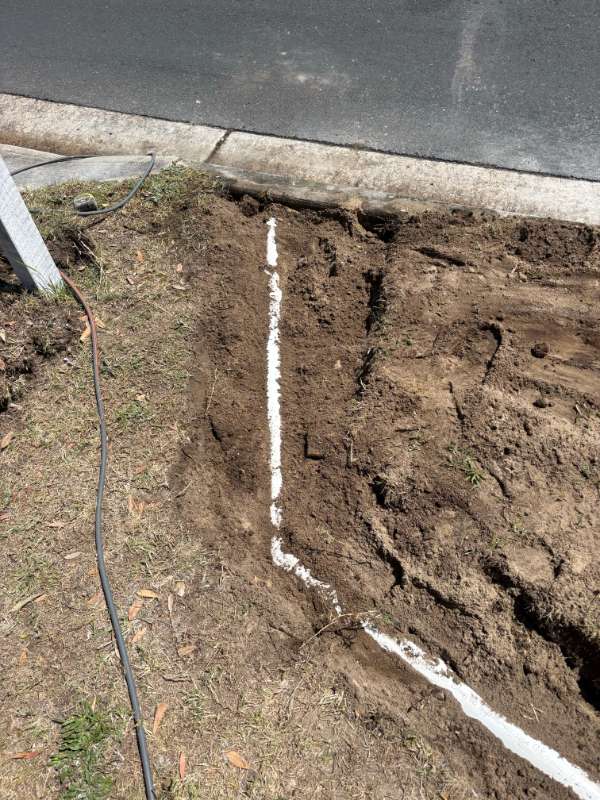
What we did: we dug from the existing stormwater pipe out to the street, uncovered the old pipe, which had rusted through, and connected a new PVC line. We cored through the kerb for a new outlet into the gutter and backfilled the nature strip.
The result: rain now leaves the property through the new line and outlet instead of building up against the house.
“Best plumber in Matraville. Unblocked my drains efficiently!”
C S, Matraville (Google review)
More local work is on our recent projects page.
Stormwater across La Perouse
- Around Yarra Road, Elaroo Avenue and Wybalena Avenue: older lines and kerb outlets.
- Around Adina Avenue, Canara Avenue and Coonda Avenue: extended homes on older lines.
- Near The Loop and Anzac Parade: homes taking the full force of storms.
- Towards Frenchmans Bay and Congwong Bay: sloping yards and sandy ground.
- Towards Phillip Bay and Little Bay: slightly more sheltered streets.
Downpipes and corrosion
Each downpipe carries water from a section of roof. On the headland, steel downpipes corrode at the base and at joints, where water and salt sit longest. When the bottom of a downpipe rusts through or the connection to the underground pipe breaks, water spills right against the wall. We replace corroded sections and connections, clear blockages, and fit rainheads or leaf guards where leaves and sand are a problem. See blocked downpipes.
Pits and sand
Stormwater pits collect water from yards and downpipes and pass it into the pipe. On a sandy, windy headland, they fill quickly. A pit full of sand can't do its job, and the pipe leading from it often fills too. We clean out pits and pipes with a jetter and vacuum, then camera the pipe to see if sand is coming in through a crack. A pit with a sump below the outlet catches sand before it reaches the pipe, and a removable basket makes cleaning easy. See stormwater pit installation.
Kerb outlets
Most La Perouse homes send stormwater to the street through a kerb outlet. Older outlets are often steel that has rusted, or have been crushed by cars. A blocked or crushed outlet means water backs up through the whole system. We replace damaged outlets and make good the kerb and nature strip, as in the Maroubra job above.
Water under the floor
When wind-driven rain pools against the walls of an older home, it can seep under the floor and sit in the crawl space. That leads to damp, musty smells and rot in floor timbers. Fixing the drainage around the house is the first step: downpipes into working pipes, paths that fall away from the walls, and grated drains or pits where water collects. Keep subfloor vents clear so the space can dry out.
Downpipes connected to the sewer
In some older homes, a downpipe or yard drain was connected to the sewer instead of the stormwater. This isn't allowed, because in heavy rain it overloads the sewer. We find these connections and reconnect them to the stormwater. See downpipes into the sewer.
What happens in a big storm
In a big storm off the bay, a lot of water lands on a property in a short time, and wind makes it worse by driving rain against one side of the house. A typical roof can shed thousands of litres in an hour of heavy rain. Everything has to work at once: gutters, downpipes, pits, pipes and the kerb outlet. If any one part is blocked or too small, water backs up behind it. That's why a system that copes with light rain can still fail in a storm. If the street gutter or council pits are overflowing, water may back up into your system no matter how well it's working. We can tell you whether the problem is on your property or in the street, and give you photos to report it to Randwick City Council.
After the storm: what to check
- Walk around the house and look for water marks or sand washed against walls.
- Check under the house for standing water or damp.
- Lift pit grates and see if they've drained.
- Look at the downpipes for overflow marks, broken joints or rust.
- Check the kerb outlet for debris.
Taking photos or a short video during a storm helps us find the cause quickly.
Why we follow the water
Stormwater problems are often caused somewhere other than where the water shows up. A pooling courtyard might be caused by a crushed kerb outlet at the front. A downpipe overflowing at the back might be caused by sand in a pipe under the side path. We start at the roof, follow each downpipe to its pit, follow each pit to the next, and follow the line out to the street. Hose testing and a camera show where the flow stops, so we fix the actual cause.
Grated drains for wind-driven rain
When rain is driven against a door or a wall, a grated drain across the threshold or along the base of the wall catches the water before it gets inside or under the floor. Grated drains are also useful across the bottom of a sloping driveway or path. Connected to the stormwater line, they handle the sudden bursts of water that come with coastal storms. We size and position them to suit how water actually moves on your block.
Agricultural drains and damp walls
Some La Perouse homes have an agricultural drain, a slotted pipe wrapped in gravel or fabric, along the base of a wall or behind a retaining wall. When these block with sand or silt, water builds up against the wall and can cause damp inside. We can camera and flush agricultural drains, and replace them where they've failed. See rising damp and agricultural drains.
Rainwater tanks
Some homes have a rainwater tank for the garden or toilets. The overflow must connect to the stormwater system so excess water is carried away in heavy rain. On the headland, tank fittings and pumps are exposed to salt air too. We check overflows, fix leaks and connect tanks properly. See our rainwater tank guide.
Looking after your stormwater
- Clean gutters a few times a year, more often after windy weather.
- Lift pit grates and clear sand and leaves after storms.
- Check the base of each downpipe for rust.
- Keep the kerb outlet clear, and don't park over it.
- Watch where water goes in heavy rain and note any new problems.
- Have older lines cameraed every few years.
Stormwater and backyard projects
If you're adding a deck, paving, an outdoor shower or a shed, think about stormwater first. New hard surfaces send more water into the system, and new structures can cover pits or pipes. It's much easier to add a pit, a grated drain or a new line before the paving goes down than to dig it up later. We can look at your plans and suggest drainage that will work with them. See backyard flooding.
Stormwater and the bay
Stormwater from La Perouse streets ends up in Botany Bay, around some of Sydney's best swimming and diving spots. Keeping your pits clean, making sure downpipes go to stormwater rather than the sewer, and never washing paint, oil or chemicals into a pit all help keep the water clean. A working stormwater system also stops sand and soil washing off your yard every time it rains.
Planning stormwater work around your home
Most stormwater jobs can be done without much disruption. Clearing and camera work happen from pits and downpipes. Relining works through existing access points. Where a new line is needed, we plan the route to avoid gardens, decks and paving where we can, and we put back what we disturb.
A fixed price before we start
Stormwater work can range from a quick downpipe clear to a new line from the back yard to the street. Whatever the job, you'll know what we found, what we recommend and the fixed price for each option before any work starts. If you'd rather start with the simplest fix and see how it goes in the next storm, we'll tell you honestly whether that's likely to work.
Why La Perouse homeowners call us
We're a short drive away in Matraville and know how storms, sand and salt air affect homes on the headland. We follow the water to the real cause, explain your options in plain language, and back our workmanship with a lifetime labour warranty.
Trees, leaves and the wind
Trees and coastal scrub around La Perouse give shelter from the wind, but they drop leaves, flowers and seed pods that the wind then delivers straight into your gutters and pits. After a blustery week, a gutter can be full. Leaf guards on the gutters, rainheads on the downpipes and pits with removable baskets all help. If the camera shows roots in the stormwater line, we can cut them out and reline the damaged joints. Getting gutters and pits cleaned before the stormy months saves a lot of trouble later.
Outdoor showers and stormwater
Outdoor showers are popular near the beach. Their drain needs to go to the right system, and their grate catches a lot of sand. If an outdoor shower floods the area around it, the drain may be blocked or connected to a pit that's already full of sand. We'll check where it goes and clear it.
Before you call
- Note where water pools and how long it takes to drain.
- Take photos or a video during a storm if you can.
- Lift pit grates and note what's inside.
- Tell us about access: side gates, slopes, decks and parking.
Sand washing off the yard
On a sandy block, heavy rain can carry sand across paths and into pits, and leave hollows under paving where water runs along the edge. If you're seeing sand fans on the path after rain or pavers starting to sink, water isn't going where it should. Redirecting downpipes into the stormwater system, adding a grated drain where water runs off, and making sure paths fall away from the house usually stop it. We'll show you where the water is going and suggest the simplest fix.
Stormwater words explained
- Pit: a box in the ground with a grate that collects water.
- Grated drain: a long, narrow drain across a path or driveway.
- Kerb outlet: where the stormwater pipe meets the street gutter.
- Fall: the slope a pipe or surface needs for water to flow.
- Sump: a low section at the bottom of a pit that catches sand.
- Downpipe: the vertical pipe from the gutter to the ground.
What happens when you call
Tell us what's going on
Call or send a quick form. A photo of the problem helps us come prepared. No call-out fee.
Options and a fixed price first
We find the cause, explain your options and give you a fixed price for each before any work starts.
Fixed, tested and backed
We do the work, test it, clean up, and back our workmanship with a lifetime labour warranty.
Jobs we finished recently
Why La Perouse homeowners call us
- Based in Matraville, a short drive from La Perouse
- Rated 5.0 from 110 Google reviews
- Free quotes, with options and a fixed price before any work starts
- Lifetime labour warranty on our workmanship
- Licensed plumbers, drainers and gasfitters (Lic. 398171C)
Stormwater questions from La Perouse homeowners
Why does my yard flood in storms?
Usually a blocked or broken pipe, a pit full of sand, or no drainage where it's needed.
Why do my pits keep filling with sand?
Wind-blown sand from the surface, or a cracked pipe letting it in.
Why are my downpipes rusting at the bottom?
Salt and damp sit longest at ground level. We replace corroded sections.
Can you fix a blocked downpipe?
Yes, from the gutter to the pit.
Who looks after the kerb outlet?
Usually you, on your side. Council looks after the gutter.
Can you reline stormwater pipes?
Yes, which avoids digging under decks and paths.
My downpipe goes into the sewer. Is that a problem?
Yes. It needs reconnecting to stormwater.
Water gets under my house. Can you help?
Yes. We fix the drainage around the house first.
Can you add drainage to a yard that pools?
Yes, with pits, grated drains and pipes.
Do you use a camera?
Yes, where it helps find the problem.
How long does a job take?
Clearing takes an hour or two. New lines or pits can take a day or more.
What warranty do I get?
Our workmanship carries a lifetime labour warranty.
More plumbing in La Perouse: our La Perouse plumber page, blocked drains, pipe relining and leak detection. Nearby: stormwater in Little Bay, Chifley and Malabar. Guides: stormwater plumbing, backyard drainage and blocked downpipes.