Stormwater plumbing in Little Bay 2036
Little Bay sits between the ocean, the golf courses and the headlands, on sandy coastal ground. The wind carries sand and leaves into every courtyard pit and strip drain, and heavy coastal storms test them. Homes on the Prince Henry estate, built from the early 2000s, have modern systems with courtyard pits and grated drains that are now twenty years into collecting sand. Older homes in the 1950s streets have older lines that roots and time have damaged. Stormwater here ends up in Little Bay and the ocean, so keeping it clean matters too. We're a few minutes away in Matraville.
Stormwater problems we fix in Little Bay
Flooding courtyards
Courtyards and paved areas that pool in heavy rain, cleared and improved.
Pits full of sand
Pits and strip drains packed with wind-blown sand and leaves, dug out and jetted.
Blocked downpipes
Downpipes blocked, broken or disconnected from the system, fixed and reconnected.
Cracked and root-damaged lines
Older lines cameraed, then relined or replaced.
Blocked kerb outlets
Outlets to the street gutter cleared or replaced.
Water against the house
Grading, pits and drains so water moves away from walls and doors.
Signs your stormwater isn't working
- Water pooling in the courtyard or at the back door.
- A strip drain overflowing at a sliding door.
- Sand washed out of pits across paving after rain.
- A downpipe spilling at its base.
- Water sitting against walls or under the house.
- Gurgling or slow draining from pits.
- Damp walls or mould inside near the ground.
Why stormwater fails in Little Bay
Wind-blown sand and leaves
Little Bay is exposed to wind off the ocean and from the open ground of the golf courses and headlands. Sand and leaves settle in pits and strip drains, and when sediment reaches a pit's outlet, it stops draining.
Twenty years of sediment
Systems on the Prince Henry estate went in from the early 2000s. Many pits and lines have never been properly cleaned, and they're now partly full.
Paving added over the years
Courtyards that were once part garden are often fully paved now. More water runs off, sometimes towards the house, and existing pits can be too small or covered.
Older lines in older streets
Homes from the 1950s may have older clay, concrete or steel stormwater pipe, with cracked joints, roots and rust.
Coastal storms
Storms off the ocean can drop a lot of rain quickly. A system that copes with ordinary rain can be overwhelmed if any part is blocked.
Little Bay homes and their stormwater
| Home type | Typical system | Common problems |
|---|---|---|
| Prince Henry estate houses | Courtyard pits, strip drains, PVC lines | Sand in pits, covered pits, undersized drains |
| Townhouses | Small courtyards, strip drains at doors | Water at sliding doors |
| Apartments | Balcony outlets, building pits | Blocked balcony drains |
| 1950s homes and rebuilds | Older lines, kerb outlets | Cracked pipe, roots, blocked outlets |
| Homes near the beach and golf courses | Pits and gutters | Heavy sand and leaf load |
How we fix stormwater
- Find out what happens in the rain: photos or video help.
- Trace the system: every downpipe, pit, strip drain and the outlet.
- Clean and jet pits and lines.
- Camera the pipes to find cracks, roots, dips and blockages.
- Give you options with a fixed price.
- Test it with water.
Recent stormwater jobs nearby
We don't have a Little Bay stormwater job to show yet, so here are two recent ones close by.
New stormwater line and kerb outlet to stop flooding, Maroubra (nearby)
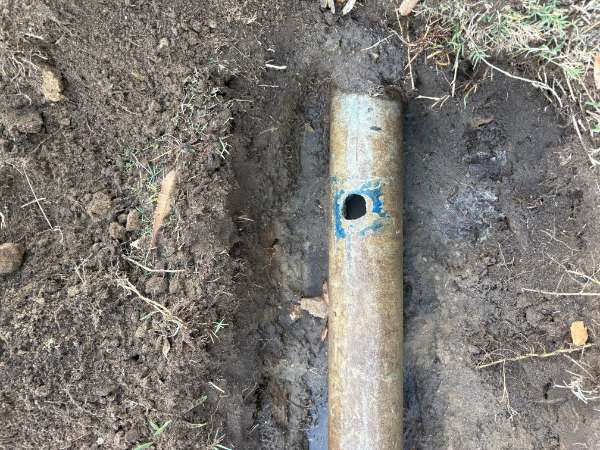
The problem: a Maroubra home's lower level flooded in every heavy storm because the old stormwater pipe couldn't carry the water away.
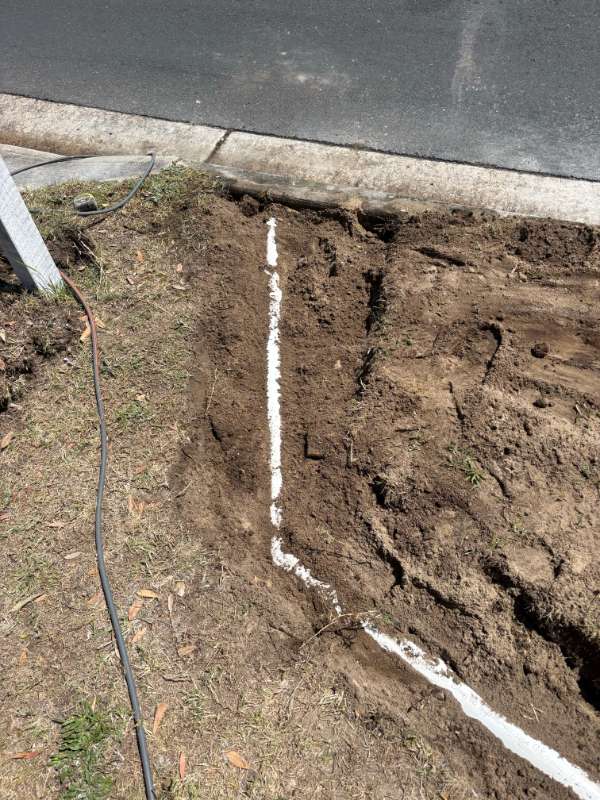
What we did: we trenched from the existing stormwater pipe to the street, uncovered the old pipe, which had rusted through, connected a new PVC line, cored through the kerb for a new outlet and backfilled the nature strip.
The result: water now flows away through the new line and outlet instead of collecting against the house.
Stormwater investigated, mapped and cleared, Matraville (nearby)
The problem: a Matraville home's stormwater wasn't coping, and the owners wanted to know where the pipes went and why the yard kept flooding.
What we did: we cleaned out every stormwater pit we could reach, ran our camera through the system to map the pipes, their direction, connections and condition, and jetted the pipework to clear debris. We drew up a basic stormwater diagram and cameraed the sewer as well.
The result: the owners got a clear picture of their system and our recommendations, and we followed up with a quote for a new system to collect all the downpipes into a seepage pit with a pump discharging to the street.
More local work is on our recent projects page.
Quick fix or long-term fix?
| Problem | Quick fix | Long-term fix |
|---|---|---|
| Pits full of sand | Dig out and jet | Baskets, geofabric and a cleaning routine |
| Courtyard floods | Clear the drains | Add a pit or bigger strip drain at the low point |
| Cracked line | Clear it | Reline or replace |
| Blocked kerb outlet | Clear it | Replace a broken outlet |
What affects the cost
- How much needs clearing.
- Length of any new pipe.
- What's on top: paving, concrete, garden.
- Relining versus digging.
You get a fixed price for each option before any work starts.
Who's responsible?
- You: gutters, downpipes, pits and pipes on your property, out to the kerb outlet.
- Apartments: shared pits and lines belong to the building.
- Randwick City Council: the street gutter, kerb and council drains.
Quick checks you can do
- Lift each pit grate and look for sand and leaves.
- Check strip drains at doors.
- Watch where water goes in rain.
- Check downpipes are connected at the bottom.
Signs it's urgent and when it can wait
- Call straight away if water is coming inside.
- Call soon if the courtyard floods every storm.
- Book a time if pits need a clean before storm season.
Little Bay, area by area
- The Prince Henry estate: courtyard homes, townhouses and apartments with pits and strip drains from the early 2000s.
- The older 1950s streets: older stormwater lines and kerb outlets, with roots from mature trees.
- Near Little Bay Beach and the rock pool: homes where wind-blown sand fills pits fastest.
- Around St Michael's and The Coast golf courses: leaves and sand from open ground.
- Towards Henry Head and Malabar: exposed streets that take the brunt of coastal storms.
- Next door in Chifley, Malabar and La Perouse: the same sandy ground and the same jobs.
Strip drains at sliding doors
Many Prince Henry estate homes and townhouses have a sliding door opening onto a paved courtyard, with a narrow strip drain across the threshold. In a heavy storm, that drain is all that stops water coming inside. Its grate clogs with leaves, the channel fills with sand, and its outlet can be too small for the paving that now drains to it. We lift the grate, clean the channel and the outlet, jet the line, and test it with a hose. If it's undersized, we'll give you options: a wider drain, a second outlet, or a pit at the low point.
Courtyard pits that have been covered
When courtyards are re-paved or planters added, pits sometimes end up under pavers, behind pots or set higher than the new surface, so water can't reach them. If your courtyard started flooding after paving work, look for a pit that's been covered. We find buried pits with the camera, raise them to the right level and fit a new grate.
Downpipes
Every downpipe should connect into the stormwater system at its base, through a fitting that can be cleaned. In Little Bay, leaves and sand from the gutters wash down and block the bend at the bottom, and the downpipe overflows at the base, soaking the wall and the slab edge. We clear blocked downpipes and their lines, reconnect any that have come loose, and replace broken sections. See blocked downpipes.
Stormwater and the bay
Stormwater isn't treated. Whatever goes into a courtyard pit in Little Bay, whether leaves, sand, soil, soap from washing the car or paint from cleaning brushes, ends up in the ocean around Little Bay Beach and the rock pool. Keeping pits clean and fitted with baskets, washing cars on the lawn rather than the driveway, and never tipping paint, oil or chemicals into a pit all help keep the water clean for everyone who swims there.
Clearing a blocked stormwater line, step by step
- We find every pit, strip drain and downpipe connection, and the outlet at the kerb.
- Pits are emptied of sand and leaves.
- The jetter goes into the line from a pit or the kerb outlet and works through the blockage, washing sand and debris out.
- The camera goes through to check for cracks, roots, dips and broken joints.
- We run water through the system with a hose to make sure it drains to the street.
- If repairs are needed, you get options with a fixed price for each.
Kerb outlets
Your stormwater usually leaves the property through a pipe under the footpath to an outlet in the kerb. Sand and leaves from the street gutter can block it from outside, and old outlets can break or be crushed by cars parking over them. On the Maroubra job above, we trenched to the street, replaced a rusted-through pipe with PVC and cored a new kerb outlet. The outlet pipe is the owner's; the kerb and gutter are Randwick City Council's.
Pump-out pits for homes below the street
Some homes on sloping ground sit lower than the street, so stormwater can't drain to the kerb by gravity. They need a pump-out pit: a sump that collects water and a pump that lifts it to the street. Pumps fail, floats stick and pits fill with sand. If your home has one, test it before storm season by filling the pit with a hose and checking the pump starts. On the Matraville job above, the recommended fix was a seepage pit with a submersible pump discharging to the street.
Balcony drains in apartments
Apartment balconies on the Prince Henry estate drain through small floor outlets or spouts. When pot plant soil, leaves or sand block them, rain pools on the balcony and can run under the sliding door. Keep the outlet clear, and lift pots onto feet so soil doesn't wash into it. If the outlet is blocked deeper down, we can clear it. A blocked shared line below the balcony is for whoever looks after the building.
Water against the slab
Most Prince Henry estate homes sit on concrete slabs. When paving falls towards the house, a garden bed is built up against the wall, or a downpipe spills beside it, water sits against the edge of the slab. Over time it can cause damp inside, mould on skirting boards and damage to the slab edge. The fix is to move the water away: regrade or drain the paving, connect downpipes properly and add a pit or ag line where water collects.
Ag lines and subsoil drainage
On sandy ground, water usually soaks away quickly, but behind retaining walls and along the high side of homes on sloping blocks, it can build up. An ag line, a slotted pipe in gravel wrapped in geofabric, collects that groundwater and carries it to the stormwater. Over the years, sand gets into ag lines that weren't wrapped properly and they stop working. We can camera and flush them, or replace them with properly wrapped lines.
What to photograph in a storm
- Where water collects and how deep it gets.
- Pits and strip drains overflowing.
- Gutters and downpipes spilling.
- Water coming under doors.
- Sand washed across the paving afterwards.
Photos or a short video help us find the cause even if it's dry when we arrive.
Leaf and sand baskets
A basket inside a pit catches leaves and much of the sand before it reaches the pipe. Emptying it takes a minute, while digging out a full pit and jetting the line takes much longer. On homes near the beach and the golf courses, baskets and geofabric under grates make a real difference. They need emptying after windy weather and before storms, but the pipes stay clear.
Relining stormwater pipes
If the camera shows a cracked or root-damaged stormwater line that still holds its shape, it can often be relined from the inside instead of dug up. That's useful under paving, driveways and established gardens. If a section has collapsed or sagged, it needs replacing. See pipe relining in Little Bay.
A stormwater care calendar
- Before storm season: clean gutters, empty pit baskets, clear strip drains and check downpipes.
- After windy weather: check pits on the beach side of the house for sand.
- After big storms: look for pools that didn't drain and sand washed out of pits.
- Every year: test any pump-out pit.
- Every few years: camera older lines in the 1950s streets.
Stormwater words explained
- Pit: a box in the ground with a grate that collects water.
- Strip drain: a narrow grated channel across a doorway or driveway.
- Kerb outlet: where your pipe lets water into the street gutter.
- Ag line: a slotted pipe that collects groundwater.
- Pump-out pit: a sump with a pump for homes below the street.
- Geofabric: fabric that lets water through but holds back sediment.
Our Priority Plan
Our Priority Plan gives you 10% off for the year, a free annual plumbing health check and priority booking. The yearly check is a good time to look at pits, strip drains and downpipes before storm season. See our Priority Plan.
Fixing a flooding courtyard, step by step
- We look at photos of the flooding and walk the courtyard to find the low point, every pit, every strip drain and where the downpipes connect.
- Each pit and drain is cleaned out, and water is run through to see where it goes and how fast.
- The camera goes through the lines to check for sand, roots, breaks and dips.
- If the system is clear but still can't cope, we look at the paved area it serves and whether the drains are big enough.
- You get options with a fixed price: clearing and baskets, a bigger strip drain, an extra pit at the low point, or a new line to the street.
- Once it's fixed, we test it with a hose, and suggest a cleaning routine to keep it working.
Chifley, La Perouse and Phillip Bay
We fix stormwater across this corner of the Eastern Suburbs. Each neighbour has its own page: stormwater in Chifley, La Perouse and Phillip Bay.
Before you pave or build
Planning new paving, a deck, a pergola or an extension? Plan the stormwater at the same time: pits at the low points, paving that falls away from doors, downpipes connected properly and room for the water from the new hard surface. It's much cheaper to put the drainage in before the paving goes down than to lift it later.
Sand under paving
On Little Bay's sandy ground, a cracked stormwater pipe or a leaking pit can wash sand away from under paving and slabs. The first signs are pavers that sink or rock, cracks in a concrete path, or a hollow sound when you tap the surface. Fixing the pipe stops more sand washing away; the paving can then be lifted, re-bedded and relaid. If you notice paving dropping near a pit or along a pipe line, have the stormwater checked before the hole gets bigger.
We'll also check that the pit grates sit flush with the relaid paving, so water can get into them, and that the new surface falls towards the pits rather than the house.
Why Little Bay homeowners call us
- Based in Matraville, a few minutes from Little Bay
- Rated 5.0 from 110 Google reviews
- Free quotes, with options and a fixed price before any work starts
- Lifetime labour warranty on our workmanship
- Licensed plumbers, drainers and gasfitters (Lic. 398171C)
Stormwater questions from Little Bay homeowners
My courtyard floods in heavy rain. What causes it?
Usually a blocked grate or pit, or a line partly full of sand and leaves. Sometimes the drain is simply too small for the paved area. We clear it, check the line with a camera and tell you if a bigger grate or another pit is needed.
Why is there sand in my stormwater pipe?
In sandy suburbs like Little Bay, Chifley and Phillip Bay, sand washes into pits and gets into older pipes through cracked joints. Clearing it helps, and repairing the joints stops it coming back.
How often should I clean my stormwater pits?
Check them at least once a year, ideally before storm season, and after big storms. Homes near the beach, the golf courses and the headlands may need it more often because of wind-blown sand and leaves.
My downpipe just runs into the garden. Is that allowed?
Downpipes should connect to the stormwater system that drains to the street or an approved system. Letting them run into the garden can undermine paths and footings and flood the neighbours. We can connect them properly.
Do you use a camera on stormwater lines?
Yes. A CCTV drain camera shows what's inside the pipe so we only dig where we need to.
Can you come today?
We offer same-day service. Tell us if water is coming inside.
Water comes under my sliding door. What can I do?
Clear the strip drain and check its outlet. If it's too small, we can fit a bigger one or add a pit.
Can a cracked stormwater pipe be relined?
Often yes, if it still holds its shape.
Who looks after the kerb outlet?
The outlet pipe is yours; the gutter and kerb are council's.
Can you add a pit to my courtyard?
Yes, at the low point, connected to your system.
Will you put the paving back?
We lift and relay pavers where we can, and tell you beforehand if any need replacing.
Do you give a fixed price?
Yes, before any work starts.
More plumbing in this area: our Little Bay plumber and Chifley plumber pages, plus blocked drains, hot water, gas fitting and leak detection in Little Bay. See all our stormwater services and backyard drainage. We also fix stormwater in nearby Malabar, Chifley and Matraville.