Stormwater plumbing in Pagewood 2035
Pagewood is mostly gentle, sandy ground, and that's both a help and a trap when it comes to rain. Sand soaks water away well until a pit fills with it, a pipe cracks and lets it in, or a slab and paving cover the ground it used to soak into. Add mature street trees, gutters full of leaves and decades-old stormwater pipes, and a heavy downpour can leave water sitting against the house. We're based in Matraville, the next suburb south-east, and sort out Pagewood stormwater from the downpipe to the kerb.
Stormwater problems we fix in Pagewood
Blocked downpipes
Downpipes cleared from the gutter to the pit, and broken or disconnected ones repaired.
Pits and grates
Sand, leaves and silt cleaned out, and broken or undersized pits replaced.
Cracked stormwater lines
Cracked and root-damaged pipes found with a camera and repaired or relined.
Pooling yards
New grated drains, pits and pipes to get water away from paths, patios and the house.
Kerb outlets
Blocked, crushed or rusted kerb outlets replaced so water reaches the gutter.
Downpipes into the sewer
Illegal connections found and moved to the stormwater system.
Signs your stormwater isn't coping
- Gutters overflowing at one corner in heavy rain, even though they look clear.
- Water bubbling up out of a pit or the base of a downpipe instead of flowing away.
- Puddles that sit for hours on the patio, the side path or the lawn after rain.
- Water against the house, damp in the subfloor, or a wet garage after storms.
- A pit that fills with sand within months of being cleaned.
- Nothing coming out at the kerb when it's pouring, or water seeping out of the footpath instead.
- The overflow gully spilling when it rains, which can mean rainwater is getting into the sewer.
Why stormwater fails in Pagewood
Sand in the pipes
Sand is good at soaking up rain, but it's bad news inside a pipe. Older stormwater lines in Pagewood were often laid in short lengths of clay or concrete pipe, and as the joints open over the decades, sand washes in every time it rains. It settles where the water slows down, in pits, bends and flat sections, until the pipe is half full. Cleaning it out helps, but it comes back unless the cracked joints are sealed.
Old pipes, older downpipes
Many homes from the Monash Gardens estate days and the post-war streets still have their original stormwater system: a few downpipes into a pipe that runs along the side of the house to the street. Some of those pipes are rusted steel or cracked clay, and some downpipes have been disconnected and just drain onto the ground. When we camera the line, we often find it's not one problem but several.
Hard surfaces that used to be lawn
Over the years a lot of Pagewood front and back yards have gone from lawn to concrete, pavers and driveways. The water that used to soak into the sand now runs straight off, and the original pipes weren't sized for it. Patios laid with the wrong fall send water towards the house instead of away from it.
Trees, leaves and the nature strip
Mature trees in Pagewood's streets and gardens fill gutters, grates and pits with leaves, and their roots find their way into cracked stormwater pipes just as they do with sewers. Leaf guards and a regular clean of the pits make a big difference.
Kerb outlets that have had a hard life
The kerb outlet is where your stormwater pipe comes out into the street gutter. Older ones are often rusted steel, crushed by cars parking over them or blocked with sand from the gutter. If the outlet is blocked, everything behind it backs up.
Pagewood homes and their stormwater
| Home type | Typical system | Common problems |
|---|---|---|
| 1920s bungalows in the north of the suburb | A few downpipes into clay or steel pipe to the kerb | Sand-filled lines, rusted kerb outlets, disconnected downpipes |
| Post-war brick homes off Page Street and Dudley Street | Clay or early PVC pipe along the side of the house | Root entry, cracked joints, pits too small for the roof area |
| Homes with big backyards near Bonnie Doon | Long runs from the back of the block to the street | Flat pipes that hold sand, patios draining towards the house |
| Rebuilds and duplexes | New PVC system, sometimes with a detention tank | Blocked grates and pits, outlets and tanks not maintained |
| Townhouses near Wentworth Avenue | Shared stormwater with pits in common driveways | Shared pits blocked by leaves; private downpipes yours to fix |
How we fix stormwater problems
- Look in the rain, or after it. Photos or a short video of where water goes in heavy rain tell us a lot. If you can, take some next time it pours.
- Trace the system. We find every downpipe, pit and grate and work out where each one goes.
- Clear and camera. We jet the line to clear sand and leaves, then run a camera through to find cracks, roots, sags and broken joints.
- Give you options with a fixed price for each, such as a clean and repair, relining a cracked section, replacing a run, or adding new pits and drains.
- Do the work, with PVC stormwater pipe laid at the right fall, pits sized for the area they drain, and the yard put back.
- Test it. We run water through the system with a hose to check every downpipe and pit drains freely.
Quick fix or long-term fix?
| Problem | Quick fix | Long-term fix |
|---|---|---|
| Pit full of sand | Clean it out | Seal the cracked pipe letting sand in |
| Downpipe overflowing | Clear the blockage | Replace a crushed or undersized downpipe connection |
| Patio pooling | Sweep water away | Regrade or add a grated drain at the low point |
| Kerb outlet blocked | Clear the outlet | Replace a rusted or crushed outlet |
| Roots in the line | Cut them out | Reline the section or replace the pipe |
| Water against the house | Divert it with a hose or sandbags | A new pit, drain or pipe to carry it away |
What affects the cost
- The length of pipe to clean, repair or replace.
- What's on top of it: lawn, garden, pavers, concrete or a driveway.
- How many pits and downpipes are involved.
- Whether relining can avoid digging up concrete.
- The kerb outlet, if work in the footpath or kerb is needed.
- Making good afterwards.
You get a fixed price for each option before any work starts.
Who's responsible?
- You (the homeowner): gutters, downpipes, pits and pipes on your property, out to and including the kerb outlet connection.
- Bayside Council: the street gutter, the public stormwater pits and pipes, and the footpath and nature strip. Work in the footpath or kerb needs council approval.
- Sydney Water: some of the larger stormwater channels and trunk drains. If a big drain or channel is blocked, they or the council look after it.
- Neighbours: if water from next door is flowing onto your property, it's usually a matter for the two owners, and sometimes the council.
Quick checks you can do
- Look at the gutters from the ground on a dry day. Plants growing out of them or a sag at one end means they need attention.
- Lift the grate on each pit and look in. Sand or leaves more than a few centimetres deep means it's due for a clean.
- Run a hose into each downpipe from the ground pit end and see if it drains.
- Find your kerb outlet in the street gutter and make sure it isn't blocked with sand or crushed.
- Next time it rains hard, walk around with an umbrella and see where water pools and which downpipes overflow.
Signs it's urgent and when it can wait
- Call us straight away if water is coming into the house, the garage or near electrics, or the overflow gully is spilling sewage in the rain.
- Call soon if water sits against the house after every storm or a downpipe pours onto the wall.
- Book a time if pits keep filling with sand, a patio pools, or you want to check the system before summer storms.
A recent stormwater job nearby
Here's a recent stormwater job nearby in Maroubra, a few minutes east of Pagewood.
New stormwater line and kerb outlet, Maroubra (nearby)
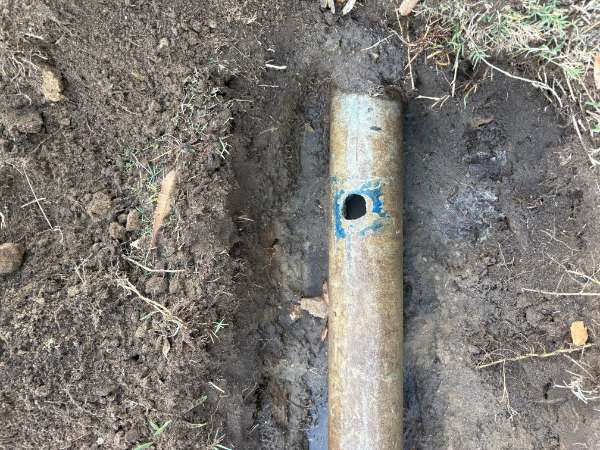
The problem: the lower level of a Maroubra home flooded every time it rained heavily, because the old stormwater pipe couldn't get the water away fast enough.
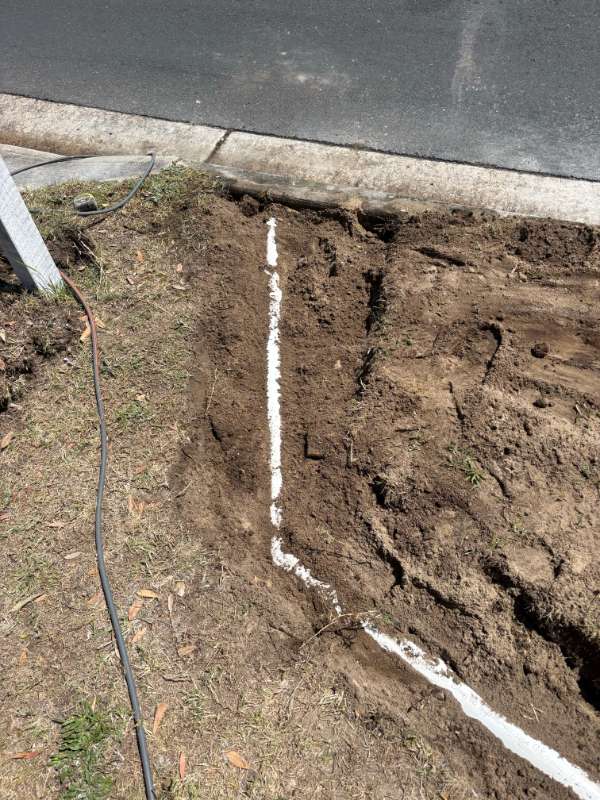
What we did: we dug a trench from the existing stormwater pipe to the street, uncovered the old pipe, which had rusted through, connected a new PVC line, cored through the kerb so the water discharges into the gutter, and backfilled the nature strip.
The result: the water now leaves the property through the new line and kerb outlet instead of building up against the house.
More local work is on our recent projects page.
“Best plumber in Matraville. Unblocked my drains efficiently!”
C S, Matraville (Google review)
Stormwater across Pagewood, area by area
- The northern streets by Astrolabe Park: the oldest stormwater systems in the suburb, with clay and steel pipes and rusted kerb outlets.
- Around Page Street and the school: post-war homes with side-of-house stormwater runs, many now under paths and driveways.
- The Dudley Street end: older cottages next to rebuilds, where new paving has changed how water runs off.
- Near Bonnie Doon Golf Club: larger blocks with long, flat runs from the back yard to the street.
- Towards Wentworth Avenue and Eastgardens: newer homes with detention tanks and shared pits that need regular cleaning.
Detention tanks on newer homes
Some newer Pagewood homes, duplexes and townhouses were built with an on-site detention tank or pit. It holds back stormwater in heavy rain and lets it out slowly through a small outlet, so the street drains don't get overwhelmed. It only works if it's kept clean. The outlet and its screen can block with leaves and silt, and then the tank fills and overflows into the yard. If your home has one, it should be inspected and cleaned regularly. We can find it, clean it and check the outlet is working. Don't remove or modify one without checking with Bayside Council, as it's usually a condition of the home's approval.
Downpipes connected to the sewer
In some older Pagewood homes, a downpipe or a yard drain was connected to the sewer instead of the stormwater. In heavy rain, that floods the sewer and can push sewage out of your overflow gully or a neighbour's. It's not allowed, and it's worth fixing. We find these with a dye test or a camera and reconnect them to the stormwater system. See downpipes into the sewer.
Before you pave or build
Planning a new driveway, patio, pool or extension? Think about where the rain will go. Every square metre of new hard surface sends water somewhere, and in a sandy suburb like Pagewood it used to soak in. Get the stormwater planned with the work: pits at the low points, falls away from the house, and pipes big enough for the new roof and paved area. It's far cheaper than fixing a pooling problem after the concrete is poured. See stormwater pit installation and backyard drainage.
A stormwater care calendar
- Late spring, before storm season: clean gutters, check leaf guards, and clean out every pit.
- After a big storm: check the pits and the kerb outlet for sand and leaves.
- Autumn: clean gutters again once the leaves have dropped.
- Every year or two: camera the main stormwater line if pits keep filling with sand.
- Any time you add paving: check where the water will go.
Stormwater words explained
- Downpipe: the vertical pipe that carries water from the gutter to the ground.
- Pit: a box in the ground with a grate that collects water and connects to the pipes.
- Kerb outlet: where your stormwater pipe comes out into the street gutter.
- Fall: the slope a pipe or paved area needs so water runs the right way.
- On-site detention: a tank or pit that holds stormwater and releases it slowly.
- Grated drain: a long, narrow drain with a grate, often across a driveway or patio.
Gutters and leaf guards
Most stormwater problems start at the roof. A gutter that's full of leaves can't feed the downpipe, so it overflows along the fascia and drops water straight beside the wall, where it soaks the subfloor or splashes up against the bricks. On Pagewood streets lined with mature trees, gutters can fill in a single season. Leaf guards help, but they aren't set-and-forget: fine debris still gets through and leaves pile up on top. A clean before storm season and again after the autumn drop keeps most homes out of trouble.
Where a downpipe meets the ground, check the connection. We often find downpipes that have come loose from the pipe below, been knocked sideways by a mower, or end in a rusted elbow that leaks into the garden bed. Fixing that one joint can stop water pooling beside the house.
Replacing a kerb outlet, step by step
- We find the existing pipe on your property and follow it to the kerb, often under the front lawn or the driveway edge.
- We check what approval Bayside Council needs for work in the footpath and kerb, and arrange it before digging there.
- We dig a trench across the nature strip, keeping clear of other services after checking where they run.
- The old outlet is removed, a new opening is cored through the kerb, and a new outlet and PVC pipe are fitted.
- The new pipe is laid at the right fall back to your property and joined to your stormwater line.
- We run water through to check it flows, backfill, and reinstate the nature strip and footpath.
It's usually a one or two day job, and it makes a big difference on homes where the old outlet had rusted shut or been crushed.
Rainwater tanks and stormwater
A rainwater tank catches roof water before it reaches the stormwater, which takes some load off the pipes and gives you water for the garden, toilets or laundry. The tank's overflow still has to go somewhere, and it should be connected to the stormwater system, not left to pour onto the ground beside the house or a neighbour's fence. If you're adding a tank, we can connect the overflow properly and, if you'd like, plumb the tank to the toilets or a garden tap. Keep the first-flush diverter and the tank inlet screen clean so leaves don't end up in the tank.
Water in the garage or under the house
Many Pagewood homes have a garage at the end of a driveway that slopes slightly towards it, or a timber subfloor that sits only a little above the yard. In a heavy storm, water running down the driveway or across the yard heads straight for those low spots. The fix is usually simple: a grated drain across the driveway in front of the garage, a pit at the low corner of the yard, or a regraded path that sheds water away from the walls, all connected to a pipe big enough to carry it. Keeping water out from under the house also keeps the subfloor dry, which is better for the timber and stops musty smells.
What to photograph next time it rains
- Gutters overflowing, and which corner of the roof.
- Downpipes spilling at the joint or not draining at the pit.
- Where water pools and how deep it gets.
- The kerb outlet: is water coming out, or seeping out of the footpath?
- Water coming onto your property from next door or the street.
A few photos or a short video taken in the rain help us find the cause quickly, especially if it's dry by the time we visit.
Soaking water into the sand: when it works and when it doesn't
On a sandy block, it can seem simplest to let stormwater soak into the ground on site through a pit with an open base or a trench of gravel. It can work for a small area such as a garden shed roof or a short path, and some approved homes were built with that kind of system. But it has limits. A soakage pit fills with silt and leaves over time and stops absorbing. In a long wet spell, the sand around it is already saturated and the water has nowhere to go. And a pit too close to the house sends water exactly where you don't want it, under the floor or against the footings.
For the main roof and paved areas, a pipe to the street is usually the reliable answer. If your home has a soakage system that's stopped working, we can check whether it can be cleaned and restored or whether the water should go to the kerb instead. Any change to an approved stormwater design should be checked with Bayside Council first.
What happens when you call
Tell us what's going on
Call or send a quick form. A photo of the problem helps us come prepared. No call-out fee.
Options and a fixed price first
We find the cause, explain your options and give you a fixed price for each before any work starts.
Fixed, tested and backed
We do the work, test it, clean up, and back our workmanship with a lifetime labour warranty.
Jobs we finished recently
Why Pagewood homeowners call us
- Based in Matraville, a few minutes from Pagewood
- Rated 5.0 from 110 Google reviews
- Free quotes, with options and a fixed price before any work starts
- Lifetime labour warranty on our workmanship
- Licensed plumbers, drainers and gasfitters (Lic. 398171C)
Stormwater questions from Pagewood homeowners
Why does my stormwater pit keep filling with sand?
Sand is washing into the pipe through cracked or open joints. Cleaning helps, but sealing or replacing the damaged section stops it coming back.
Who is responsible for the kerb outlet?
The pipe and outlet from your property are yours. The gutter and footpath are Bayside Council's, and work in them needs approval.
Can you fix water pooling on my patio?
Yes. We find the low point and add a grated drain or pit, or regrade it so water runs away from the house.
Is it legal to have my downpipes going into the sewer?
No. Stormwater must go to the stormwater system. We can find and reconnect them.
Do I need a camera inspection for stormwater?
If pits keep filling or water backs up, yes. It shows cracks, roots and sags so we fix the right part.
Can a stormwater pipe be relined?
Yes. Relining seals cracked sections from inside, which stops sand and roots getting in without digging.
How often should I clean my pits?
At least once a year before storm season, and after big storms if you have a lot of trees.
My home has a detention tank. Does it need maintenance?
Yes. The outlet and screen block with leaves and silt. It should be inspected and cleaned regularly.
Water from next door floods my yard. What can I do?
Talk to your neighbour first. We can work out where the water is coming from and what would stop it on your side.
How long does a stormwater repair take?
A clean and small repair is often done in a few hours. A new line to the kerb can take a day or two.
Can you add a drain across my driveway?
Yes. A grated drain across the driveway connected to the stormwater system catches water before it reaches the garage.
Will you put my lawn and pavers back?
Yes. We backfill, relay pavers and leave the area tidy.
More plumbing in Pagewood: our Pagewood plumber page, blocked drains, leak detection, gas fitting and hot water. Nearby: stormwater in Matraville and Maroubra. Guides: stormwater plumbing, backyard drainage and blocked downpipes.