Gas fitting in Kensington 2033
Kensington runs along Anzac Parade between Moore Park and Kingsford, and its gas work reflects its homes. In a terrace or semi, the meter is at the front and the kitchen and hot water are at the very back, often in a later extension, so the gas line is long and has been added to over the years. Federation and interwar houses on the tree-lined streets still have heater bayonets in the living rooms, and the unit blocks along the light rail have banks of meters and older lines. We come up from Matraville and handle the lot.
Gas work we do in Kensington
Cooktops and ovens
New and replacement gas cooktops and ovens connected, tested and certified.
Heater bayonets
Bayonets repaired, moved, added or capped in living rooms and bedrooms.
Gas hot water
Storage and continuous flow systems connected, with the gas supply sized to suit.
Long gas runs
Lines to the back of terraces and extensions checked, extended or upsized.
Gas leak checks
Pressure tests to find and fix leaks on your side of the meter.
Capping off
Old gas points and appliances safely disconnected and capped.
Signs you need a gasfitter
- You can smell gas near an appliance, the meter or a bayonet.
- Cooktop flames are yellow or lazy instead of blue.
- Hot water goes cold when the cooktop or heater is on.
- A heater won't stay lit, or the pilot keeps going out.
- The bayonet is loose, cracked or hard to connect.
- Soot or scorch marks around an appliance or flue.
- A new appliance needs connecting.
- You're going electric and need gas capped off.
Why gas jobs come up in Kensington
Long runs in terraces and semis
On a narrow terrace block, the gas meter is at the front and the kitchen, laundry and hot water are often at the very back. The line runs down the side passage or under the floor, and over the decades it has often been extended for a new kitchen or a back extension. A long, narrow line can struggle to supply a modern cooktop and continuous flow hot water at the same time.
Old galvanised gas pipe
Many older Kensington homes still have their original galvanised steel gas pipe. Over time it corrodes, especially where it runs through damp subfloors or along the outside of the house. Joints that were fine for decades can start to weep.
Heater bayonets in older homes
Federation and interwar houses here were often fitted with gas bayonets in living rooms and bedrooms for portable heaters. Some are still used every winter; others haven't been touched in years. Old bayonets can leak, stick or be in the wrong spot for how the room is used now.
Hot water in tight spaces
Gas hot water in Kensington is often squeezed into a laundry cupboard, a side passage barely wider than the unit, or a corner of a back extension. Replacing it means checking flue clearances, ventilation and the gas supply as well as the space.
Unit blocks and meter banks
The older walk-ups and newer apartments along Anzac Parade and the light rail usually have a bank of gas meters, one per unit, with separate lines running up the building. Knowing which meter and line is yours matters before any work starts.
Kensington homes and their gas
| Home type | Typical gas | Common jobs |
|---|---|---|
| Terraces and semis | Meter at the front, long line to the back | Supply too small, line extensions, hot water swaps |
| Federation and interwar houses | Galvanised pipe, heater bayonets | Leaking bayonets, corroded pipe, cooktop swaps |
| Older unit blocks | Meter bank, lines up the building | Identifying meters, cooktop connections |
| Newer apartments | Continuous flow hot water, cooktops | Appliance swaps, error codes |
| Shared houses near UNSW | Heavily used cooktops and hot water | Hot water supply, appliance faults |
How a gas job runs
- Talk it through: the appliance, the problem and what you'd like to do.
- Check the supply: meter, regulator, pipe size and route.
- Pressure test your side of the meter for leaks.
- Give you options, each with a fixed price, before any work starts.
- Do the work: connect, repair, extend or cap off.
- Test and commission the appliance and check the flames and flue.
- Lodge the paperwork: a certificate of compliance, as required in NSW.
Repair, extend or new line?
| Situation | Usual fix |
|---|---|
| Leaking joint or bayonet | Repair or replace the fitting |
| New cooktop or oven | Connect to the existing point |
| Bayonet in the wrong spot | Move it or add a new one |
| Hot water and cooktop starving each other | Upsize the line or regulator |
| Corroded galvanised pipe | Replace the affected section with copper |
| Appliance no longer used | Disconnect and cap off |
What affects the cost
- The type of job: a connection, a repair, an extension or a new line.
- Pipe length and route, especially in long terraces.
- Access under floors, in tight laundries and in unit blocks.
- The appliance, if we're supplying it.
- Upgrades needed, such as a larger regulator or line.
You get a fixed price for each option before any work starts.
Who's responsible?
- You: gas pipes and appliances on your side of the meter.
- Owners corporation: shared gas pipes in a block of units.
- The gas network: the meter and the supply to it.
Safety checks you can do
- Look at the flames: they should be blue and steady.
- Check for soot or scorching around appliances and flues.
- Make sure vents in rooms with gas heaters aren't blocked.
- Know where your meter and shut-off valve are.
Signs it's urgent and when it can wait
- Call the gas network straight away if you smell gas strongly. Turn off the gas at the meter if it's safe, open windows, and don't use switches or flames.
- Call soon if flames are yellow, an appliance keeps going out or you can smell gas faintly near a fitting.
- Book a time if you need a new cooktop connected, a bayonet moved or old gas capped.
A recent gas job nearby
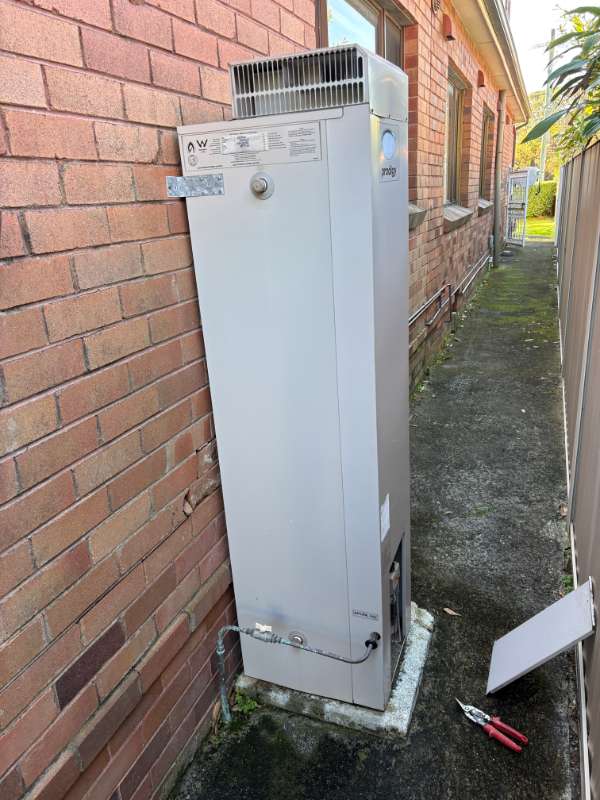
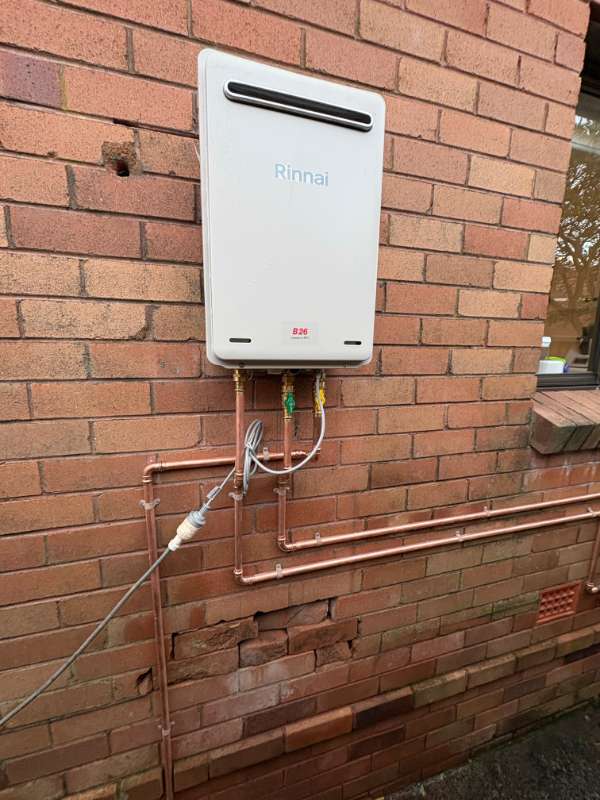
Here's a recent gas hot water job nearby in Maroubra, where an old tank was replaced and the gas supply upgraded to suit the new unit.
Old gas tank replaced with continuous flow, Maroubra (nearby)
The problem: the gas storage tank down the side of a Maroubra home had stopped sending hot water to the taps.
What we did: we explained repair against replacement and the systems that would suit, and the owners chose a Rinnai continuous flow unit. We removed the old tank, mounted the new unit on the wall, upsized the copper pipework, and replaced the gas regulator at the meter so the new system gets enough gas.
The result: reliable hot water at every tap, on a gas supply sized for the new unit.
More local work is on our recent projects page.
“Great plumber, fixed my leaking taps quickly and at a great price!”
Tom (Google review)
Gas across Kensington
- Along Anzac Parade and the light rail: unit blocks and apartments with meter banks.
- Towards Moore Park and Centennial Park: Federation and interwar houses with heater bayonets and older pipe.
- On the side streets: terraces and semis with long lines to kitchens at the back.
- Near UNSW: shared houses where cooktops and hot water get heavy use.
- Towards Kingsford: interwar and post-war homes with older gas hot water.
Long gas lines to the back of a terrace
In a Kensington terrace, the gas has a long way to travel from the meter at the front to the kitchen and hot water at the back. Many of these lines were sized decades ago for a stove and maybe a small heater. Add a modern cooktop and a continuous flow hot water unit, and the line can't deliver enough gas for both at once. The signs are hot water that goes lukewarm while someone cooks, or a cooktop that drops when the hot water fires. We measure the line, work out the load and give you options: upsizing the line, running a new one along a better route, or changing the regulator at the meter.
Old galvanised gas pipe
Galvanised steel was the standard for gas pipe for decades. In Kensington's older homes it often runs under the floor or along the side of the house, and after many years it corrodes, particularly where it's been in contact with damp soil or concrete. A pressure test shows whether the line is holding. Where a section is corroded or leaking, we replace it with copper, and where the whole line is near the end of its life, we'll tell you and give you the option of replacing it.
Cooktops and ovens
Connecting a new gas cooktop or oven needs a licensed gasfitter. We check the existing point, connect the appliance, test for leaks and adjust it so the flames burn clean and blue. If the kitchen has moved, or you're going from an upright stove to a separate cooktop and oven, we can relocate or add a gas point. In older kitchens, we also check the shut-off valve and the line back to the meter.
Heaters and bayonets
Many Kensington homes still have gas bayonets for portable heaters, especially in the Federation and interwar houses near Centennial Park. A bayonet that leaks, sticks or won't accept the heater's plug needs replacing. If you'd like a bayonet in a different room or in a better spot, we can move it or add a new one. Gas heaters need ventilation, so we check the room before connecting. See gas point installation.
Gas hot water in tight laundries
In Kensington, gas hot water is often in a laundry cupboard, a side passage or a corner of an extension. When a storage tank fails, the replacement has to fit the space and meet flue and ventilation clearances. Sometimes a continuous flow unit on an outside wall is the better option, freeing up the cupboard altogether. We measure the space, check the gas supply and give you options. See hot water in Kensington.
Continuous flow hot water
Continuous flow gas units heat water as you use it, so you don't run out. They need a bigger gas supply than a storage tank while they're running, which is why the line and regulator often need upgrading when one is fitted. If your unit shows an error code, note the code and the brand when you call. Common causes are a gas supply problem, a flue issue or a faulty part.
Supply sizing
Every gas appliance needs a certain amount of gas to work properly. Add up the cooktop, oven, hot water and heaters, and the line from the meter has to carry the total when they're all on. In older Kensington homes the pipe is often smaller than modern appliances need, especially over a long run. We work out the load and size the line to suit, so every appliance gets enough gas.
Why the regulator matters
The regulator at the meter controls the gas pressure going into your home. If it's too small or faulty, appliances can struggle even when the pipe is big enough. When we add a large appliance like continuous flow hot water, we check the regulator and replace it if needed, as in the Maroubra job above.
Gas in unit blocks
In Kensington's unit blocks, each unit usually has its own meter in a bank near the entry or in a meter room. Lines run up the building to each unit. Before any work, we make sure we're working on the right meter and line. The pipes inside your unit are generally yours, while shared pipes are usually the owners corporation's. If we find a problem in a shared line, we give you a note to pass on.
Gas or induction?
Some Kensington homeowners are weighing up gas against induction. If you're keeping gas, we can connect a new cooktop. If you're switching to induction, we can cap off the gas to the kitchen safely and, if you're going fully electric, cap off the supply to the house. We'll explain what's involved so you can decide.
Gas heaters and ventilation
Unflued gas heaters need fresh air to burn safely, and the room needs the right vents. In older homes, vents are sometimes painted over or blocked. We check ventilation before connecting a heater and tell you if anything needs changing. Have gas heaters serviced regularly, as recommended by the manufacturer.
Before you call
- Note the appliance brand and model.
- Note any error code on a hot water unit.
- Tell us where the meter is, and in a unit block, your unit number.
- Tell us about access: side passages, parking and stairs.
Buying a home in Kensington?
In an older home, a gas check before you buy is worth considering. We can pressure test the lines, check the appliances and bayonets, and tell you what's in good shape and what might need attention.
Looking after gas appliances
- Have gas appliances serviced as the manufacturer recommends.
- Keep vents clear in rooms with gas heaters.
- Watch the flames: blue and steady is good.
- Don't store things around the hot water unit or meter.
- Call us if you notice a smell, soot or yellow flames.
Old heater points nobody uses
Plenty of Kensington homes have gas bayonets that haven't been used in years, sometimes hidden behind furniture. An unused point is still connected to the gas. If you don't need it, we can cap it off safely so there's no risk of it being knocked or leaking.
Small jobs, done properly
A cooktop swap or a bayonet repair is a small job, but it still needs a licensed gasfitter, a leak test and paperwork. We do small jobs with the same care as big ones, and lodge the certificate of compliance as required.
Gas safety in winter
Winter is when gas heaters come out and hot water works hardest. Before the cold weather, check your heaters, make sure vents are clear and book a service if they're due. If a heater won't stay lit or the flames look wrong, stop using it and have it checked.
Shared houses near UNSW
In Kensington's shared houses, the cooktop and hot water are used morning and night by several people. Hot water that runs out, or a cooktop that drops when the shower's running, usually points to a supply or sizing problem. We check the system and give you options to make it keep up.
Why Kensington homeowners call us
We come up from Matraville and know Kensington's terraces, Federation homes and unit blocks. Our gasfitters are licensed, we pressure test and certify every job, and you get a fixed price before any work starts. Our workmanship carries a lifetime labour warranty.
Planning new gas work
If you're planning a new kitchen, an outdoor area or a hot water upgrade, talk to us early. We can plan the gas line, size it for every appliance and run it along a route that suits the layout, so it's ready when you need it.
Outdoor BBQ points
A gas bayonet in the backyard means no more swapping bottles for the barbecue. We can run a line to a convenient spot, fit an outdoor bayonet and make sure the supply suits the barbecue as well as your other appliances.
Gas lines under the floor
In many Kensington terraces and Federation houses, the gas line runs through the subfloor. Down there it can be knocked during other work, sit in damp soil or be clipped loosely to old timbers. When we pressure test and find a leak, the subfloor is often where it is. We get under the house, find the joint or section that's leaking and repair it, then test again so you know the whole line is holding. If access is tight, we'll tell you before we start and plan the safest way in.
Gas cooktops in older kitchens
Older Kensington kitchens often have a gas point that was set up for a freestanding stove. A new built-in cooktop may need the point moved or a new flexible connection, and it must sit the right distance from benches, walls and rangehoods. We check the clearances, connect the cooktop, test for leaks and adjust each burner. If the kitchen layout is changing, we'll suggest the best spot for the new point.
When an appliance won't light
If a gas appliance won't light, check that the gas is on at the meter and at any isolating valve near the appliance, and that other gas appliances in the house are working. If nothing works, the problem may be at the meter or regulator. If only one appliance won't light, it's usually the appliance itself or its connection. Don't keep trying to light it if you can smell gas; turn it off and call us.
Gas and back extensions
Many Kensington terraces have had a kitchen or laundry moved into an extension at the back. The gas line was often extended at the same time, sometimes with a mix of pipe sizes and materials. When a new appliance goes in, we trace the line from the meter to the point, check each section and make sure the whole run can carry the load.
Gas words explained
- Bayonet: a gas outlet that a heater or appliance plugs into.
- Regulator: the device at the meter that controls gas pressure.
- Pressure test: a test to check the gas lines aren't leaking.
- Certificate of compliance: the paperwork lodged after gas work, as required in NSW.
- Flue: the pipe that carries exhaust gases outside.
- Continuous flow: hot water heated as you use it.
- Capping off: safely disconnecting and sealing a gas point.
What happens when you call
Tell us what's going on
Call or send a quick form. A photo of the problem helps us come prepared. No call-out fee.
Options and a fixed price first
We find the cause, explain your options and give you a fixed price for each before any work starts.
Fixed, tested and backed
We do the work, test it, clean up, and back our workmanship with a lifetime labour warranty.
Jobs we finished recently
Why Kensington homeowners call us
- Based in Matraville, a short drive from Matraville
- Rated 5.0 from 110 Google reviews
- Free quotes, with options and a fixed price before any work starts
- Lifetime labour warranty on our workmanship
- Licensed plumbers, drainers and gasfitters (Lic. 398171C)
Gas questions from Kensington homeowners
Do I need a licensed gasfitter to connect a cooktop?
Yes. In NSW, gas work must be done by a licensed gasfitter.
Why does my hot water go cold when the cooktop is on?
The gas supply is probably too small for both at once, often on a long terrace line.
My home has old galvanised gas pipe. Is that a problem?
It can corrode and leak over time. A pressure test shows whether it's holding.
Which gas meter is mine in our block?
Usually labelled by unit number. We can help identify it.
Can you move my gas bayonet?
Yes, or add new ones.
Can you fit gas hot water in a small laundry?
Often, if the space meets the clearances. A continuous flow unit outside may suit better.
My continuous flow unit shows an error code. Can you fix it?
Yes. Note the code and brand when you call.
My cooktop flames are yellow. Is that a problem?
It can be. Turn it off and have it checked.
Can you cap off gas if I go electric?
Yes, with a pressure test and paperwork.
What's a certificate of compliance?
The paperwork lodged after gas work, as required in NSW.
Can you add a gas point for a barbecue?
Yes. We run the line and fit an outdoor bayonet.
What warranty do I get?
Our workmanship carries a lifetime labour warranty.
More plumbing in Kensington: our Kensington plumber page, hot water, blocked drains and taps and toilets. Nearby: gas fitting in Randwick and Coogee. Guides: gas fitting, gas compliance certificates and gas point installation.