Pipe relining in Little Bay 2036
Little Bay has two very different kinds of housing, and two very different kinds of drains. In the 1950s, much of the land was handed to returned servicemen through the War Ballots, and the brick and fibro homes built on those blocks still drain through clay pipes laid at the time. Since 2001, when Prince Henry Hospital closed and its site became available for housing, a new neighbourhood of houses, townhouses and apartments has grown up around the heritage buildings, with modern PVC drains under slabs and paving. Both can fail, and relining can fix both without digging. Our workshop is in Matraville, just up the road.
What relining does
Relining puts a new pipe inside the old one. The line is jetted clean, roots are cut out, and a flexible liner soaked in resin is positioned over the damaged section through an access point. It's inflated against the pipe wall and left to cure. The result is a hard, smooth, jointless lining that seals cracks, open joints and root entry points.
A patch reline seals one short section, such as a single joint full of roots. A longer reline covers the run between two access points when damage is spread along the pipe. Many jobs are a combination: patches at the worst joints of a line that's otherwise sound.
Signs your drain may need relining
- The same drain blocks every few months.
- Roots keep coming back after the line is cleared.
- The overflow gully fills when the washing machine empties.
- A camera has shown cracks or open joints in a pipe that's still the right shape.
- The damaged section is under a driveway, slab or courtyard.
- A stormwater pit fills with sand soon after it's cleaned.
Why Little Bay pipes need relining
Clay sewers from the War Ballot years
The homes built on War Ballot land in the 1950s were connected with glazed clay pipe in short lengths. Seventy years on, many joints have opened. Roots from garden trees and street trees grow in, and sand gets in with them.
Mature gardens on older blocks
The older Little Bay blocks have had decades for trees and hedges to grow. Their roots find the moisture at every clay joint near them.
Newer homes on the old hospital site
The newer homes built after 2001 have PVC drains. They're much younger, but joints can still separate as the ground settles, and roots from the new estate's maturing landscaping are beginning to find them. These lines often run under driveways, courtyards and slabs, where digging would be costly.
Rocky and sandy ground
Little Bay sits on a rocky coastline with sandy pockets. Pipes laid over or against rock can crack where they rest on a high point; pipes in sand can settle and open at the joints.
Old meets new
Where an older home has been extended or rebuilt, new PVC drains often join the original clay line at a junction that wasn't designed for it. That join is a common place for damage.
Little Bay homes and relining
| Home type | What the camera often shows | How relining fits |
|---|---|---|
| Post-war houses from the War Ballot era | Clay sewer with roots at several joints | Patches at the worst joints or a longer reline |
| Extended or rebuilt older homes | New PVC joined to old clay | A patch at the junction |
| Houses on the old hospital site | PVC with a separated joint under a driveway | Patch reline without breaking concrete |
| Townhouses | Shared lines under common driveways | Reline the shared section from common openings |
| Apartments | Building stacks and shared lines | Usually a building matter |
How we reline
- Clear the line with a high-pressure jetter.
- Camera inspection, recorded, with each fault located from above.
- Work out whose it is: your line, a shared line, or Sydney Water's main.
- Options and fixed prices for patches, a longer reline, or a dig-up repair where needed.
- Prepare and install the liner through an access point.
- Cure and check with the camera and a water test.
- Hand over the footage and a compliance certificate.
Patch relining
Root-damaged and cracked joints sealed from inside.
Longer relines
Full runs relined where damage is spread along the pipe.
Stormwater relining
Stormwater joints sealed so sand stops washing in.
Junction repairs
Damage where new drains meet old.
CCTV inspections
Recorded footage so the right fix is chosen.
New inspection openings
Access points added where there aren't enough.
Reline or dig?
| What the camera shows | Relining | Digging |
|---|---|---|
| Roots at one or two joints | A patch at each | Only if access is easy |
| Cracks along much of the line | A longer reline | A full trench |
| Damage under a driveway or slab | Avoids breaking concrete | Means cutting and reinstating |
| A collapsed section | Not suitable | Replace that section |
| A dip holding water | Won't level it | Relay the section |
| Pipe resting on rock and cracked | A liner over the crack | Digging in rock is slow |
Our post on relining vs digging goes through the trade-offs in more detail.
What affects the cost
- How many patches or metres are needed.
- Pipe size, bends and junctions.
- Access: existing openings or one to add.
- Preparation: heavy roots or scale.
- Any digging for a collapsed section.
You get a fixed price for each option before any work starts.
Who's responsible?
- You: the private sewer and stormwater pipes serving your home, out to the connection or kerb.
- Townhouse complexes and apartments: shared lines and common property are usually the owners corporation's.
- Sydney Water: the sewer main and its access chambers.
- Randwick City Council: public stormwater in the street.
See our sewer responsibility guide.
A quick check you can do
- Find the overflow gully and lift the grate. Water should sit low.
- Run the washing machine or empty a laundry tub and look again.
- Find your inspection openings and check the caps.
- Look in stormwater pits for sand.
- Note how often the drain blocks.
Signs it's urgent and when it can wait
- Call straight away if sewage is overflowing inside or in the yard.
- Call soon if drains are slow and gurgling.
- Plan it in if a camera has shown roots or cracks but the line still runs.
A recent drain job in Little Bay
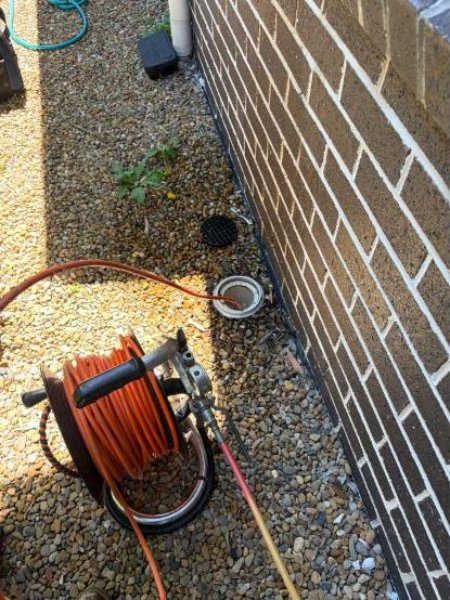
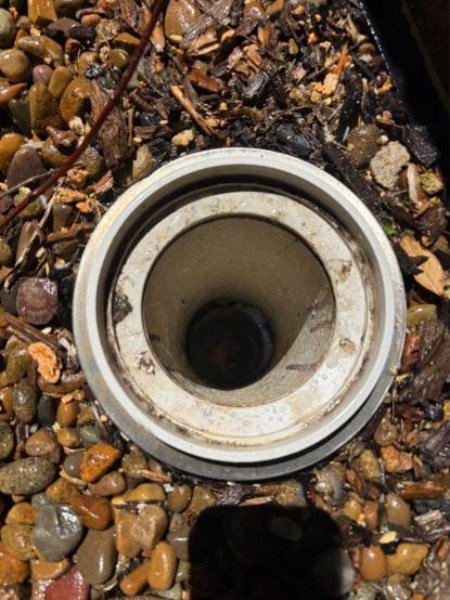
Here's a recent job right here in Little Bay. Every relining job starts the same way: clear the line properly and find out exactly where the problem is.
Grease-blocked kitchen drain cleared, Little Bay
The problem: a Little Bay home had a blocked kitchen sink, with dirty water backing up into the dishwasher.
What we did: the overflow gully outside the kitchen window was overflowing, which told us the blockage was further down the line. It was grease built up in the pipe. We cleared it with our high-pressure jetter, which broke the grease down and flushed it through.
The result: we filled both sink bowls and let them go to flush the system and check everything drained freely before we left.
More local work is on our recent projects page.
“Best plumber in Matraville. Unblocked my drains efficiently!”
C S, Matraville (Google review)
Relining across Little Bay, area by area
- The older streets west of Anzac Parade: post-war homes on War Ballot blocks with clay sewers and mature gardens.
- Around St Michael's and The Coast golf courses: homes with large trees nearby.
- The old Prince Henry Hospital site: newer houses, townhouses and apartments with PVC under slabs and driveways.
- Near the beach and Henry Head: rocky ground and exposed blocks.
- Rebuilt older blocks: new drains joined to old clay.
Relining under newer homes
Homes built on the former hospital site since 2001 have modern drains, but they're often under concrete driveways, paved courtyards and slabs. When a joint separates or roots find their way in, relining from an inspection opening fixes it without breaking up finished surfaces. On these homes, most jobs are one or two short patches.
Relining clay in post-war homes
The older homes on Little Bay's War Ballot blocks often have clay sewers running down the side of the house or across the backyard to a main at the rear. Roots are the usual problem. A camera inspection shows how many joints are affected. If it's a few, patches are the answer. If it's most of them, a longer reline from the gully to the boundary seals them all at once.
Before you build or buy
If you're extending an older Little Bay home, adding a granny flat or replacing a driveway, have the drains checked first. Relining before new concrete goes down is easy; reaching the pipe afterwards isn't. If you're buying, a camera inspection before exchange tells you what's under the yard, because a building inspection usually doesn't.
Stormwater lines and sand
Cracked or separated stormwater joints let sand wash in every time it rains, filling pits and narrowing pipes. Relining those joints keeps sand out so the line stays clear. See stormwater in Little Bay.
What a relining day looks like
We arrive in your time window and set up at the access point, usually the overflow gully or an inspection opening. We'll ask you to hold off using water. The line is jetted clean and cameraed again to confirm the sections. Liners are measured, soaked in resin, positioned and inflated. While they cure, the house stays quiet. Then we camera the line so you can see the result, flush it with water and clean up. Paving, gardens and driveways stay as they were.
Questions worth asking
- Will I see the footage before and after?
- Which faults suit relining, and is any section better dug up?
- How many patches, and where?
- Is the price fixed, including any new access point?
- Is the damage in my line, a shared line or the main?
- What warranty comes with the work? We give a lifetime labour warranty.
Looking after relined pipes
- Flush only toilet paper.
- Wipe fat out of pans before washing up.
- Keep the overflow gully clear and below the house drains.
- Keep new trees away from the sewer line.
- If a drain slows, call early.
Relining words explained
- Patch reline: a short liner sealing one damaged section.
- Longer reline: a liner along the run between access points.
- Resin: the material that cures hard to form the new pipe wall.
- CCTV inspection: a camera pushed through the pipe.
- Inspection opening: a capped access point.
- Junction: where one pipe joins another.
Reading the footage
| On screen | What it means | Usual fix |
|---|---|---|
| Roots at a clay joint | Roots through an open joint | Cut out, then patch reline |
| A fine root curtain at a PVC joint | Roots through a ring joint that has moved | Patch reline |
| A crack along the top of the pipe | Load from above or pipe resting on rock | Patch or longer reline |
| Sand in the bottom of the pipe | Sand washing in upstream | Seal the joints |
| Water sitting in a section | A dip where the pipe has dropped | Dig and relay |
| Pipe broken in | A collapse | Dig and replace |
Pipes on rock
Parts of Little Bay are rocky, especially towards the coast and the headlands. Pipes laid in shallow trenches over rock can crack where they sit on a high point, and roots wedge between pipe and rock. Digging to reach them means cutting rock, which is slow and noisy. Relining from an access point seals the crack without any of that, which makes it especially useful on these blocks.
Shared lines on the old hospital site
Many townhouses and some houses built on the former Prince Henry Hospital site share private sewer lines before they reach Sydney Water's main, often under common driveways or paths. When a shared line blocks, several homes feel it at once. We camera the line from a common access point, show where each home connects and where the damage is, and give the owners corporation a report and a fixed price. Relining is usually the cleanest fix because it avoids cutting shared driveways.
Granny flats and extensions on older blocks
The generous War Ballot blocks in the older part of Little Bay suit granny flats and rear extensions, and plenty have been added. Their drains join the original clay sewer somewhere along the way. That junction, sometimes made with an adaptor between PVC and clay, is a common weak spot. If the granny flat drains slowly while the house is fine, the camera usually shows the problem there, and a patch reline at the junction often fixes it.
Why the camera comes first
Without a camera, choosing between relining and digging is guesswork. A Little Bay clay line that blocks every spring might have roots at two joints, or at twenty. A newer PVC line might have one separated joint, or a section that has dropped. The footage decides the fix, so you pay for the repair you need and nothing more.
Adding an inspection opening
Some older Little Bay homes have only the overflow gully as an access point, or an inspection opening buried under a later path or garden. To camera and reline properly, we may need to uncover it or add a new one near the boundary. It's a small excavation, finished flush, and it's included in the fixed price if needed. It also makes every future clean much easier.
If a relined drain slows later
A liner is long-lasting for the section it covers, but other joints keep ageing. If a relined line slows, it's usually roots at a joint outside the relined section, grease or wipes, or a problem in a shared line or the main. We camera it and show you. If it's our workmanship, our lifetime labour warranty covers it.
A drain care calendar
- Late winter: check the gully grate is clear and the inspection caps are on.
- Spring: roots grow fastest. If your line has had them and isn't relined, book a jet.
- Before storm season: clean stormwater pits.
- Before building: camera the line and mark where it runs.
- Whenever a drain slows: call early.
Sewer smells in older homes
A sewer smell in an older Little Bay home with no blockage can come from a cracked clay joint under the house or along the side path, letting gas into the ground and the subfloor. It can also come from a dried-out floor waste, a loose inspection cap or a cracked vent pipe. We check the simple things first, then camera the line. A relined joint seals the smell along with the crack.
Grease and kitchen lines
Our recent Little Bay job was a grease blockage, and it's a common one. Kitchen drains carry fat and oil that cool and stick to the pipe wall, especially where an old clay joint has a step. Jetting clears it. If the same kitchen line keeps blocking, a camera often shows a joint where grease catches, and a patch reline there smooths it out. Wiping pans with paper towel before washing up makes a big difference.
Homes near the heritage buildings
The former hospital site still has around nineteen heritage-listed buildings among the newer homes. Drainage work near heritage areas is best done with as little disturbance as possible, which is another reason relining suits this part of Little Bay. Paths, landscaping and old stonework stay untouched while the pipe is fixed from inside.
Courtyards and paved yards
Newer Little Bay homes often have paved or tiled courtyards over the sewer and stormwater lines. When a joint under the paving fails, relining from openings either side of the courtyard means the paving stays down. If a section under the paving has dropped, we'll discuss whether a short dig or a reroute is the least disruptive way to fix it.
Spring and roots in Little Bay
Many Little Bay owners notice their drains slow in spring. As the weather warms, trees put on growth and the roots already inside a cracked clay joint grow quickly. A line that coped all winter can block within weeks. A maintenance jet in late winter helps if the line hasn't been relined yet, but sealing the joints is what breaks the cycle for good.
Little Bay's two kinds of drains
| Older War Ballot homes | Newer hospital-site homes | |
|---|---|---|
| Pipe | Glazed clay in short lengths | PVC with ring or solvent joints |
| Typical age | About 70 years | Under 25 years |
| Main problem | Roots and cracks at many joints | A few separated joints, early root entry |
| Usual access | Overflow gully, sometimes a buried opening | Inspection openings near the house and boundary |
| Typical fix | Several patches or a longer reline | One or two patches |
Knowing which you have tells you roughly what to expect before the camera even goes in.
Buying an older Little Bay home
Older homes on Little Bay's War Ballot blocks come up for sale regularly, often after decades with the same owners. Their sewers have usually never been looked at. A camera inspection before you exchange shows whether the clay line is sound, has roots at a few joints, or is cracked along its length, and roughly what it would take to fix. It's a small cost against one of the more expensive repairs a home can need, and the footage gives you something real to discuss before settlement.
What happens when you call
Tell us what's going on
Call or send a quick form. A photo of the problem helps us come prepared. No call-out fee.
Options and a fixed price first
We find the cause, explain your options and give you a fixed price for each before any work starts.
Fixed, tested and backed
We do the work, test it, clean up, and back our workmanship with a lifetime labour warranty.
Jobs we finished recently
Why Little Bay homeowners call us
- Based in Matraville, just up the road from Little Bay
- Rated 5.0 from 110 Google reviews
- Free quotes, with options and a fixed price before any work starts
- Lifetime labour warranty on our workmanship
- Licensed plumbers, drainers and gasfitters (Lic. 398171C)
Pipe relining questions from Little Bay homeowners
Can my 1950s clay sewer be relined?
Usually, yes, as long as it hasn't collapsed or sagged badly. The camera tells us.
Can newer PVC pipes on the old hospital site be relined?
Yes. Relining seals separated PVC joints and root entry points.
Will relining stop roots?
For the relined section, yes. The liner has no joints.
Do you need to dig?
Usually not. If there's no access point, we may add one with a small hole.
Can you reline under my driveway?
Yes, from access points either side.
How long does it take?
A patch is often a few hours; a longer reline may take a day.
Can I use the drains during the work?
Not while the liner cures. We'll tell you when.
What if the damage is in Sydney Water's main?
Then it's theirs. We'll show you the footage.
Who pays for a shared line in a townhouse complex?
Usually the owners corporation.
Can stormwater pipes be relined?
Yes, to stop sand washing in.
What do I get at the end?
Before and after footage and a compliance certificate.
Is relining always better than digging?
No. Collapsed pipe and sags need digging. For cracks and roots, especially under concrete, relining is usually better.
More plumbing in Little Bay: our Little Bay plumber page, blocked drains, stormwater, leak detection and hot water. Nearby: pipe relining in Malabar and Matraville. Guides: pipe relining guide, tree roots in pipes and relining vs digging.