Sewer repairs in Malabar 2036
Every flush in Malabar ends up at the same place: Sydney Water's treatment plant on the headland at the end of Long Bay. Getting it there starts with the private sewer pipe on your own block, and in many Malabar homes that pipe is older than the kitchen, the bathroom and most of the house around it. When it cracks, sags or fills with roots, the trouble shows up as slow drains, gurgling toilets and a gully that overflows in the yard. Here's how to tell what's going on, who's responsible for which part, and what a proper repair involves.
Signs your sewer line needs repair
- The overflow gully spills or the water in it sits high, especially when the washing machine drains.
- Toilets gurgle or bubble when another fixture drains.
- Several drains are slow at once: shower, basin and kitchen all sluggish together.
- A sewage smell around the side of the house or near an inspection opening.
- Wet ground, lush grass or a sunken strip along the line of the sewer.
- Blockages that keep coming back a few months after each clean.
What goes wrong with sewers in Malabar
Clay pipe joints that let roots in
Older Malabar homes were connected with short clay pipes joined every half-metre or so. Each joint is a potential gap. Roots from garden trees, hedges and the street trees on the nature strip find those gaps, grow in, and spread into a mat that catches toilet paper and waste. Cutting roots out restores flow for a while; sealing or replacing the joint fixes it.
Sagging pipe in the sandy streets
On the lower, sandier ground towards Malabar Beach and Cromwell Park, pipes can settle unevenly. A section that drops even a little holds a puddle of wastewater, and solids settle in it. A sag is one of the few faults that relining can't really correct, because the liner follows the shape of the old pipe. A dig-up repair that re-lays the section to the right fall is usually the answer.
Cracks from rock and loads above
Higher up the slope, sewers often run close to sandstone. Pipes laid on rock without proper bedding crack where they rest on a high point. Driveways, car parking and heavy vehicles over a shallow line add stress. These cracks often show on camera as a split along the top of the pipe.
Broken junctions and old connections
Where a branch from the kitchen or laundry joins the main house drain, the junction is a weak point. In extended homes, new PVC drains joined into old clay with makeshift fittings often fail at the join. We see a lot of damage right at these connections.
Rainwater in the sewer
In older homes it's not unusual to find a downpipe or a yard drain connected into the sewer. In heavy rain that floods the line and can push sewage back out of your gully or a neighbour's. It also adds to the load on Sydney Water's network and the treatment plant. It has to be separated, with the rainwater sent to the stormwater system. See downpipes connected to the sewer.
How Malabar sewers are laid out
In many older parts of Malabar, Sydney Water's sewer main doesn't run under the street. It runs through backyards or along the rear boundaries of a row of homes, and each house connects into it at a junction on or near the property. That means the main, and the access chamber on it, might be in your yard. It also means a fault you're experiencing could be in your private line, in a section you share with a neighbour, or in the main itself.
Before we quote a sewer repair, we work out which. The camera, and a locator that tracks the camera head from above, show us where the fault is and how far along the pipe. If it's in the main, we'll show you the footage so you can report it to Sydney Water.
Malabar homes and their sewers
| Home type | Typical sewer | Common faults |
|---|---|---|
| Original cottages | Clay house drain to a main in the backyard or rear lane | Root entry at joints, cracked pipe, old inspection openings |
| Cottages with extensions | Old clay joined to newer PVC, often under the extension | Failed joins between materials, damage under slabs |
| Brick homes on the slope | Clay or early PVC over sandstone | Cracks where pipe rests on rock, shallow lines under driveways |
| Rebuilds and duplexes | New PVC with the old connection kept | Damage at the old junction, poorly supported new pipe |
How we repair a sewer
- Clear the line with a high-pressure jetter so the camera can see the pipe wall.
- Inspect with CCTV, record the footage and locate the fault from above.
- Work out responsibility: your line, a shared line or Sydney Water's main.
- Give you options with a fixed price for each: a patch reline, a longer reline, a dig-up repair of one section, or a new line.
- Do the repair, using PVC sewer pipe and proper bedding for any section that's dug up, or a resin liner for relined sections.
- Test and inspect again with the camera, then give you the footage and a compliance certificate.
Dig-up repairs
A collapsed, sagging or badly broken section cut out and replaced with new PVC, bedded and laid to the right fall.
Patch relining
A cracked joint or short damaged section sealed from inside without digging. See pipe relining in Malabar.
Junction repairs
Broken connections between branches and the house drain rebuilt properly.
Inspection openings
New access points so the line can be inspected and cleared without breaking in.
Overflow gully repairs
Gullies raised, regraded or replaced so they work as a safety valve.
Stormwater separation
Downpipes and yard drains taken off the sewer and connected to stormwater.
Clearing, relining or digging
| What the camera shows | What usually fixes it | Why |
|---|---|---|
| Roots at one or two joints, pipe otherwise sound | Root cut, then a patch reline at each joint | Seals the gap without digging |
| Cracks along much of the line | A longer reline | One continuous lining from end to end |
| A sag holding water | Dig up and re-lay that section | A liner follows the sag; it can't level it |
| A collapsed section | Dig-up repair | There's no pipe left for a liner to bond to |
| Grease or wipes, pipe in good condition | Jet clean and change habits | Nothing is broken |
What affects the cost
- The type of fault and how many places need repair.
- Depth and ground: sand is easy digging, sandstone is not.
- What's on top: lawn, paving, concrete, a deck or an extension.
- Access for equipment down side passages and into back gardens.
- Whether a new inspection opening or gully is needed.
- Making good afterwards: turf, paving or concrete.
You get a fixed price for each option before any work starts.
Who's responsible for which part
- You: the private sewer pipes from your fixtures to the point where they connect to Sydney Water's sewer, and the overflow gully.
- Shared lines: where more than one home drains through a private pipe before it reaches the main, the owners sharing it are usually responsible for that section together.
- Sydney Water: the sewer main and its access chambers, even when they're in your backyard. Don't build over or block access to a chamber.
- Building near the main: if you're planning an extension, pool or deck near a sewer main, Sydney Water has rules about building over or next to it. Check before you design.
Our sewer responsibility guide and where does sewage go explain more.
The overflow gully: your safety valve
The overflow relief gully is the grated outlet in the yard, usually near the kitchen or laundry. If the sewer blocks downstream, sewage rises and spills out of the gully outside instead of coming up through a shower or toilet inside. It only works if the grate is lower than every drain in the house and isn't buried. We often find Malabar gullies covered by new paving, built up by garden beds, or with the grate glued down. If yours is hidden or higher than the floor wastes, it's worth fixing before the next blockage.
A quick check you can do
- Find the overflow gully and lift the grate. The water should sit low in the trap.
- Run the washing machine or empty a full laundry tub, then look again. Water rising up the gully means a restriction further down.
- Look for an inspection opening, a capped pipe sticking out of the ground near the house. If the cap is loose or broken, roots and sand can get in.
- Walk the route of the line, usually from the bathroom towards the back or side of the block, and look for damp patches or sunken ground.
- Note which drains are slow and when. That helps us find the fault faster.
Urgent or can it wait?
- Call us straight away if sewage is overflowing inside, from a floor waste, shower or toilet, or pooling in the yard where people walk.
- Call soon if the gully is spilling, drains are slow, or toilets gurgle.
- Book a camera inspection if you've had more than one blockage this year, or you're buying an older Malabar home.
A recent drain job nearby
This job was nearby in Maroubra, just north of Malabar.
Blocked drains jetted clear, Maroubra (nearby)
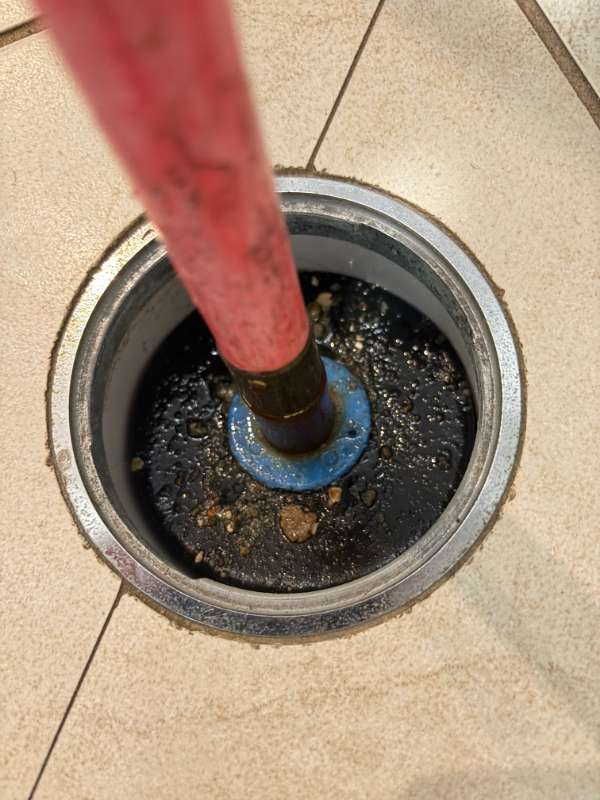
The problem: a Maroubra home had slow, blocked drains and floor wastes.
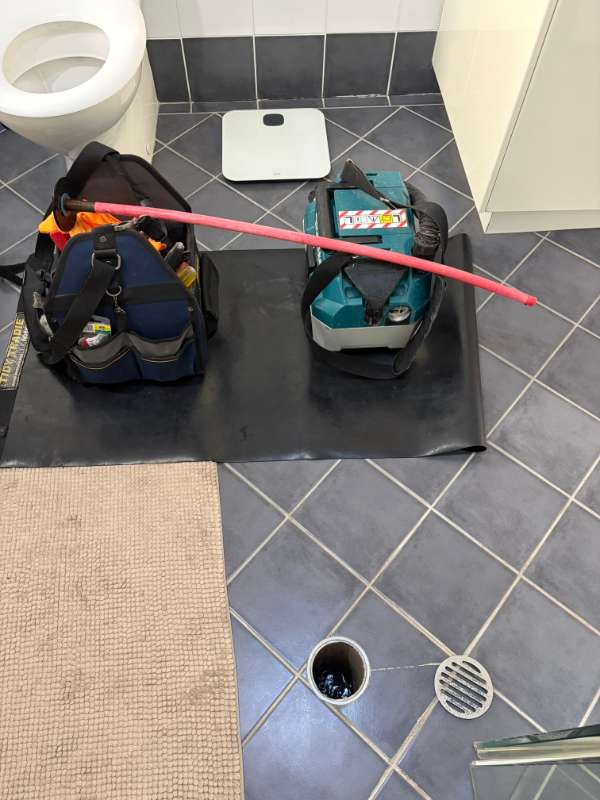
What we did: we put down a protective mat to keep the floor clean, then cleared the drains and floor wastes with high-pressure jetting. While we were there we also repaired leaking taps, so the owners didn't need a second visit.
The result: the drains flow freely again and nothing was left behind for the owners to clean up.
More local work is on our recent projects page.
Sewers across Malabar, area by area
- The beach end near Long Bay: older cottages and sandy ground; sags and root entry are common.
- Around Cromwell Park: flat, low lots where heavy rain can find its way into cracked sewers and fill them.
- The slopes up to Anzac Parade: sandstone near the surface, lines cracked where they sit on rock.
- Near the headland: longer private runs and rocky ground, where relining often saves a lot of digging.
- Rebuilt blocks: new drains inside the boundary, but sometimes an old junction or connection that was never replaced.
On the day: what a sewer repair looks like
When you call, we ask what's happening, which drains are affected and whether anything is overflowing. That tells us which equipment to bring. When we arrive, we walk the yard with you to find the gully, any inspection openings and the likely route of the line, and we put mats down wherever we're working inside.
Most sewer jobs start with the jetter. Once the line is clear, the camera goes in and the footage plays on a screen so you can watch along. We mark the ground above any fault we find and measure how deep it is. Then we sit down with you, show you the footage, and go through the options and the fixed price for each.
If you go ahead, a dig-up repair means opening a trench only over the faulty section, cutting out the old pipe, laying new PVC on proper bedding with the right fall, and backfilling. A reline means preparing the pipe and installing the liner from an access point. Either way, we put the camera through at the end so you can see the result, test the line with water, and leave the site clean.
Planning a pool, deck or extension?
Malabar blocks are often tight, and new work tends to end up near the sewer. Before you finalise plans, find out where your private line and any Sydney Water main run. A quick camera inspection with location marking gives your designer the facts. Fixing or relining an old clay line before it disappears under a new slab or deck is far easier than trying to reach it afterwards. If the main or its access chamber is nearby, Sydney Water's rules on building over or next to their assets apply, so check those early.
Storm season and your sewer
When a big southerly storm comes through, cracked sewers on low ground can take in water from the soaked sand around them. Downpipes illegally connected to the sewer add more. The result is a line running full, gullies spilling and toilets slow to flush until the rain eases. If your sewer only misbehaves in heavy rain, that's a strong clue that stormwater is getting in somewhere. A camera inspection in dry weather, and a check of every downpipe and yard drain, usually finds it.
Before you agree to a sewer repair
- Ask to see the camera footage and where the fault is marked on the ground.
- Ask whether the fault is in your line, a shared line or the main.
- Ask why the recommended fix suits this fault, and what the other options are.
- Make sure the price is fixed and you know what it includes, such as making good.
- Ask about the warranty and paperwork. We give a lifetime labour warranty and a compliance certificate.
What not to put down the drain
- Wet wipes, including ones labelled flushable.
- Fat, oil and grease from cooking. Wipe pans with paper towel first.
- Sanitary products, cotton buds and dental floss.
- Sand from beach towels, wetsuits and boards rinsed in the laundry tub. It settles in the line. Rinse them outside on the lawn instead.
- Chemical drain cleaners, which can damage old pipes and joints and don't fix roots.
A yearly sewer routine for older Malabar homes
- Late winter: check the overflow gully grate is clear and sits below the house drains, and that inspection caps are on tight.
- Spring: roots grow fastest as the weather warms. If your line has had roots before, this is the time for a maintenance jet.
- Before summer storms: make sure no downpipe or yard drain runs into the sewer.
- Any time a drain slows: call early, before it becomes an overflow.
Smells without a blockage
Sometimes a Malabar home has a sewer smell but every drain runs freely. Common causes are a floor waste or shower that has dried out because it isn't used, a loose or missing inspection cap in the garden, a cracked vent pipe on the side of the house, or a gully that has lost the water in its trap. Pouring a bucket of water into unused floor wastes and gullies refills the trap and often fixes it. If the smell persists, we check the vents, caps and joints.
Sewer words explained
- House drain: your private sewer pipe from the house to the connection.
- Sewer main: Sydney Water's pipe that collects from a row of homes.
- Junction: the fitting where one pipe joins another.
- Fall: the slope a drain is laid at so waste flows by gravity.
- Inspection opening: a capped access point for clearing and cameras.
- Access chamber: Sydney Water's manhole on the main.
- Overflow relief gully: the grated outlet in the yard that lets sewage overflow outside the home.
Grease and kitchen lines in older Malabar homes
Not every sewer problem is roots or a broken pipe. In older Malabar homes, the kitchen branch is often a long run of clay or early plastic from the back of the house to where it joins the main drain. Fat and oil from washing up cool and stick to the inside of that pipe, and over a few years they build up into a thick coating that narrows the line. The first sign is usually a kitchen sink that drains slowly, then a gully that overflows when the dishwasher empties.
We clear grease with high-pressure jetting, which scours the pipe wall rather than just punching a hole through the middle. Then we put the camera through to check the pipe underneath is sound. If the line is in good condition, a change in habits keeps it that way: scrape plates into the bin, wipe greasy pans with paper towel before washing them, and run hot water after the dishwasher. If the camera shows the grease has been sitting in a sag or a cracked joint, that's the part to fix so it stops collecting again.
What happens when you call
Tell us what's going on
Call or send a quick form. A photo of the problem helps us come prepared. No call-out fee.
Options and a fixed price first
We find the cause, explain your options and give you a fixed price for each before any work starts.
Fixed, tested and backed
We do the work, test it, clean up, and back our workmanship with a lifetime labour warranty.
Jobs we finished recently
Why Malabar homeowners call us
- Based in Matraville, next door to Malabar
- Rated 5.0 from 110 Google reviews
- Free quotes, with options and a fixed price before any work starts
- Lifetime labour warranty on our workmanship
- Licensed plumbers, drainers and gasfitters (Lic. 398171C)
Sewer repair questions from Malabar homeowners
How do I know if the problem is mine or Sydney Water's?
A camera inspection shows where the fault is. If it's in your private line, it's yours; if it's in the main, it's Sydney Water's. We show you the footage either way.
There's a manhole in my backyard. Is that mine?
Usually not. Access chambers on the sewer main belong to Sydney Water. Keep them clear and don't build over them.
Can roots be removed for good?
Cutting roots clears the pipe, but they grow back through the same crack. Sealing the joint with a reline or replacing the section stops them.
Will you have to dig up my yard?
Not always. Many faults can be relined from an access point. Sags and collapsed sections usually need a dig-up repair of that section only.
Why does my gully overflow when it rains?
Often rainwater is getting into the sewer, through a downpipe connected to it, a broken inspection cap or cracked pipe. We find where and fix it.
Is relining or digging better?
It depends on the fault. Cracks and root entry suit relining; sags and collapses need digging. Many jobs use a bit of both.
How long does a sewer repair take?
A patch reline or short dig-up is usually done in a day. A longer replacement can take longer, depending on depth and what's on top.
Do I share my sewer with the neighbours?
Some Malabar homes do, before the line reaches the main. The camera shows where your line joins and whether a section is shared.
Can you move my overflow gully?
Yes. We can raise, lower or relocate a gully so it sits below the house drains and isn't buried.
Can I build over my sewer line?
Building over or next to a Sydney Water main has rules. Building over your own private line may be possible, but it's worth having it inspected or relined first.
What paperwork do I get?
Camera footage and a compliance certificate for the work, which is useful when you sell.
Should I get a camera inspection before buying in Malabar?
For an older home, yes. A building inspection doesn't usually look inside the sewer, and it's one of the costliest repairs to find out about later.
More plumbing in Malabar: our Malabar plumber page, blocked drains, pipe relining, stormwater and taps and toilets. Nearby: sewer repairs in Matraville and Maroubra. Guides: sewer responsibility, tree roots in pipes and blocked drains guide.