Stormwater plumbing in Eastgardens 2036
Eastgardens was built mostly from the late 1980s onwards, and its homes were designed with proper stormwater systems: PVC pipes, grated drains, pits in courtyards, and on many newer sites, a detention tank to hold water back in heavy rain. Thirty years on, those systems are full of leaves, silt and sand, and some have been covered by later paving or garden beds. A courtyard that floods in a summer storm is usually a system that's stopped working, not one that was never there. We're based in Matraville, a few minutes away.
Stormwater problems we fix in Eastgardens
Flooding courtyards
Blocked courtyard pits and grated drains cleared, and extra drainage added where needed.
Blocked grated drains
Strip drains across doorways and driveways cleaned out and repaired.
Detention tanks
On-site detention tanks and pits inspected, cleaned and their outlets cleared.
Downpipes
Blocked and disconnected downpipes cleared and reconnected.
Sand in pipes
Lines jetted clean, and cracked or dislodged sections repaired or relined.
Kerb outlets
Blocked or crushed outlets cleared or replaced.
Signs your stormwater isn't working
- Water pooling in the courtyard or against the back door in heavy rain.
- A grated drain across a doorway that fills and overflows.
- Pits that bubble up rather than draining.
- Gutters overflowing at a corner.
- Water spilling from a detention pit in the yard or driveway.
- Nothing coming out of the kerb outlet when it pours.
- Sand or silt collecting in pits after each storm.
Why stormwater fails in Eastgardens
Leaves and silt in small pits
Eastgardens courtyard homes and townhouses often rely on small pits and narrow grated drains. Trees planted when the estates were new are now mature, and their leaves fill those pits quickly. Silt and fine sand settle in with them. Once a pit is half full, it can't take a heavy downpour.
Grated drains at doorways
Strip drains across courtyard doorways and garage entries are the first line of defence against water coming inside. Their grates clog with leaves, and the channel underneath fills with silt. A blocked strip drain at a sliding door is one of the most common causes of water inside an Eastgardens home.
Detention tanks that haven't been cleaned
Many newer homes and townhouse complexes have an on-site detention tank or pit that holds water in heavy rain and releases it slowly through a small outlet. If the outlet screen blocks, the tank fills and overflows. Plenty of owners don't know their home has one.
Sandy ground and settling pipes
Eastgardens sits on the sandy ground of the Botany basin. Pipes can settle over the years, joints can pull apart, and sand washes in. A pipe that has dropped holds water and silt and slowly blocks.
Paving added over the years
Lawn and garden beds have been replaced with paving in many courtyards. More water now runs off, sometimes towards the house, and existing pits may have been covered or left too high.
Eastgardens homes and their stormwater
| Home type | Typical system | Common problems |
|---|---|---|
| Houses from the late 1980s and 1990s | PVC pipes, pits and downpipes to the kerb | Leaf-filled pits, settled pipes, blocked outlets |
| Courtyard homes | Courtyard pits and strip drains at doors | Blocked strip drains, water at sliding doors |
| Townhouse complexes | Shared pits and pipes along common driveways | Shared pits full of leaves, unclear responsibility |
| Newer homes and complexes | On-site detention tanks or pits | Blocked outlet screens, tanks never cleaned |
| Older homes on the edges | Older clay or steel pipes | Cracked pipes, sand, rusted outlets |
How we fix stormwater
- Find out what happens in the rain. Photos or a short video in a storm help a lot.
- Trace the system: every downpipe, pit, strip drain, tank and outlet.
- Clear and camera the pipes to find blockages, settled sections and broken joints.
- Give you options with a fixed price for each.
- Do the work: cleaning, repairs, relining, new pits or drains, or a detention tank service.
- Test it by running water through the system.
Quick fix or long-term fix?
| Problem | Quick fix | Long-term fix |
|---|---|---|
| Courtyard flooding | Clear the pit | A larger pit, extra strip drain, or a bigger pipe |
| Water at the sliding door | Clear the strip drain | A deeper channel and a pipe sized for the area |
| Detention pit overflowing | Clear the outlet screen | Regular servicing |
| Pits full of sand | Clean them | Repair the pipe letting sand in |
| Kerb outlet blocked | Clear it | Replace a crushed outlet |
What affects the cost
- The length of pipe involved.
- What's on top: paving, concrete, garden.
- Whether relining can avoid lifting paving.
- Detention tank access and how much silt is inside.
- Kerb and footpath work, which needs council approval.
- Making good.
You get a fixed price for each option before any work starts.
Who's responsible?
- You: gutters, downpipes, pits, pipes and any detention tank on your property, out to the kerb outlet.
- Townhouse complexes: pits and pipes in common areas are usually the owners' together; those within your lot are usually yours.
- Bayside Council: street gutters, public pits and pipes, and the footpath. Work there needs approval, and detention tanks are usually a condition of approval, so check before changing one.
- Neighbours: water flowing between properties is usually for the owners to sort out.
Quick checks you can do
- Lift each courtyard pit grate and look for leaves and silt.
- Lift a section of strip drain at the door and check the channel.
- Find out if your home has a detention tank. Look for a large pit with a heavy lid, or check your house plans.
- Run a hose into downpipe pits to check they drain.
- Check the kerb outlet in the street gutter.
Signs it's urgent and when it can wait
- Call straight away if water is coming inside or near electrics.
- Call soon if the courtyard floods every storm or a detention pit overflows.
- Book a time if pits keep filling with leaves or sand, or before storm season.
A recent stormwater job nearby
Here's a recent job nearby in Maroubra, where a home kept flooding in heavy rain.
New stormwater line and kerb outlet to stop flooding, Maroubra (nearby)
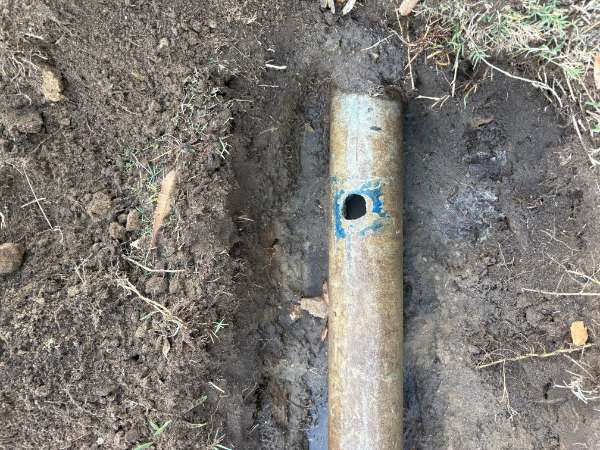
The problem: a Maroubra home's lower level flooded in every heavy storm because the old stormwater pipe couldn't carry the water away.
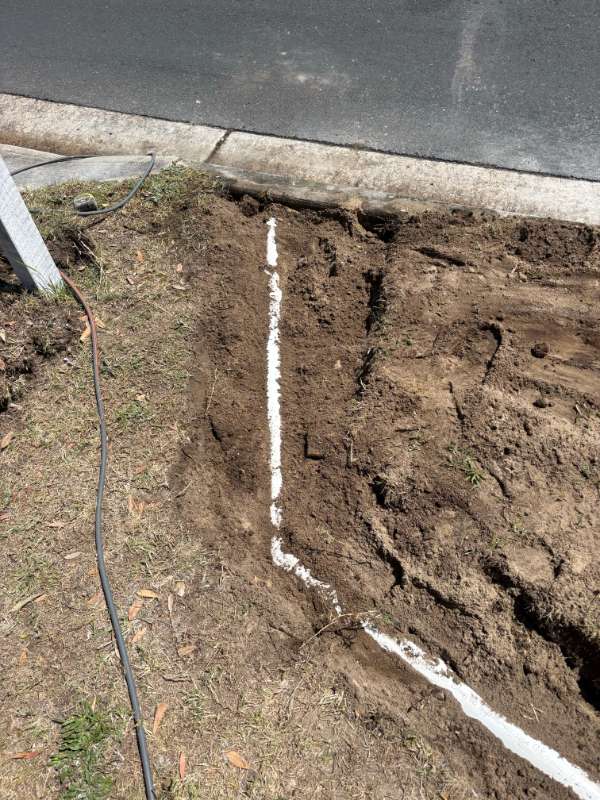
What we did: we trenched from the existing stormwater pipe to the street, uncovered the old pipe, which had rusted through, connected a new PVC line, cored through the kerb for a new outlet and backfilled the nature strip.
The result: water now flows away through the new line and outlet instead of collecting against the house.
More local work is on our recent projects page.
“Best plumber in Matraville. Unblocked my drains efficiently!”
C S, Matraville (Google review)
Stormwater across Eastgardens, area by area
- Around Westfield and Wentworth Avenue: apartments and complexes with shared pits and detention systems.
- Near Bunnerong Road: houses and townhouses from the late 1980s and 1990s with original PVC systems.
- Around Mutch Park: family homes with mature trees filling gutters and pits.
- The Pagewood and Hillsdale edges: older homes with older pipes and outlets.
- Courtyard homes throughout: strip drains at doors and small courtyard pits.
Strip drains at sliding doors
Most Eastgardens courtyard homes have a sliding door opening onto a paved area, with a strip drain across the threshold. In heavy rain, that drain is all that stops water running inside. If its grate is clogged or its channel full of silt, water builds up against the door and comes under it. Lift the grate a few times a year and clean the channel. If water still comes in during heavy storms, the drain or the pipe from it may be too small, or the paving may slope the wrong way. We can fit a deeper channel, a bigger outlet pipe, or regrade the paving near the door.
Detention tanks: what you need to know
An on-site detention system is usually a concrete or plastic tank, or an oversized pit, with an outlet restricted by a small orifice plate and a screen. In heavy rain it fills and lets water out slowly. If the screen or orifice blocks, it overflows. Many are under driveways or courtyards with an access lid. They should be inspected and cleaned regularly, more often under trees. We can locate yours, clean out silt and leaves, clear the outlet and check it works. Don't remove or modify a detention system without checking with Bayside Council first.
Shared pits in townhouse complexes
In a townhouse complex, stormwater from several homes often flows through shared pits and pipes along the common driveway. If one is blocked, water backs up into everyone's courtyards. Those common pits are usually the owners corporation's responsibility. Pits and pipes within your own courtyard are usually yours. We can tell you which is which and give a report the owners corporation can act on.
Gutters and downpipes
Gutters full of leaves overflow onto courtyards and against walls. Clean them before storm season and after the autumn leaf drop. Check that each downpipe still connects into its pit and hasn't been knocked loose. A downpipe that spills onto paving beside the house sends water straight to the door.
Before you pave or build
Planning new paving, a pergola, a granny flat or an extension? Plan the stormwater at the same time: pits at the low points, paving falling away from doors, and pipes sized for any new roof area. On a site with a detention tank, check the approval conditions before changing what drains into it. See stormwater pit installation and backyard drainage.
A stormwater care calendar
- Late spring: clean gutters, courtyard pits, strip drains and the detention tank screen.
- After big storms: check pits and the kerb outlet.
- Autumn: clean gutters again after leaf drop.
- Every year or two: have the detention system inspected and cleaned.
- Whenever you add paving: plan the drainage.
Stormwater words explained
- Strip drain: a narrow channel drain with a grate, often across a doorway.
- Pit: a box in the ground with a grate that collects water.
- On-site detention: a tank or pit that holds stormwater and releases it slowly.
- Orifice plate: the small opening that controls how fast a detention tank empties.
- Kerb outlet: where your stormwater enters the street gutter.
- Fall: the slope a pipe or surface needs for water to run.
Servicing a detention tank, step by step
- We find the tank or pit, often under a driveway or courtyard with a heavy access lid.
- The lid comes off and we check the inlet, the outlet screen and the orifice plate.
- Leaves, silt and sand are removed from the tank floor and the screen is cleaned.
- We check the outlet pipe to the street is clear, jetting it if needed.
- We run water in to confirm it drains at the expected rate.
- The lid is refitted and sealed, and we note anything that needs attention, like a damaged screen or a cracked lid.
Most services take an hour or two. If the tank has never been cleaned, it can take longer.
Fixing a flooding courtyard, step by step
- We look at photos of the flooding and walk the courtyard to find the low point and every pit and strip drain.
- Each pit and drain is cleaned out, then water is run through to test the pipe.
- If the pipe is slow, a camera shows whether it's blocked, settled or broken.
- We work out whether the existing pit and pipe can carry the water from the courtyard and roof that now drain to it.
- Options are priced: repair and clean, a larger pit, an extra strip drain at the door, a bigger pipe to the street, or regrading the paving.
- Once you choose, we do the work and test it with a hose at the highest flow we can manage.
Garage driveways
Many Eastgardens homes and townhouses have a garage at the end of a short driveway that slopes down slightly towards it. A strip drain across the driveway in front of the garage door catches the water before it gets inside. When that drain blocks with leaves and grit, water runs under the door and across the garage floor. Clean it a few times a year. If it overflows even when clean, the outlet pipe may be too small or blocked further along.
Balcony drains in apartments
Apartment balconies around Westfield and Wentworth Avenue drain through small floor outlets or spouts. When pot plant soil, leaves or debris block them, rain pools on the balcony and can get under the door into the apartment or through to the balcony below. Keep balcony outlets clear and don't stand pots over them. Balcony drains that connect into the building's system are usually common property; if one is blocked inside the building, tell your building manager.
Water against the slab
Most Eastgardens homes sit on concrete slabs. When paving falls towards the house or a downpipe spills beside the wall, water sits against the edge of the slab after every storm. Over time that can lead to damp in the walls, staining, and a welcoming environment for pests. Paving should fall away from the walls, downpipes should connect into pits, and garden beds against the house should be kept below the damp course. Small changes here prevent a lot of trouble.
Rainwater tanks in small yards
A slimline tank against a side fence or wall takes some roof water out of the stormwater system and gives you water for the garden, toilets or laundry. The overflow still needs to connect to the stormwater properly, not spill onto the paving. If your home has a detention tank, check how the rainwater tank fits with it before installing, as the approval may treat them differently. Keep the first-flush device and inlet screen clean.
Downpipes connected to the sewer
Most Eastgardens homes were built with downpipes going to the stormwater, but in some older homes on the edges, and in some later alterations, downpipes or courtyard drains have been connected to the sewer. In heavy rain that floods the sewer and can push sewage out of the overflow gully. It isn't allowed. We find these with a dye test or camera and reconnect them to stormwater. See downpipes into the sewer.
What to photograph in a storm
- Where water collects in the courtyard and how deep it gets.
- Strip drains and pits overflowing.
- Gutters spilling, and which corner.
- Water coming under doors.
- Any detention pit lid lifting or water spilling from it.
- Whether water is coming out of the kerb outlet.
A few photos taken during heavy rain help us find the cause even if it's dry when we arrive.
Courtyard pits that have been covered
When courtyards are re-paved, pits sometimes end up under pavers, behind planters or with their grates set higher than the new surface. Water can't reach them, so it pools at the real low point instead. If you can't find a pit you know should be there, or the pit sits above the paving around it, it needs resetting. We lift the pavers around it, reset the pit at the right level, and relay them so water runs straight in.
Pipes that have settled in sand
Even modern PVC stormwater pipe can move in Eastgardens' sandy ground. If the sand under a section washes out or settles, the pipe dips, and a dip holds water and silt. On a camera it shows as a section where water sits after the rest has drained. Shallow dips can be managed with regular jetting. Deeper ones are best fixed by lifting that section and relaying it on fresh bedding at the right fall. Where a joint has pulled apart, letting sand in, a patch reline seals it without digging.
Older homes on the edges
The streets at the Pagewood and Hillsdale edges of Eastgardens include some older homes with clay, concrete or steel stormwater pipes and old kerb outlets. These behave more like the older suburbs nearby: cracked joints letting sand in, roots, and rusted outlets. A camera inspection tells you whether to clean, reline or replace.
Why Eastgardens courtyards fill so fast
A typical Eastgardens courtyard is enclosed on three or four sides by the house, a garage and boundary walls. All the rain that lands on it, plus water from any roof that drains into it, has only one way out: the pit or strip drain. There's no lawn edge for water to spill over and no slope to the street. If that single outlet is half blocked, a heavy shower can fill the courtyard in minutes. That's why keeping courtyard drains clean matters more here than in an open backyard, and why adding a second outlet is often the most effective fix.
Leaf guards and grates
Fine mesh leaf guards on gutters and leaf baskets in courtyard pits cut down how often you need to clean. They're not a cure-all: fine debris still gets through, and leaves pile up on top of the guards. But in an Eastgardens courtyard under a mature tree, a removable leaf basket in the main pit makes the twice-yearly clean a two-minute job. We can fit baskets to most standard pits.
What happens when you call
Tell us what's going on
Call or send a quick form. A photo of the problem helps us come prepared. No call-out fee.
Options and a fixed price first
We find the cause, explain your options and give you a fixed price for each before any work starts.
Fixed, tested and backed
We do the work, test it, clean up, and back our workmanship with a lifetime labour warranty.
Jobs we finished recently
Why Eastgardens homeowners call us
- Based in Matraville, a few minutes away
- Rated 5.0 from 110 Google reviews
- Free quotes, with options and a fixed price before any work starts
- Lifetime labour warranty on our workmanship
- Licensed plumbers, drainers and gasfitters (Lic. 398171C)
Stormwater questions from Eastgardens homeowners
Why does my courtyard flood?
Usually the courtyard pit or strip drain is blocked with leaves and silt, or the pipe from it is too small. We clear it and check the pipe.
Water comes under my sliding door in storms. What can I do?
Clean the strip drain at the door. If it still happens, a deeper drain, a bigger pipe or regraded paving usually fixes it.
Does my home have a detention tank?
Many newer Eastgardens homes do. Look for a large pit with a heavy lid, or check your plans. We can find it.
How often should a detention tank be cleaned?
At least every year or two, more often under trees.
Who looks after shared pits in our complex?
Common pits are usually the owners corporation's. Those in your own courtyard are usually yours.
Can I remove my detention tank?
Not without checking with Bayside Council. It's usually a condition of approval.
Why are my pits full of sand?
Sand is washing in through a settled or broken pipe joint. We camera and repair it.
Who looks after the kerb outlet?
Your pipe and outlet are yours. The gutter and footpath are council's.
Can a stormwater pipe be relined?
Yes, to seal cracked or separated joints without lifting paving.
How long does a stormwater repair take?
A clean is a few hours. New pipes or pits can take a day or two.
Can you add drainage to my courtyard?
Yes. Extra pits or strip drains connected to the system usually solve pooling.
Will you put the paving back?
Yes. We relay pavers and leave the area tidy.
More plumbing in Eastgardens: our Eastgardens plumber page, blocked drains, leak detection, gas fitting and hot water. Nearby: stormwater in Pagewood and Botany. Guides: stormwater plumbing, backyard drainage and blocked downpipes.