Water filters in Mascot 2020
Plenty of Mascot households buy bottled water or use a jug filter because they don't like the taste of chlorine in their tap water, or because the water from older galvanised pipes sometimes comes out with a tinge of brown. A properly installed water filter gives you better-tasting water straight from the tap. And because groundwater use is restricted in parts of Mascot, many homeowners are turning to rainwater tanks for the garden, with a pump and filter on the line. We come over from Matraville and fit filters that suit your home.
Filters we fit
Filtered mixer taps
One mixer with a separate filtered outlet. Good where there's no room for a second tap.
Under-sink carbon filters
Single or twin cartridges under the sink with their own drinking water tap.
Whole-house filters
Fitted on the main water line so every tap and shower gets filtered water.
Reverse osmosis
Removes the most, including fluoride and most dissolved minerals. Needs a tank and drain line.
Sediment pre-filters
Catch rust and grit from old pipes before they reach your taps or drinking filter.
Filter servicing
Cartridge changes, leaking housings resealed, and neglected systems brought back into shape.
Which filter suits your home?
Start with the problem you want solved. For drinking and cooking water, an under-sink carbon filter or a filtered mixer does the job for most households. If chlorine in the shower bothers you, or you'd like filtered water through the whole home, a whole-house filter on the main line is the better fit. Reverse osmosis takes out the most, including fluoride, but it needs more cupboard space and sends some water down the drain as it filters. Cartridge life, flow at the tap and where the unit sits all matter too. We talk you through those before you choose, so there are no surprises later.
| What you want | Usually the best fit |
|---|---|
| Better-tasting drinking water | Under-sink carbon filter or filtered mixer |
| Less chlorine in the shower too | Whole-house filter |
| Fluoride and most minerals removed | Reverse osmosis |
| Rust and grit from old pipes | Sediment pre-filter |
| Filtered water to the fridge | Under-sink filter with a fridge line |
| One tap only, no extra holes | Filtered mixer tap |
Water filters in Mascot homes
Walk-up unit blocks
The apartments around Mascot station and on former industrial land usually have compact kitchens with stone benchtops and a single sink. An under-sink filter with a slim twin housing, or a filtered mixer that replaces your existing tap, usually fits well. A whole-house filter in an apartment depends on where your unit's water supply comes in and whether there's room to fit it, which we can check on a visit.
Post-war cottages
Mascot's workers' cottages, semis and post-war houses often still have some of their original galvanised steel water pipes under the floor or in the walls, even where the kitchen has been updated. That steel rusts inside over the years. You might notice discoloured water after the house has been empty for a day, or a drinking water filter that clogs up well before its due date. In these homes we often fit a sediment pre-filter ahead of the drinking water filter so the carbon cartridge isn't doing all the work, and we'll tell you honestly if the pipes themselves are the bigger problem. See galvanised pipes.
Rainwater instead of a bore
Groundwater under parts of Mascot and Botany is contaminated, and the NSW Government restricts using it from backyard bores. If you want water for the garden, toilets or laundry without using mains water, a rainwater tank is the better option. We can fit the tank pump and a filter on the rainwater line so the water is clear for the uses it's connected to. Rainwater for drinking needs more treatment than a simple filter, and the mains supply is the safer choice for that.
Mascot homes and filters
| Home type | Typical set-up | Things to check |
|---|---|---|
| Apartments near the station | Filtered mixer or slim under-sink filter | Cupboard space, stone benchtops, unit water supply |
| Workers' cottages | Sediment pre-filter plus drinking filter, or whole-house | Galvanised pipe, rust, flow |
| Semis | Under-sink filter or filtered mixer | Older pipes, space on the main line |
| Homes with a rainwater tank | Pump and filter on the tank line | Tank connections, backflow protection |
How we install a water filter
- Talk it through: what you want the filter to do, and who uses the water.
- Check the pipes, the cupboard and the benchtop.
- Recommend options with a fixed price for each, before any work starts.
- Install the filter with quality fittings and an isolating valve.
- Flush the cartridges as the maker recommends.
- Test for leaks and check the flow.
- Show you how it works, when to change cartridges, and how.
What affects the cost
- The type of filter and brand.
- Whether a new tap or mixer is needed.
- Benchtop: drilling stone takes more time and the right tools.
- Space under the sink or on the main line.
- A fridge line or extra outlets.
You get a fixed price before any work starts.
Who's responsible?
- You: filters, taps and pipes inside your home.
- Owners corporation: shared supply pipes in a unit block. A whole-house filter on a shared line isn't usually possible.
- Sydney Water: the water supply up to the meter.
Signs your filter needs attention
- Slow flow from the filtered tap.
- The taste is back to how it was before the filter.
- A drip or damp under the sink.
- It's been more than a year since the last cartridge change.
- Cloudy or discoloured water from the filtered tap.
A recent kitchen and tap job nearby
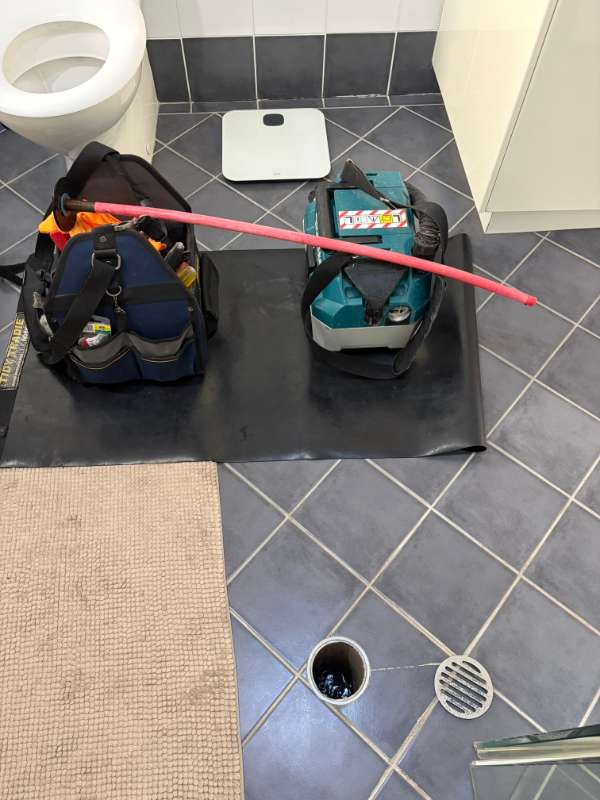
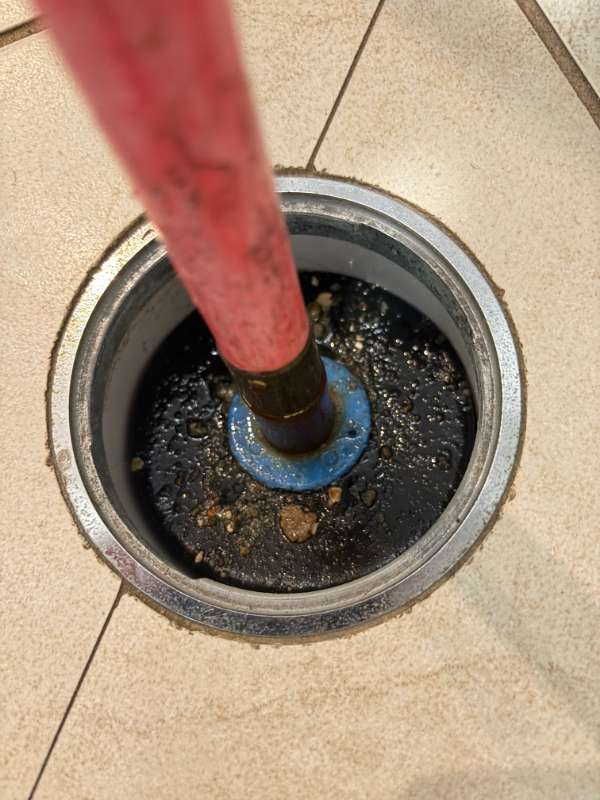
Here's a recent kitchen and tap job nearby in Maroubra, where we sorted the taps and the drains in one visit.
Leaking taps fixed during a drain clear, Maroubra (nearby)
The problem: a Maroubra home had leaking taps as well as slow drains.
What we did: we laid a mat to protect the floor, jetted the drains and floor wastes clear, and then repaired the leaking taps on the same visit.
The result: the taps shut off properly and the drains flow freely, all in one visit.
“Great plumber, fixed my leaking taps quickly and at a great price!”
Tom (Google review)
More local work is on our recent projects page.
Water filters across Mascot
- Around Mascot station: compact apartment kitchens with stone benchtops.
- On former industrial land: newer apartments where filtered mixers suit best.
- The older streets south of the station: cottages with galvanised pipe where sediment pre-filters help.
- Semis throughout the suburb: updated kitchens on older pipes.
- Homes with back yards: rainwater tanks with pumps and filters instead of bores.
Understanding Sydney tap water
Sydney's tap water is treated to meet the Australian Drinking Water Guidelines and is safe to drink. Chlorine is added to keep it safe as it travels through the pipes, and fluoride is added for dental health. Most people who choose a filter do it because of the taste or smell of chlorine, or because they'd rather not drink fluoride, not because the water is unsafe. Older pipes inside the home can add their own taste, rust or sediment, which is a separate issue from the water Sydney Water supplies. A filter is about getting water the way you like it from your own tap.
Carbon filters explained
Most drinking water filters use activated carbon. Carbon has a huge surface area that traps chlorine, many tastes and odours, and some other substances as water passes through. Carbon block cartridges are denser than loose granules and filter more finely. Many under-sink systems pair a sediment cartridge with a carbon block, so grit is caught first and the carbon lasts longer. Carbon filters don't remove fluoride or dissolved minerals; for that, you need reverse osmosis or a specialised cartridge.
Reverse osmosis explained
Reverse osmosis pushes water through a very fine membrane that removes most dissolved minerals, fluoride and many other substances. It's usually combined with sediment and carbon stages. Because filtering is slow, the system fills a small storage tank under the sink, which feeds a dedicated tap. Some water goes to the drain as part of the process. Reverse osmosis needs more space than a standard under-sink filter, a connection to the sink waste, and regular servicing. Some systems add back a small amount of minerals for taste.
Whole-house filters explained
A whole-house filter sits on the main water line where it enters the home, usually after the meter. Every tap, shower and appliance gets filtered water. Most whole-house systems use a large sediment cartridge followed by a large carbon cartridge. They reduce chlorine in the shower and bath, and protect appliances from grit. They need space on the main line, isolating valves and a bypass so the water can stay on during cartridge changes. In a cottage, this is usually straightforward. In a unit, it depends on where your supply comes in.
Filtered mixer taps
A filtered mixer looks like a normal kitchen mixer but has a separate outlet, or a separate lever, for filtered water. The filter cartridge sits under the sink. It's a tidy choice for Mascot kitchens where there's no room or no wish for a second tap, or where drilling a stone benchtop isn't appealing. The filtered water flows through its own channel inside the mixer, so it doesn't mix with unfiltered water.
Choosing a filter: questions we'll ask
- What bothers you about the water now? Taste, smell, colour, or something else.
- Who drinks it? Some households want fluoride removed; others don't mind.
- How much filtered water do you use? Cooking, drinking, the kettle, the fridge.
- Do you want filtered water in the shower? That points to a whole-house filter.
- What's under your sink? Space, the waste pipe and isolating valves.
- What's your benchtop? Laminate, timber or stone changes how we fit a tap.
- How much upkeep suits you? Some systems need more cartridge changes than others.
Answering these takes a few minutes and makes it much easier to recommend the right filter. Many Mascot households end up with a simple under-sink carbon filter or a filtered mixer, because that's all they need. Others want more. Either way, you'll know what you're getting and why.
Filters and older pipes
If your water sometimes comes out brown, cloudy or with tiny flecks, the cause is usually inside your home rather than the water supply. Old galvanised steel pipe rusts inside, and the rust breaks loose when water starts flowing after a quiet spell, or when the pressure changes. A sediment pre-filter catches most of this before it reaches a drinking water filter, a fridge or a mixer cartridge. That said, a filter only treats the symptom. If the rust is bad, the pipe is getting thin, and a burst may not be far off. We'll tell you what we see and give you options, from a pre-filter to replacing the worst runs of pipe. See burst pipes in Mascot.
Filters, kettles and hot water
Sydney's water is fairly soft, so heavy scale isn't the problem it is in some parts of Australia. Still, kettles and hot water systems collect some mineral deposits over time. A carbon filter doesn't remove minerals, so it won't stop this. Reverse osmosis does, which is one reason some households choose it for the kettle and coffee machine. For the hot water system, regular servicing does more than a filter. See hot water in Mascot.
Filters for renters and owners
If you own an apartment in Mascot, you can usually fit a filter inside your unit without needing approval, as long as it doesn't touch shared pipes or change the building. If you rent, check with the owner before any plumbing work. A benchtop filter that connects to the tap with a diverter is an option for renters who can't make changes, though it won't filter as well as a proper under-sink system.
Bottled water versus a filter
Many households start looking at filters because they're tired of buying and carrying bottled water, or of refilling jugs. A plumbed-in filter gives you filtered water on tap, as much as you like, with only a cartridge change once or twice a year. There's no storage, no plastic bottles and no lifting. Over a year or two, most households find a filter is far more convenient, and it's easier on the environment too.
Getting the most from a new filter
When a new filter is installed, the cartridges are flushed to clear carbon dust and air. The first few litres may look cloudy or a little grey; that's normal and clears quickly. If the filtered tap hasn't been used for a few days, such as after a holiday, run it for a short while before drinking. Keep the cupboard under the sink clear enough to see the filter, so you'll notice any drip early. And set a reminder on your phone for the next cartridge change, so the filter keeps working as it should.
Looking after your filter
- Change cartridges as the maker recommends, usually every 6 to 12 months for carbon, sooner with older pipes.
- Write the date on the cartridge when it's changed.
- Run the filtered tap for a few seconds if it hasn't been used for a while.
- Check under the sink for drips every few months.
- Book a service if the flow slows or the taste returns.
Filter servicing in Mascot
Many filters get fitted and forgotten. A cartridge that hasn't been changed in years can slow the flow to a trickle and stop doing its job. Old housings can crack or their O-rings can perish, causing slow leaks into the cupboard. We service most common brands: we change cartridges, replace O-rings and housings where needed, check the fittings and isolating valve, and flush the system. If a system is too old to get parts for, we'll tell you and suggest a replacement.
What to expect on the day
We give you a time window and let you know when we're on the way. Most under-sink filter and filtered mixer installs are done in a couple of hours. We clear the cupboard space with you, protect the benchtop and floor, fit the filter, flush it, test for leaks, and show you how it works. We'll leave you with a note of the cartridge type and when it's due for a change.
Where the filter goes under the sink
In a compact Mascot kitchen, the space under the sink is often shared with the waste pipe, the isolating valves, cleaning products and sometimes a dishwasher connection. We look at the layout before recommending a filter, so it fits without getting in the way. Twin housings are usually mounted on the side or back wall of the cupboard, with enough clearance below to unscrew the housings for cartridge changes. Slimline and quick-change cartridges suit tight cupboards. For reverse osmosis, the storage tank needs a spot of its own, which in some apartment kitchens means a neighbouring cupboard. We'll show you where everything will go before we start.
If the isolating valve under your sink is old or seized, we'll replace it at the same time. That way you can turn off the water to the filter and the mixer without shutting off the whole unit.
Filters for the fridge and coffee machine
Many fridges have water and ice dispensers with a small internal filter. Connecting the fridge to a proper under-sink filter, or adding an inline filter on the fridge line, gives better water and a longer filter life. Coffee machines that are plumbed in also benefit from filtered water, which helps both taste and the machine itself. We can run a fridge or coffee machine line from the filter as part of the install, using quality fittings and an isolating valve so it can be turned off easily.
Our approach
We're not tied to one brand. We recommend filters that are well made, have cartridges you can get easily, and suit your water and your kitchen. We fit them properly, with an isolating valve and fittings that won't leak, and we test everything before we leave. Our labour is covered by a lifetime warranty, and if you'd like us to look after the cartridge changes, we can do those too.
Filters and the Priority Plan
If you're on our Priority Plan, your free annual plumbing health check is a good time to look at the filter too. We check the cartridges, the housings and the fittings, and let you know if anything is due. Members also get 10% off for the year and priority booking, which is handy when a cartridge change or a new tap is on the list along with other small jobs around the home. See our Priority Plan.
Not sure which filter is right? Tell us what you'd like to change about your water, send a photo of the space under your sink, and we'll suggest a couple of options before we come out. There's no obligation, and you'll get a fixed price for each option before any work starts.
Water filters are one of the simplest upgrades you can make in a Mascot kitchen. A good filter, properly installed and looked after, gives you water you enjoy drinking for years, straight from your own tap.
Filter words explained
- Cartridge: the replaceable part of a filter that does the filtering.
- Housing: the casing that holds the cartridge.
- Micron rating: how fine a filter is. Lower numbers catch smaller particles.
- Carbon block: a dense carbon cartridge that reduces chlorine, taste and odour.
- Membrane: the very fine layer in a reverse osmosis system.
- Bypass: a valve arrangement that lets water flow around a whole-house filter while it's serviced.
Why Mascot homeowners call us
- Based in Matraville, a short drive from Mascot
- Rated 5.0 from 110 Google reviews
- Free quotes, with options and a fixed price before any work starts
- Lifetime labour warranty on our workmanship
- Licensed plumbers, drainers and gasfitters (Lic. 398171C)
Water filter questions from Mascot homeowners
Is Sydney tap water safe to drink?
Yes. It's treated to meet the Australian Drinking Water Guidelines. Filters are mostly for taste and preference.
Which filter is best for a unit?
Usually a filtered mixer or a slim under-sink filter.
Will a filter remove fluoride?
Carbon filters don't. Reverse osmosis does.
Can you fit a filter without drilling my stone benchtop?
Yes, with a filtered mixer in the existing tap hole.
How often should I change cartridges?
Usually every 6 to 12 months, depending on the filter and your pipes.
My water goes brown sometimes. Will a filter fix it?
A sediment pre-filter helps, but old galvanised pipes may be the cause.
Can you connect a filter to my fridge?
Yes, in most cases.
Can you fit a whole-house filter in a unit?
Sometimes, depending on where your supply comes in.
Do you service filters you didn't install?
Yes, most common brands.
Can I use bore water in Mascot?
Groundwater use is restricted in parts of Mascot because of contamination. A rainwater tank with a pump and filter is the better option.
Does reverse osmosis waste water?
Some water goes to the drain as it filters.
What warranty do I get?
Installation is backed by our lifetime labour warranty.
More plumbing in Mascot: our Mascot plumber page, taps and toilets, hot water and leak detection. Nearby: water filters in Botany and Pagewood. Guides: water filters, rainwater tanks and galvanised pipes.