Pipe relining in Banksmeadow 2019
On an industrial site, the expensive part of a sewer or stormwater repair is often not the pipe but what sits on top of it: thick concrete hardstand, a driveway carrying trucks all day, a slab under racking, or a loading dock that can't be closed. Relining repairs the pipe from the inside, through an inspection opening or pit, with little or no digging. Banksmeadow's older lines, cracked by traffic and roots and laid in shifting sand, are often good candidates. We're based a few minutes away in Matraville.
What we reline in Banksmeadow
Sewer lines under yards
Cracked and root-damaged sewers under concrete hardstand and driveways.
Pipes under slabs
Sewer and stormwater lines under factory and warehouse floors, repaired without lifting the slab.
Stormwater lines
Cracked stormwater pipes across yards and car parks.
Single bad joints
Patch relining for one cracked joint or root entry point.
Junctions and branches
Where a branch line joins the main, a common place for roots and leaks.
Homes near Botany
Older clay sewers under driveways, paths and gardens.
Signs a pipe may need relining
- A drain that keeps blocking with roots, even after being cleared.
- Camera footage showing cracks, open joints or roots getting in.
- Sewage or water seeping into the ground over a line.
- Sand washing into a pit or line from a broken pipe.
- A smell outside where a sewer runs.
- A pipe under concrete or a building that you'd rather not dig up.
Why relining suits many Banksmeadow sites
Concrete everywhere
Most industrial sites in Banksmeadow are covered in concrete and asphalt. Digging up a sewer under a hardstand means saw-cutting, breaking out, excavating, replacing the pipe, backfilling and re-pouring, and the area is out of use the whole time. Relining avoids most of that.
Sites that can't stop
A loading dock, a driveway or a busy yard can't easily be closed for days. Relining is usually done in a day or two through existing access points, so traffic can keep moving around the work.
Old pipes that are cracked but still in line
Many older sewers have cracks, open joints and root entry but still hold their shape and fall. Those are exactly the pipes relining is made for.
When relining isn't the right answer
Relining follows the old pipe. It won't fix a sag where waste collects, a pipe that has collapsed completely, or a line with the wrong fall. In Banksmeadow's sandy ground, sags are common. If the camera shows one, we'll tell you, and that section usually needs to be dug up and re-laid. We'd rather tell you that now than reline a pipe that will keep blocking.
Banksmeadow sites and relining
| Situation | Relining suits? | Why |
|---|---|---|
| Roots at joints in an old clay sewer | Usually yes | Liner seals the joints so roots can't get in |
| Cracked pipe under a hardstand | Usually yes | Avoids breaking out the concrete |
| Pipe under a factory slab | Usually yes | Avoids lifting the floor |
| Sag in sandy ground | No | Liner follows the dip; re-lay instead |
| Fully collapsed section | No | Needs digging and replacing |
| Pipe crushed under a driveway | Sometimes | Depends how deformed it is |
How relining works
- Clear the pipe with high-pressure jetting, cutting out roots and washing out debris.
- Camera and measure the pipe to confirm relining suits it and find the exact length and position of the damage.
- Prepare the liner: a flexible tube soaked in resin, cut to length.
- Install it through an inspection opening or pit, and inflate or invert it so it presses against the old pipe.
- Cure it so the resin hardens into a new, joint-free pipe inside the old one.
- Reopen branches where needed, then camera the line to check the result.
Patch relining and full relining
A patch reline is a short sleeve over one damaged joint or crack. A full reline covers a longer length of pipe, from one access point to the next. If the camera shows one or two bad joints in an otherwise sound line, patches are usually the better value. If the whole line is cracked or has roots at every joint, a full reline makes more sense.
A recent drain job nearby
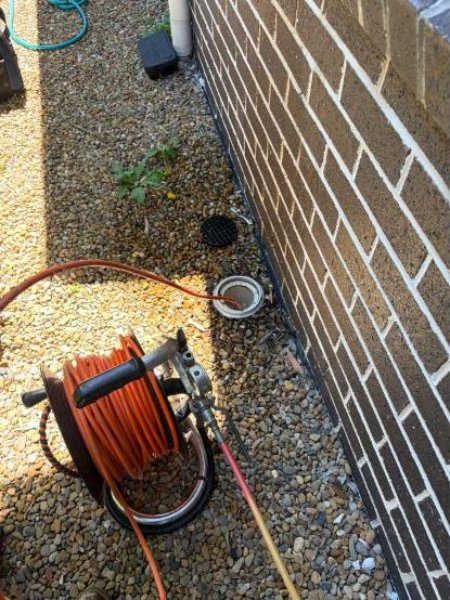
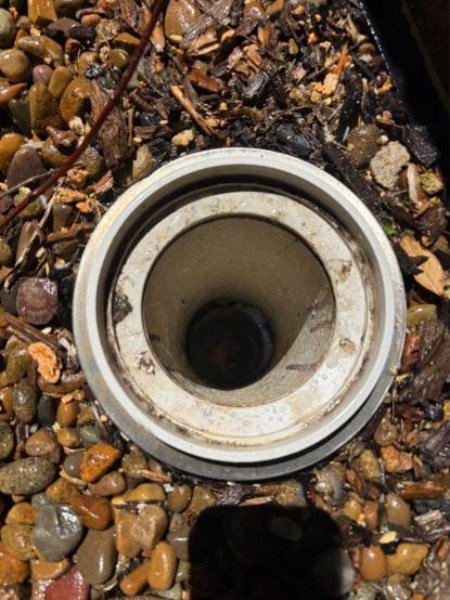
Before any relining, the pipe has to be cleared. Here's a recent job in Little Bay where grease was jetted out of a kitchen line.
Grease-blocked kitchen drain cleared, Little Bay (nearby)
The problem: a Little Bay home had a blocked kitchen sink, with dirty water backing up into the dishwasher.
What we did: the overflow gully outside the kitchen window was overflowing, which told us the blockage was further down the line. It was grease built up in the pipe. We cleared it with our high-pressure jetter, which broke the grease down and flushed it through.
The result: we filled both sink bowls and let them go to flush the system and check everything drained freely before we left.
More local work is on our recent projects page.
Quick fix or long-term fix?
| Problem | Quick fix | Long-term fix |
|---|---|---|
| Roots in the sewer | Cut them out | Reline the joints they come through |
| One cracked joint | Clear the line | Patch reline |
| Whole line cracked | Clear it | Full reline, or replace if it has sagged |
| Leaking stormwater line under a yard | Clear it | Reline to stop sand washing in |
What affects the cost
- The length to be relined and the pipe size.
- How many patches or junctions are involved.
- Access: existing inspection openings and pits, or a new one.
- Preparation: how much clearing and root cutting is needed first.
- Timing: outside your business hours.
You get a fixed price for each option before any work starts.
Who's responsible?
- The site owner: the private sewer and stormwater on the property. In a lease, check who pays.
- Factory complexes: shared lines are usually the complex's; branches inside a unit belong to that unit.
- Sydney Water: the sewer main and the junction where your line connects.
Quick checks you can do
- Keep any camera footage from past drain jobs.
- Note how often each drain blocks and what was found.
- Find your inspection openings and pits.
- Look for sinking concrete or damp spots over pipe lines.
Signs it's urgent and when it can wait
- Call straight away if sewage is coming up or leaking into the yard.
- Call soon if a line keeps blocking with roots.
- Book a time if you want an older line camera-checked.
Relining and the bay
A cracked sewer leaks into the sand, and on low ground near the bay that sand is close to the water table. Sealing old pipes keeps sewage in the sewer, and sealing stormwater lines stops sand washing in and silt washing out. It's better for the site and for Botany Bay.
Banksmeadow, area by area
- Industrial estates off Botany Road: older sewers under concrete yards and shared lines behind units.
- Larger warehouses and logistics yards: long lines under hardstand and driveways.
- Near the port and the bay: reclaimed sand and a high water table.
- The Botany side: homes with older clay sewers under driveways and gardens.
- Next door in Botany, Hillsdale and Matraville: the same old pipes and the same sandy ground.
Relining words explained
- Liner: a resin-soaked tube that hardens inside the old pipe.
- Patch reline: a short liner over one damaged spot.
- Full reline: a liner along the whole length between access points.
- Curing: hardening the resin with time, heat or light.
- Junction reinstatement: reopening a branch line after relining.
- Sag: a dip in the pipe that relining can't fix.
Homes in Banksmeadow
For the homes and units on the Botany side of Banksmeadow, we camera and reline older clay sewers under driveways and paths, just as we do in Botany. See pipe relining in Botany.
Relining or digging: how we decide
The camera footage decides. We look at the whole length of the pipe and ask a few questions. Is the pipe still round, or has it been squashed out of shape? Does water run straight through, or does it sit in a dip? Are the cracks and open joints spread along the line, or in one or two spots? Is there enough access at each end to get a liner in? And what's on top: a garden bed, a thin path, or 200 mm of reinforced concrete carrying trucks?
| What the camera shows | What we usually recommend |
|---|---|
| Pipe round, water runs through, cracks or roots at a few joints | Patch relining at those joints |
| Pipe round, cracks or roots along most of the line | Full relining |
| A dip that holds water | Dig up and re-lay that section; reline the rest if needed |
| Pipe broken, deformed or collapsed | Dig up and replace that section |
| Pipe sound, just blocked | Clear it; no repair needed |
Often the right answer is a mix: re-lay one sagging section where the ground has dropped, and reline the rest of the line from inside. We'll show you the footage and explain why.
Relining under a working site
Relining needs access at the ends of the damaged pipe, usually an inspection opening, a pit or the overflow gully, plus space for our equipment and a short time with the line out of use. On a factory complex, that might mean the amenities in one or two units can't be used for part of a day. We'll tell you exactly which fixtures will be out and for how long, and plan it for a quiet time: early, late or on a Saturday. The yard, the driveway and the dock stay open.
Stormwater relining on big yards
Cracked stormwater pipes under industrial yards let sand wash in every time it rains. The pits fill faster, the line silts up, and over time the sand that washes out from around the pipe can leave voids under the concrete, which then cracks and sinks. Relining a cracked stormwater line stops the sand moving. On a large yard, that can save the concrete as well as the pipe. See stormwater in Banksmeadow.
Relining a sewer, step by step
- We find and open the access points at each end of the damaged length: an inspection opening, the overflow gully, a boundary trap or a pit. If there isn't one, we may fit a new inspection opening first.
- The line is jetted clean. Roots are cut out with a root-cutting head, and grease, scale and debris are washed away so the liner can bond to the pipe wall.
- The camera goes through again to measure the pipe's size and the exact distance to each crack, joint and branch.
- The liner is cut to length and soaked with resin on site.
- It's pulled or inverted into the pipe and inflated against the old pipe wall, where it stays until the resin cures.
- Once it's hard, the inflation bladder comes out, branch connections are reopened where needed, and the ends are trimmed.
- A final camera run shows the result, and we give you the before and after footage.
What the liner is like
A cured liner is a smooth, joint-free pipe inside the old one. It's slightly smaller than the original, but because it's smooth and has no joints for waste to catch on, it usually flows as well as or better than the old cracked pipe. Roots can't get in through it, and it stops water leaking out into the sand.
Pipes under racking and stock
In warehouses, sewer and stormwater lines sometimes run under areas now covered with racking, stock or machinery. Digging them up would mean clearing the area, which could take days and cost more than the plumbing. Relining from an access point outside the area can repair the pipe without moving anything. If there's no access close enough, we'll look at the nearest place a new inspection opening could go.
Relining and old cast iron
Older industrial buildings sometimes have cast iron sewer or stormwater pipes. Cast iron corrodes from the inside, building up scale that narrows the pipe, and eventually cracks or splits. If a cast iron pipe still holds its shape, it can often be descaled and relined. If it has rusted through in places, those sections may need to be replaced first. The camera shows which.
Recent sewer findings near Banksmeadow
Two recent jobs in Matraville show the kind of damage we find nearby. On one, roots had got into a sewer where a newer PVC pipe joined the original terracotta, and sewage was leaking onto a side path. We cut the roots out and quoted a permanent repair of that joint, the kind of spot a patch reline or a new joint fixes for good. On another, roots from large trees above a sewer had squashed one section of pipe and lifted another so it held water. Cutting the roots out got it flowing, but the squashed and lifted sections need digging and re-laying, because a liner would simply follow the damage.
Before you reline: questions worth asking
- Has the whole line been cameraed, not just the bit near the blockage?
- Is there a sag anywhere that relining won't fix?
- Is the pipe round enough for a liner to seal?
- Which branches will need reopening afterwards?
- Which fixtures will be out of use, and for how long?
- Will you get the before and after footage?
We answer all of these before any work starts, and you'll get a fixed price for each option.
What to tell us when you call
- Which drains keep blocking, and how often.
- Whether a camera has been through the line before, and if you have the footage.
- Where the inspection openings and pits are.
- What's above the pipe: concrete, asphalt, a slab, racking or garden.
- When the line could be out of use for a few hours.
Relining and future maintenance
A relined pipe still needs looking after. Keep wipes, paper towels and grease out of the sewer, and keep pits and grates clear on stormwater lines. A camera check every few years on long or busy lines catches any new problems early, at the joints the liner didn't cover or in sections that weren't damaged when the work was done.
Leases, owners and who pays
On a leased industrial site, a broken sewer or stormwater line under the yard is usually the owner's responsibility, but leases differ. Before work starts, the owner will want to know what's wrong, what the options are and what each costs. We give you the camera footage, a short written summary of what we found, and a fixed price for each option, relining, patching or digging. That gives the owner what they need to approve the work quickly, so the problem doesn't sit for weeks while emails go back and forth.
Relining and the water table
Near the bay, the water table can be close to the surface, especially after rain. Digging there means pumping out water to keep the trench dry, which adds time and cost. Relining avoids most digging, so it's often the simpler option on the lowest ground near the port and the foreshore. Where we do need to dig, we'll plan for pumping and shoring before we start.
Why the camera comes first
Nobody should reline a pipe they haven't seen. The camera tells us whether relining will work, how long the liner needs to be, where the branches are and whether there's a sag that needs digging. It also gives you a record of the pipe before and after, which is useful if you sell or lease the site later.
Junctions where branch lines join
On a factory or warehouse sewer, branch lines from each toilet, basin and floor waste join the main line at junctions. Junctions are a weak point: the fitting is often older than the pipes either side, and roots and leaks favour them. After a main line is relined, each junction is reopened from the inside with a cutter so the branch can drain again, and if a junction itself is damaged, it can be sealed with a junction liner. We camera every junction after the work to make sure it's open and sealed.
Relining stormwater pits and lines together
On a sandy industrial yard, a cracked stormwater line and a broken pit often go together: sand comes in through the cracked pipe, fills the pit, and the pit's walls crack under traffic. Relining the line stops the sand at its source, and repairing or rebuilding the pit with a heavy-duty grate finishes the job. We'll look at both together so you're not paying to fix one and then the other a year later.
What happens when you call
Tell us what's going on
Call or send a quick form. A photo of the problem helps us come prepared. No call-out fee.
Options and a fixed price first
We find the cause, explain your options and give you a fixed price for each before any work starts.
Fixed, tested and backed
We do the work, test it, clean up, and back our workmanship with a lifetime labour warranty.
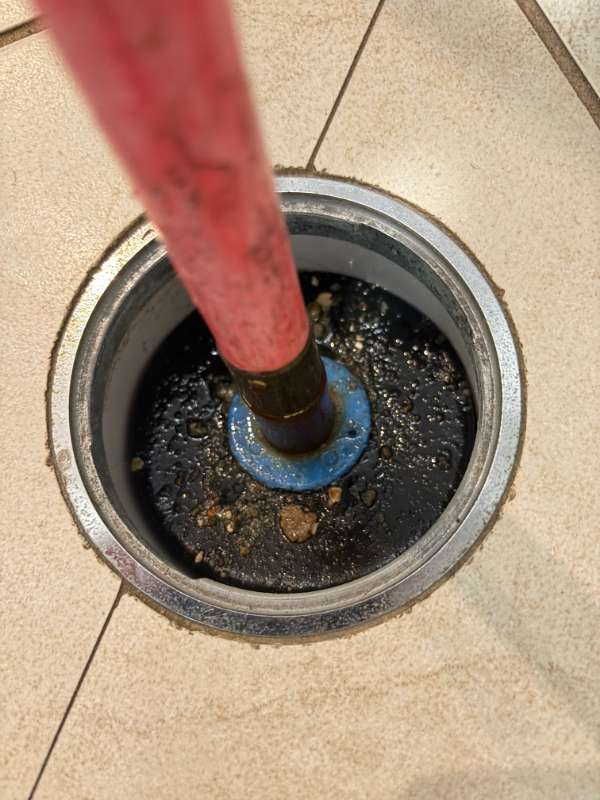
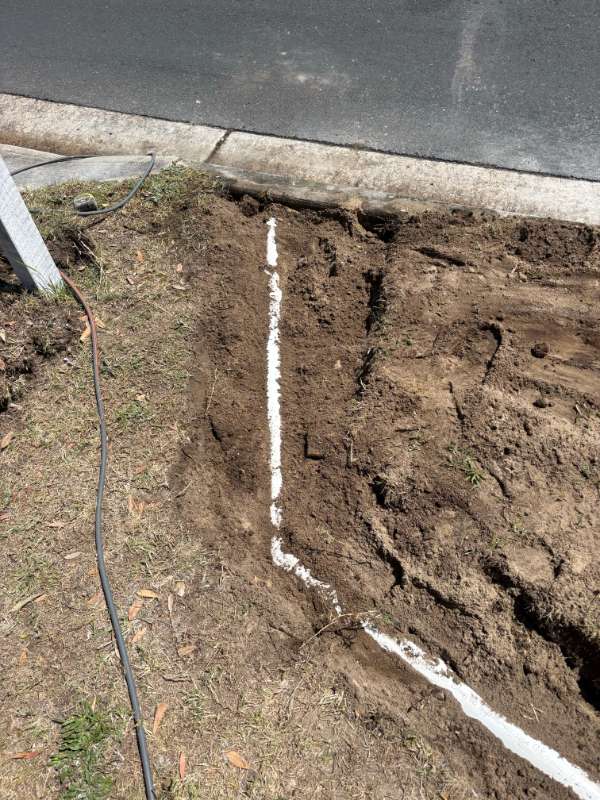
Jobs we finished recently
Why Banksmeadow businesses and homeowners call us
- Based in Matraville, a few minutes from Banksmeadow
- Weekend and early starts when that keeps your site running
- Rated 5.0 from 110 Google reviews
- Options and a fixed price before any work starts
- Lifetime labour warranty on our workmanship
- Licensed plumbers, drainers and gasfitters (Lic. 398171C), with accredited backflow testers on the team
Pipe relining questions from Banksmeadow businesses and homeowners
Can you reline pipes under a concrete yard?
Yes. That's one of the main reasons to reline: the pipe is repaired from the inside, so the concrete stays.
Can you reline a pipe under a factory floor?
Often yes, through an inspection opening or pit, so the slab doesn't need to be lifted.
Does relining work on every pipe?
No. It won't fix a sag or a collapsed pipe. We camera it first and tell you honestly.
How long does relining take?
Most relining is done in a day or two, depending on the length and access.
Can you reline stormwater pipes too?
Yes. Relining stops sand washing in through cracks and joints.
Will relining stop roots?
Yes. The liner seals the joints, so roots can't get in.
Can you work around our site's operations?
Yes. We can work outside your business hours or on a weekend.
What's the difference between patch and full relining?
A patch covers one damaged spot. A full reline covers the whole length between access points.
Do you need to clear the pipe first?
Yes. We jet it clean and cut out roots so the liner bonds properly.
Will you show us the camera footage?
Yes, before and after.
Do you still look after homes in Banksmeadow?
Yes. We reline sewers for the homes and units on the Botany side of Banksmeadow too.
Do you give a fixed price?
Yes, for each option, before any work starts.
More plumbing in Banksmeadow: our Banksmeadow plumber page, sewer repairs, blocked drains and stormwater. Nearby: pipe relining in Botany and Hillsdale. Guides: pipe relining, relining or digging and CCTV drain inspection.