Stormwater plumbing in Banksmeadow 2019 for industrial sites and homes
Banksmeadow is flat, sandy and close to sea level, and much of it was reclaimed from Botany Bay in the early 1970s for the port, the foreshore and the golf course. Big warehouse roofs and wide concrete yards send a lot of water into pits that have very little fall to carry it away, and sand washes into everything. Stormwater from these sites ends up in the canals and Botany Bay, so a pit full of rubbish is an environmental problem as well as a flooding one. We're a few minutes away in Matraville and we look after stormwater at factory complexes along Beauchamp Road.
Stormwater problems we fix in Banksmeadow
Pits full of sand
Yard and roadway pits packed with sand and sediment, often right over the outlet pipe. Dug out, jetted and checked.
Flooding loading docks
Water pooling at roller doors and dock levellers in heavy rain because pits and lines can't keep up.
Broken downpipes
Downpipes and high-level pipes hit by trucks, forklifts and bins, spilling water across entries.
Grated trench drains
Strip and trench drains across driveways and doors that fill with grit and stop working.
Cracked and crushed lines
Pipes under driveways broken by heavy traffic, and joints pulled apart as the sand settles.
Deep and multi-chamber pits
Large pits and junction chambers that need pumping out and a confined space entry to clean properly.
Signs your site's stormwater isn't working
- Water sitting over a pit grate long after the rain stops.
- Pools at roller doors, loading docks or the lowest corner of the yard.
- Water running down a wall from a broken or disconnected downpipe.
- Sand and silt spread across the yard after a storm, coming out of pits.
- Water coming into a unit under the door or through a floor waste in heavy rain.
- Clean water running into a pit in dry weather, which can mean a leaking water or fire service pipe nearby.
- A pit that smells of rotting leaves or sludge.
Why stormwater fails on Banksmeadow sites
Flat, low, reclaimed ground
Stormwater needs fall to move. On the flat, reclaimed land near the bay, pipes are laid with only a small fall, so water moves slowly and sediment drops out and stays. Pits fill faster here than on sloping sites, and a pipe that has settled even slightly can hold water and silt permanently.
Sand, grit and rubbish from the yard
Sand blows and washes across industrial yards, and every storm carries it into the pits. Add packaging, plastic, styrofoam, leaves and the grit from truck tyres, and a pit can go from clear to full in a season. When the sediment reaches the outlet pipe, the pit stops draining.
Big roofs and hard yards
A warehouse roof and a concrete yard shed almost all the rain that falls on them. In a summer storm that's a lot of water arriving at once. If any part of the system is part-blocked, from the downpipes to the yard pits to the line out to the street, water backs up and pools where it's least wanted: at doors and docks.
Trucks, forklifts and bins
Downpipes and high-level pipes along a building's front are easy to hit with a truck, a forklift or a bin. A cracked downpipe dumps water at the base of the wall or across a doorway. Pits and grates in driveways get driven over all day, and their walls crack and lids break.
Roots along the boundary
Trees and shrubs planted along boundaries and in landscaped strips send roots into pits and pipe joints looking for water. Roots catch leaves and sediment and can block a line completely.
Banksmeadow sites and their stormwater
| Type of site | Typical stormwater | Common problems |
|---|---|---|
| Factory and warehouse complexes | Shared roadway pits, downpipes on each unit, shared line to the street | Sand-filled roadway pits, downpipes hit by vehicles, water at low doorways |
| Large warehouses | Big roof catchment, long yard lines, deep pits, sometimes a detention tank | Pits overwhelmed in storms, silt in long lines, deep pits never cleaned |
| Workshops and yards | Grated trench drains, yard pits | Grit and oily residue in drains, broken grates |
| Offices and showrooms | Downpipes, car park pits | Leaves in pits, blocked downpipes |
| Homes near Botany | Downpipes, small pits, kerb outlet | Sand in pits, old lines, water against walls |
How we fix stormwater
- Find out what happens in the rain. Photos or a short video from a storm help a lot, even if it's dry when we arrive.
- Walk the site and find every downpipe, pit, trench drain and the line out to the street.
- Clean and jet. Pits are emptied, lines are jetted and sediment is taken away.
- Camera the lines to find cracks, crushed sections, root entry and dips.
- Give you options with a fixed price for each, from a clean-out schedule to replacing a broken section or adding a pit.
- Test it with water to make sure it flows.
Quick fix or long-term fix?
| Problem | Quick fix | Long-term fix |
|---|---|---|
| Pits full of sand | Dig out and jet | Fit silt baskets or geofabric under grates, repair pit walls and set a cleaning schedule |
| Downpipe broken by a vehicle | Replace the broken section | Add a protective bollard or guard and move the pipe if it's in a traffic path |
| Water at a roller door | Clear the trench drain | Upgrade the grate and channel, or add a pit at the low point |
| Line crushed under a driveway | Clear what we can | Replace the section with properly bedded pipe |
| Deep pit never cleaned | Pump out and clean | Add it to a yearly maintenance visit before storm season |
What affects the cost
- How many pits and lines need cleaning, and how full they are.
- Depth and access: deep pits need pumps and a confined space entry; high pipes need ladders or a lift.
- Disposal of the sludge and rubbish we take out.
- Timing: working outside your business hours or on a weekend.
- Repairs: concrete cutting, new pipe, new grates and making good.
You get a fixed price for each option before any work starts.
Who's responsible?
- The site owner or tenant: downpipes, pits, trench drains and pipes on the property, out to the kerb or the council drain. Check your lease for who pays for maintenance.
- Factory complexes: roadway pits and shared lines are usually the complex's, while downpipes on each unit may belong to the unit. We'll tell you which is which.
- Bayside Council: street gutters, kerb inlets and council stormwater pipes.
- Sydney Water: some larger stormwater channels and canals in the area.
Quick checks you can do
- Lift a few yard pit grates and look for sand, rubbish or standing water.
- Walk the building front and look for cracked or loose downpipes.
- Check trench drains at roller doors for grit.
- After rain, look for pools that take hours to go.
- In dry weather, check whether any pit has clean water running into it.
Signs it's urgent and when it can wait
- Call straight away if stormwater is coming inside, near electrics or stock.
- Call soon if a storm is forecast and pits are already full, or a downpipe is broken over a doorway.
- Book a time if you'd like pits and lines cleaned before storm season or a camera check of an older system.
A recent job nearby
Here's a recent stormwater job at a factory complex on Beauchamp Road in Matraville, just up the road from Banksmeadow.
2.5 m deep stormwater pit cleaned out, factory complex, Matraville (nearby)
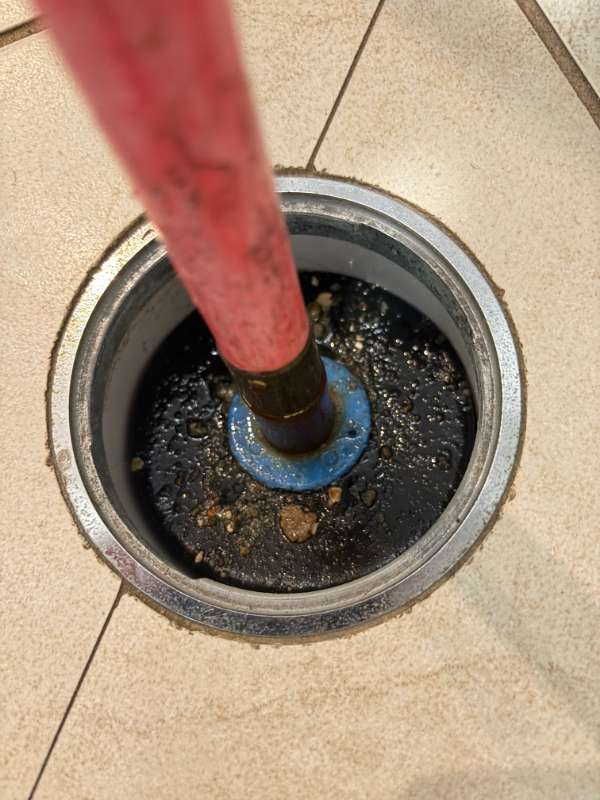
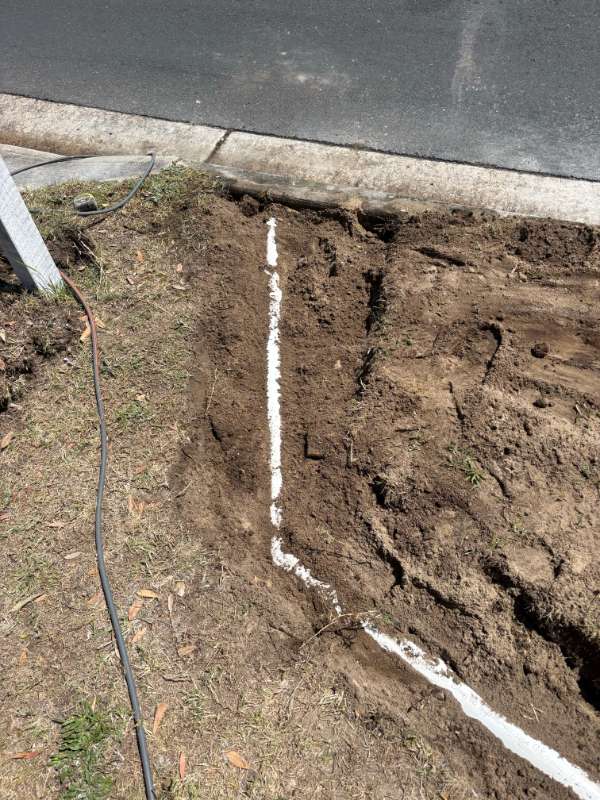
The problem: a large stormwater pit in the back corner of a factory complex on Beauchamp Road, Matraville, needed cleaning. When we arrived, a steady stream of clean water was running into it from the ground, a sign of a burst pipe below ground, most likely on the nearby fire service.
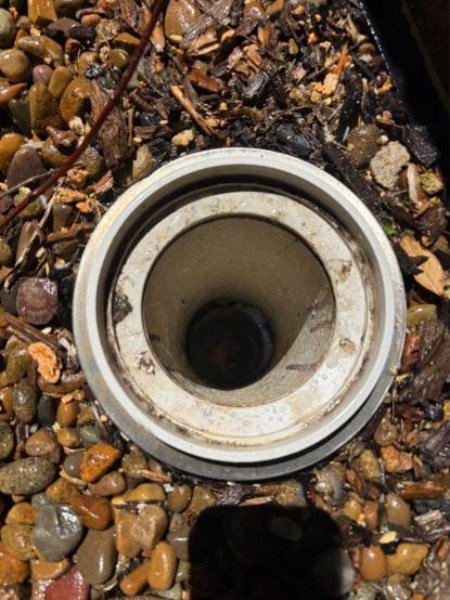
What we did: we dug a trench to divert the running water away so the pit could be opened safely. The pit is about 2.5 metres deep with two chambers: one was full of styrofoam and sludge, the other of tree roots and sludge. We pumped it out with hired pumps, cleared both chambers by hand, washed it down with our high-pressure jetter and fitted geofabric under the grate to stop leaves getting in. The work was carried out as a confined space entry, and the waste was taken away and disposed of properly.
The result: the pit flows freely again, so rubbish and sludge from the site are no longer heading for the canal and Botany Bay, and the site knows it has a separate leak to chase on the fire service.
Vehicle-damaged high-level stormwater pipe replaced, factory complex, Matraville (nearby)
The problem: at a factory complex on Beauchamp Road, Matraville, a truck or van had clipped a high-level 80 mm PVC stormwater pipe in front of one of the units. Every time it rained, water poured out of the broken pipe right at the unit's entry.
What we did: because the pipe sat over the main thoroughfare, we did the work on a Saturday when the site was quiet, working from a large A-frame ladder. We cut out the damaged section and fitted new 80 mm PVC pipe, fittings and clips to reconnect the upper-level downpipe properly.
The result: rain now goes back into the pipe instead of onto the doorway, and the job was done without blocking the driveway on a working day.
More local work is on our recent projects page.
Stormwater around Banksmeadow, area by area
- Near the port and the foreshore: reclaimed land with almost no fall, where pits fill with sand and drain slowly.
- Industrial estates off Botany Road: factory complexes with shared roadway pits and rows of downpipes along unit fronts.
- Large warehouses and terminals: long yard lines, deep pits and big roof catchments.
- Near Sir Joseph Banks Park and the Botany side: homes and older buildings with older lines and small pits.
- Next door in Botany, Hillsdale and Matraville: the same sandy ground and the same jobs.
Why stormwater matters for the bay
Stormwater isn't treated. What goes into a yard pit in Banksmeadow ends up in the canals and Botany Bay. A pit full of styrofoam, plastic, oily sludge and rubbish isn't just a flooding risk, it's pollution heading for the water. Keeping pits clean, fitting baskets or geofabric under grates, and keeping oils and wash water out of the stormwater are all part of looking after an industrial site.
Wash water and the stormwater
Water from washing trucks, forklifts, equipment or floors can carry oil, detergents and grit. It shouldn't go into the stormwater. If you wash on site, the wash area usually needs to drain to the sewer through a silt trap or an arrestor, with an approval from Sydney Water. We can look at how your wash area drains and tell you what's needed.
Deep pits and confined spaces
Some sites have deep pits and junction chambers, two or more metres down, often with more than one chamber. They're rarely cleaned because they're hard to get into. Cleaning one properly means diverting any water running in, pumping it out, and entering it as a confined space with the right safety precautions. We do this, as we did at the Beauchamp Road complex, and it's worth doing before they block completely.
Downpipes in the traffic path
On a busy site, downpipes along a building's front are hit by trucks, forklifts and bins. Once one is cracked, it sends water across doorways and down walls. We replace the broken section and can suggest a bollard, a steel guard or a new route for the pipe so it doesn't happen again.
Trench drains at roller doors
A grated trench drain across a roller door or dock is all that stops yard water running inside. They fill with grit and rubbish and their grates break under wheels. We clean the channel, check the outlet, replace broken grates with heavy-duty ones, and if the drain is undersized for the area it serves, we'll give you options to upgrade it.
A stormwater maintenance calendar
- Every month or two: sweep the yard and check pit grates for rubbish.
- Before the storm months: have pits, trench drains and lines cleaned and jetted.
- After big storms: check for sand washed into pits and pools that didn't drain.
- Every year: check downpipes for damage and deep pits for build-up.
- Every few years: camera the main lines to find cracks or dips early.
Stormwater words explained
- Pit: a box in the ground with a grate that collects water and connects to the pipes.
- Trench drain: a long grated channel, often across a doorway or driveway.
- Kerb outlet: where your pipe lets water out into the street gutter.
- Detention tank: a tank or oversized pit that holds water in heavy rain and lets it out slowly.
- Geofabric: a fabric that lets water through but holds back sediment.
- Confined space: a pit or chamber that needs special safety precautions to enter.
Homes in Banksmeadow
The homes and units on the Botany side of Banksmeadow have the same stormwater as Botany next door: downpipes, small pits and a kerb outlet, all on flat sandy ground where water drains slowly. We clear pits and lines, fix broken pipes and stop water sitting against walls. See stormwater in Botany.
Fixing a flooding loading area, step by step
- We look at photos or video from a storm and walk the yard to find the low point.
- Every pit and trench drain serving that area is cleaned out and the lines are jetted.
- The camera goes through the lines to check for breaks, dips or a blocked outlet.
- We test with water to see how fast it drains.
- If the system is undersized or broken, you get options: repairing the line, adding a pit, upgrading the trench drain or regrading part of the yard drainage.
- Once it's fixed, we can put it on a yearly cleaning visit.
Before you move into a warehouse or factory unit
Stormwater is easy to overlook when you're looking at a new site, and expensive to discover after the first big storm. Before you sign, it's worth having the pits and main lines checked. We can camera the lines, open the pits, look at the downpipes and trench drains, and tell you in plain terms what's working, what's full and what's broken. That gives you something concrete to raise with the owner before the lease starts, rather than after stock gets wet.
What to photograph in a storm
- Where water collects and how deep it gets, especially at doors and docks.
- Pits and trench drains overflowing.
- Downpipes spilling or leaking at joints.
- Water coming inside, and where it comes in.
- Sand and rubbish washed out across the yard afterwards.
A few photos or a short video taken during heavy rain help us find the cause even when it's dry on the day we arrive, and they help whoever manages the site see why the work is needed.
Pit baskets, grates and geofabric
A basket in a pit or a layer of geofabric under the grate catches leaves, plastic and some of the sand before it reaches the pipe. They need emptying, but emptying a basket takes minutes, while digging out a pit and jetting a blocked line takes much longer. On sites where pits sit in a traffic path, heavy-duty grates rated for trucks stop broken grates falling in and blocking the line.
Why a pit fills faster in Banksmeadow
On a sloping site, water moving through a pit has enough speed to carry most fine sediment on down the line. On Banksmeadow's flat, low ground it doesn't. Water slows down as it enters a pit, drops its sand and silt, and leaves only the cleaner water to go on. That is exactly what a pit is meant to do, but it means the sediment has to be taken out regularly. A pit that was cleaned two years ago on a sandy yard is probably close to full now.
What happens when you call
Tell us what's going on
Call or send a quick form. A photo of the problem helps us come prepared. No call-out fee.
Options and a fixed price first
We find the cause, explain your options and give you a fixed price for each before any work starts.
Fixed, tested and backed
We do the work, test it, clean up, and back our workmanship with a lifetime labour warranty.
Jobs we finished recently
Why Banksmeadow businesses and homeowners call us
- Based in Matraville, a few minutes from Banksmeadow
- Weekend and early starts when that keeps your site running
- Rated 5.0 from 110 Google reviews
- Options and a fixed price before any work starts
- Lifetime labour warranty on our workmanship
- Licensed plumbers, drainers and gasfitters (Lic. 398171C), with accredited backflow testers on the team
Stormwater questions from Banksmeadow businesses and homeowners
Do you clean stormwater pits on industrial sites?
Yes. We empty and jet yard and roadway pits, trench drains and lines at factories, warehouses and workshops, and take the waste away.
Can you clean deep pits?
Yes. We pump them out and clean them as a confined space entry, as we did for a 2.5 metre two-chamber pit at a factory complex in Matraville.
Can you come today?
We offer same-day service. If water is coming inside, tell us when you call.
Can you work on a weekend?
Yes. Jobs in busy driveways or that need ladders over a thoroughfare can be done on a Saturday when the site is quiet.
Why are our pits always full of sand?
Banksmeadow's ground is sandy and flat, and sand washes off the yard into pits every storm. Silt baskets, geofabric under grates and regular cleaning help.
A truck hit our downpipe. Can you fix it?
Yes. We replace the damaged section and can suggest a guard or a new route so it doesn't happen again.
There's clean water running into a pit when it hasn't rained. What does that mean?
It often means a leaking water or fire service pipe nearby. We can help find it.
Who looks after the pits in our factory complex?
Roadway pits and shared lines are usually the complex's responsibility; downpipes and pits serving one unit may be that unit's. We'll tell you which is which.
Can wash water go into the stormwater?
No. Wash water with oil, detergent or grit needs to go to the sewer through the right trap or arrestor, with approval from Sydney Water.
Do you use a camera on stormwater lines?
Yes. It shows cracks, crushed sections, roots and dips so you can fix the cause.
Do you still look after homes in Banksmeadow?
Yes. We fix stormwater for the homes and units on the Botany side of Banksmeadow too.
Do you give a fixed price?
Yes, for each option, before any work starts.
More plumbing in Banksmeadow: our Banksmeadow plumber page, blocked drains, leak detection and burst pipes. Nearby: stormwater in Botany and Hillsdale. Guides: stormwater plumbing, stormwater pits and blocked downpipes.