Sewer repairs in Banksmeadow 2019
Sewers on Banksmeadow's industrial sites can run a long way from the amenities to the Sydney Water connection, often under concrete yards and driveways that carry trucks all day. Laid in the sandy, low ground of the Botany basin, they settle and dip, joints open, and older clay and cast iron lines crack. When a sewer keeps blocking, or sewage is seeping into the yard, the line usually needs repairing, not just clearing. We're based a few minutes away in Matraville and we repair sewers across the area, from factory units to the homes on the Botany side.
Sewer repairs we do in Banksmeadow
Cracked and broken pipes
Damaged sections of sewer replaced, or relined from the inside without digging.
Sagging lines in sand
Dipped sections dug up and re-laid at the right fall so waste stops collecting.
Root damage
Roots cut out and the joints they got through sealed or replaced.
Crushed pipes under driveways
Sections broken by heavy traffic replaced with properly bedded pipe.
Boundary traps and inspection openings
Collapsed boundary traps replaced and new inspection openings fitted for easy access.
Grease trap plumbing
The pipes, vents and connections around grease traps and arrestors for food businesses.
Signs your sewer needs repairing
- The same drain blocks again within weeks or months of being cleared.
- Sewage seeping into the yard, a garden bed or a side passage.
- A sewer smell outside near a line or an inspection opening.
- The overflow gully spilling after toilets are flushed.
- Sinking ground or a dip in concrete over the line.
- Gurgling from toilets and floor wastes when other fixtures drain.
- Camera footage showing cracks, roots, a sag or a broken joint.
Why sewers fail in Banksmeadow
Sand that settles
Banksmeadow is built on sand, and much of the land near the bay was reclaimed in the early 1970s. Sand settles and washes away from under pipes, and a sewer that loses its support sags. Waste collects in the dip, and the line blocks again and again. The fix is to re-lay that section at the right fall, or in some cases reline it.
Heavy loads above
Sewers under industrial yards carry the weight of trucks, prime movers and forklifts every day. Pipes laid too shallow or without proper bedding crack and crush. Once a pipe is broken, sand runs in and the line blocks.
Old clay and cast iron
Older sites can still have earthenware or cast iron sewers. Earthenware joints open and roots get in; cast iron corrodes and scales inside until the pipe narrows and splits. Often a site has a mix: old pipe near the boundary and newer PVC closer to the buildings.
Roots from boundary trees
Trees along boundaries and in landscaped strips send roots towards sewer joints. A root that gets in grows into a mat that catches paper and waste. Cutting roots out clears the line, but they grow back unless the joint is repaired.
Grease and food waste
Food businesses and busy lunchrooms send fats, oils and food scraps down the drain. Grease sets in the pipe, especially where the line is flat or dips, and builds up until it blocks. That's why Sydney Water requires a grease trap for any business that cooks or serves hot food.
Banksmeadow sites and their sewers
| Type of site | Typical sewer | Common problems |
|---|---|---|
| Factory complexes | Branch lines from each unit to a shared line | Shared line blocked by one unit, sags in sand |
| Large warehouses | Long sewer under the yard to the boundary | Crushed sections under driveways, long sags |
| Food businesses | Kitchen line through a grease trap to the sewer | Grease build-up, trap and vent problems |
| Older industrial buildings | Earthenware or cast iron, sometimes no inspection opening | Cracked joints, roots, corrosion |
| Homes near Botany | Clay sewer, boundary trap | Roots, collapsed boundary traps, sags |
How we repair a sewer
- Clear the line so the camera can see it.
- Camera inspection from end to end, with the footage shown to you, and the depth and position of any damage located.
- Explain what we found: the type of damage, where it is and what caused it.
- Give you options with a fixed price for each: patch relining, full relining, or digging up and replacing a section.
- Do the repair at a time that suits your site.
- Test and camera the line again to confirm it's sound.
Recent sewer jobs nearby
Here are two recent sewer jobs in Matraville, just up the road from Banksmeadow.
Roots cut out of a sewer under a driveway, Matraville (nearby)
The problem: a Matraville home had a blocked sewer under the front driveway. Our camera showed tree roots inside the line. The boundary trap was the original earthenware, while the line from the house had already been replaced with PVC.
What we did: we cut the roots out with the high-pressure jetter and got the sewer flowing, then had the owner flush the toilets to clear the branch lines. A second camera run upstream showed a section of pipe that looked squashed, most likely by the roots of the large trees above it, and a section holding water where roots had lifted the pipe and created a backfall.
The result: the sewer is flowing again, and the owner knows the roots will grow back and may keep squashing and lifting the pipe, so a longer-term repair can be planned rather than waiting for the next blockage.
Overflowing boundary trap cleared and roots found in a hidden shaft, Matraville (nearby)
The problem: a Matraville sewer was overflowing into the backyard, with the boundary trap open and spilling.
What we did: we jetted through the blockage to get it flowing, then put the camera in. Just past the boundary trap was an extra shaft with several tight bends, packed with tree roots. The bends were too tight to get the root-cutting head through the trap and into the shaft.
The result: the sewer was flowing again, and we recommended digging beside the boundary trap to open the shaft and remove the roots from there. The tree beside the trap had already been removed, so once the roots are out, regrowth should be minimal.
More local work is on our recent projects page.
Quick fix or long-term fix?
| Problem | Quick fix | Long-term fix |
|---|---|---|
| Roots at a joint | Cut the roots out | Patch reline or replace the joint |
| Sag in sand | Jet it clear | Dig up and re-lay the section at the right fall |
| Crushed under a driveway | Clear it | Replace with properly bedded, stronger pipe |
| Collapsed boundary trap | Clear it | Replace the trap, or remove it and fit an inspection opening where allowed |
| Grease build-up | Jet the line | Fix the grease trap, the fall of the line, and kitchen habits |
What affects the cost
- The type and length of damage.
- Depth and what's on top: concrete, asphalt, a building or a garden.
- Whether relining is possible or the pipe has to be dug up.
- Access, and whether an excavator is needed.
- Timing: working on a weekend or outside business hours.
You get a fixed price for each option before any work starts.
Who's responsible?
- The site owner: the private sewer from the buildings to the connection with the Sydney Water sewer. In a lease, check who pays.
- Factory complexes: the shared line is usually the complex's; branch lines inside a unit belong to that unit.
- Sydney Water: the sewer main in the street or easement, and the junction where your line connects.
Quick checks you can do
- Find your inspection openings and boundary trap, if there is one, and make sure they're not buried.
- Check the overflow gully grate isn't covered.
- Look for damp, smelly or sinking spots over the sewer line.
- Note which fixtures are affected when a drain blocks.
- Keep any camera footage from past jobs.
Signs it's urgent and when it can wait
- Call straight away if sewage is coming up inside, through a gully or into the yard.
- Call soon if the sewer keeps blocking or smells.
- Book a time if you want an older line checked with a camera.
Grease traps and arrestors
Sydney Water requires any business that cooks or serves hot food to have a grease trap and an approval to discharge trade wastewater. The trap separates fats and oils from the water before it reaches the sewer. A licensed plumber installs it, arranges the plumbing inspection, provides an updated sewer service diagram and a certificate of compliance. Grease traps must be pumped out and cleaned by an authorised liquid waste transporter, on the schedule Sydney Water sets. We look after the plumbing side: the lines into and out of the trap, the vents, the bucket traps in sinks and floor wastes, and repairs when something leaks or blocks.
Trade waste from other sites
It isn't only food businesses. Workshops, wash bays and some factories send oily water, grit and other waste into the sewer, and Sydney Water may need a trade waste approval and pre-treatment, such as an oil arrestor or a silt trap. If you're unsure whether your site needs one, ask us and we'll point you in the right direction.
Boundary traps
Many older properties have a boundary trap near the street, where the private sewer meets the line to the Sydney Water main. They're often earthenware, and they crack, collapse and catch roots. A collapsed boundary trap causes repeat blockages. We replace them, and fit a proper inspection opening so the line can be cleared and checked without digging next time.
Banksmeadow, area by area
- Industrial estates off Botany Road: factory complexes with shared sewer lines along the back of the units.
- Larger warehouses and logistics yards: long sewer runs under concrete yards and driveways.
- Near the port and the bay: reclaimed sandy ground where lines settle.
- The Botany side: homes and units with older clay sewers and boundary traps.
- Next door in Botany, Hillsdale and Matraville: we repair sewers here every week.
Sewer words explained
- Private sewer: the pipes on your property from the buildings to the Sydney Water connection.
- Boundary trap: a trap near the boundary of older properties.
- Inspection opening: a capped access point for clearing and checking the line.
- Sag or belly: a dip in the pipe where waste collects.
- Relining: a resin liner cured inside the old pipe to seal it.
- Grease trap: a tank that separates fats and oils before they reach the sewer.
Homes in Banksmeadow
For the homes and units on the Botany side of Banksmeadow, we repair cracked and root-damaged clay sewers, replace collapsed boundary traps and fit inspection openings, just as we do in Botany. See sewer repairs in Botany.
Digging up and re-laying a sagging section, step by step
- The camera locates the sag and its depth, and we mark the line on the surface.
- We cut concrete or asphalt if needed and dig down to the pipe, keeping the trench safe.
- The sagging section is cut out, and the sand underneath is cleaned out and replaced with firm bedding.
- New PVC pipe is laid at the right fall and joined to the sound pipe either side.
- The line is tested and run with water, then the camera goes through again to confirm the dip is gone.
- The trench is backfilled and compacted, ready for the surface to be reinstated.
Relining instead of digging
If the pipe is cracked, has open joints or has roots getting in but still holds its shape and fall, relining can repair it from the inside without digging up the yard. A resin-soaked liner is pulled or inverted into the pipe and cured in place, forming a new pipe inside the old one. Short damaged sections can be patch-relined. Relining doesn't fix a sag, because the liner follows the old pipe, so for a dipped section we'll usually recommend re-laying it. See pipe relining in Banksmeadow.
Keeping the site working during a repair
A sewer repair can mean the toilets and sinks served by that line can't be used while the work is done. On a factory complex, that may affect several businesses. We plan the work so the line is out of use for as short a time as possible: setting everything up first, doing the cut-over quickly, and where needed, working on a Saturday or early in the morning. If a longer job can't avoid downtime, we'll tell you how long the amenities will be out so you can plan around it.
When sewage gets into the stormwater
On some older sites, a broken sewer can leak into a nearby stormwater line or pit, or a stormwater downpipe may have been connected into the sewer. Both are problems: sewage in the stormwater pollutes the canals and Botany Bay, and stormwater in the sewer overloads it in storms and can cause overflows. A camera inspection and a dye test show where the lines go. We'll fix any wrong connections and broken pipes we find.
Sewer service diagrams
Sydney Water keeps a sewer service diagram for most properties, showing where the private sewer runs and where it connects. On older industrial sites the diagram may be out of date or missing changes made over the years. When we repair or change a sewer, we update the plumbing paperwork so the next person to work on it knows where the pipes are.
A third job: roots at a PVC joint
Sewer leaking in a side passage, roots at a joint, Matraville (nearby)
The problem: a Matraville home had a blocked toilet, and sewage was leaking onto the side path where a PVC pipe went into the ground.
What we did: our camera showed tree roots inside the pipe. We cut them out with the high-pressure jetter, then did a paper test, flushing toilet paper and watching it reach the inspection opening at the side of the house.
The result: the sewer is flowing again. The roots were getting in where the PVC pipe joins the original terracotta, so we quoted separately for a permanent repair of that joint.
Mixed old and new pipe
Many sites in and around Banksmeadow have a sewer that's been partly replaced over the years. A new PVC line from the amenities meets the original earthenware or cast iron near the boundary. The joint where old meets new is a common weak point: the two pipes are different sizes and shapes, the connector can move, and roots find their way in. When a camera shows damage right at a change of material, a short patch reline or a properly made new joint usually fixes it for good.
What to tell us when you call
- Which drains are affected and how often they've blocked.
- Whether sewage has come up anywhere, inside or outside.
- Where the inspection openings or boundary trap are, if you know.
- Whether there's camera footage from an earlier visit.
- Whether the site has a grease trap or arrestor.
- When the amenities can be out of use for a short time.
Camera inspections before a lease or purchase
If you're about to lease or buy an industrial site in Banksmeadow, the sewer is worth checking. A camera inspection from the inspection opening to the boundary shows whether the line is sound, sagging, cracked or full of roots. It takes a short visit, you get the footage, and it can save a nasty surprise when the first blockage comes. If repairs are needed, you'll have the facts to raise with the owner before you sign.
Inspection openings on older sites
Some older buildings have no inspection opening on the sewer at all, so every blockage means digging or pulling a toilet off its base to get in. Fitting an inspection opening, a capped access point brought up to ground level, means future blockages can be cleared and the line checked with a camera quickly and cleanly. At a home in Botany next door, we found the line with our camera and locator, dug down beside the house, cut a new PVC inspection opening into the old 150 mm earthenware pipe and raised it to the surface with a screw-down cap.
What happens when you call
Tell us what's going on
Call or send a quick form. A photo of the problem helps us come prepared. No call-out fee.
Options and a fixed price first
We find the cause, explain your options and give you a fixed price for each before any work starts.
Fixed, tested and backed
We do the work, test it, clean up, and back our workmanship with a lifetime labour warranty.
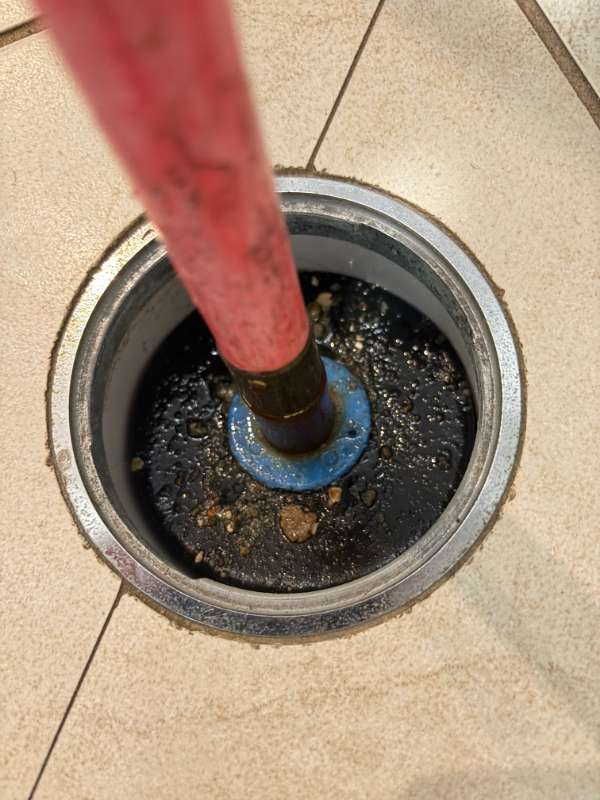
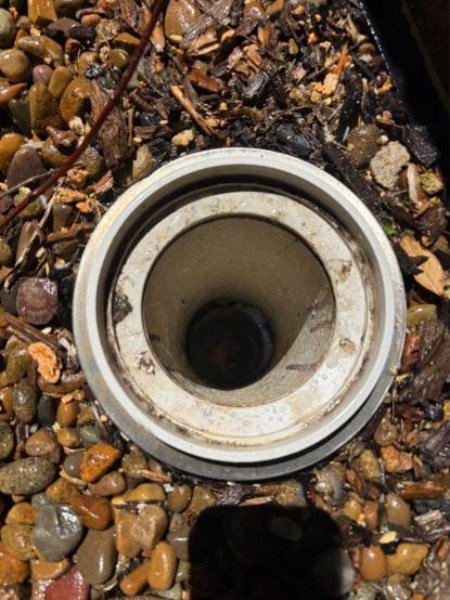
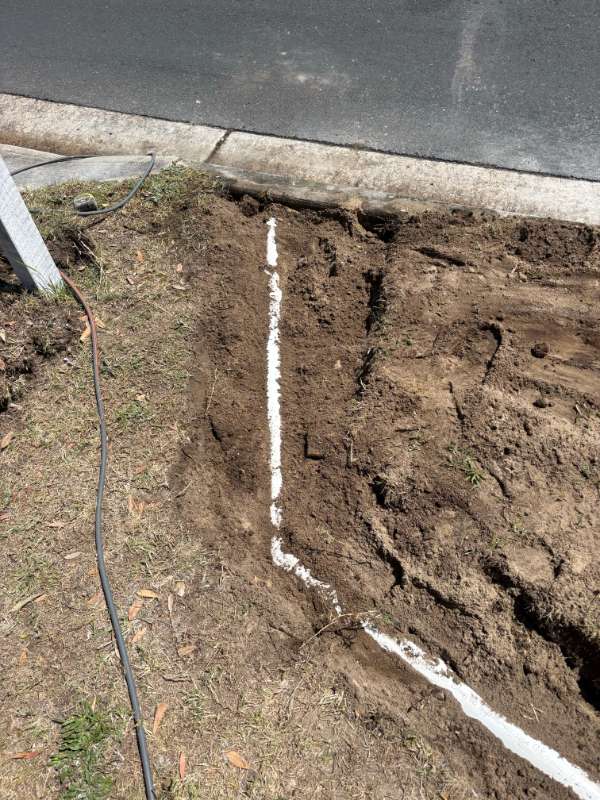
Jobs we finished recently
Why Banksmeadow businesses and homeowners call us
- Based in Matraville, a few minutes from Banksmeadow
- Weekend and early starts when that keeps your site running
- Rated 5.0 from 110 Google reviews
- Options and a fixed price before any work starts
- Lifetime labour warranty on our workmanship
- Licensed plumbers, drainers and gasfitters (Lic. 398171C), with accredited backflow testers on the team
Sewer repair questions from Banksmeadow businesses and homeowners
Do you repair sewers on industrial sites?
Yes. We repair sewer lines at factories, warehouses, workshops and food businesses in Banksmeadow and nearby.
Why does our sewer keep blocking?
Usually a sag in the sand, a cracked or crushed section, or roots at a joint. A camera inspection shows which.
Can you repair a sewer without digging up our yard?
Often yes, by relining. If the pipe has sagged or collapsed, a section may need to be dug up and re-laid.
Can you come today?
We offer same-day service. Tell us if sewage is coming up when you call.
Do you do grease trap plumbing?
Yes. We install and repair the plumbing around grease traps and arrestors. Pump-outs are done by an authorised liquid waste transporter.
Does our business need a grease trap?
If you cook or serve hot food, Sydney Water requires one, along with a trade waste approval.
Can you work on a weekend?
Yes. If a repair needs the sewer out of use or a driveway closed, we can do it on a weekend.
Who pays for a sewer repair in a factory complex?
Shared lines are usually the complex's; branch lines inside a unit belong to that unit. We'll tell you where the damage is.
Can you fit an inspection opening?
Yes. It makes future clearing and camera checks much easier.
Will you show us the camera footage?
Yes, and we can send it to you for the site owner or insurer.
Do you still look after homes in Banksmeadow?
Yes. We repair sewers for the homes and units on the Botany side of Banksmeadow too.
Do you give a fixed price?
Yes, for each option, before any work starts.
More plumbing in Banksmeadow: our Banksmeadow plumber page, blocked drains, pipe relining and stormwater. Nearby: sewer repairs in Botany and Hillsdale. Guides: CCTV drain inspection, drain jetting and blocked drains guide.