Blocked drains in Banksmeadow 2019: factories, warehouses and homes
Banksmeadow is mostly an industrial suburb on the northern shore of Botany Bay, wrapped around Port Botany, with oil terminals, the goods railway, chemical plants, food factories, warehouses and transport yards, and only about 500 residents. Its drains work harder than most: big roof areas, wide concrete yards, trucks and forklifts driving over pits, staff amenities used by a whole shift, and sandy, low ground that settles under pipes. We're based a few minutes away on Girawah Place in Matraville and we're in the factory complexes along Beauchamp Road regularly.
Drain problems we clear in Banksmeadow
Staff toilets and amenities
Toilets, urinals, showers and basins in amenities blocks that back up or drain slowly. Cleared, then checked so the next shift isn't caught out.
Kitchenette and lunchroom sinks
Grease, food and coffee grounds that block lunchroom sinks and the line out to the sewer.
Floor wastes in workshops
Floor wastes and grated drains in workshops and wash areas that fill with grit, sand and rubbish.
Sewer lines across the site
Main sewer lines blocked by roots, rags, wipes or a dipped section of pipe in the sand.
Stormwater pits and lines
Yard and driveway pits full of sand and sediment, and lines that back up across loading areas in storms.
Homes near Botany
The small number of homes and units on the Botany side, with the same old sewers and sandy ground as Botany next door.
Signs a drain on your site is blocking
- Toilets in the amenities that flush slowly, gurgle, or rise high in the bowl before draining.
- A smell of sewage in an amenities block, a lunchroom or near an inspection opening in the yard.
- Floor wastes in a bathroom or workshop that bubble or hold water when something else drains.
- The overflow gully outside the amenities spilling dirty water onto the yard.
- Water pooling over a yard pit or across a loading dock in rain instead of draining away.
- Sand, silt or rubbish sitting on top of a pit grate.
- A lunchroom sink that drains slowly or smells, even after you've cleared the plug.
Why drains block in Banksmeadow
Sandy ground that moves
Banksmeadow sits on the low, sandy ground of the Botany basin, and much of the land near the bay was reclaimed in the early 1970s for the port, the foreshore and the golf course. Pipes laid in sand don't stay perfectly straight. Sections settle, joints open and dips form, and every dip becomes a place where paper and waste collect. A sewer that blocks every few months on a site like this usually has a sag in it, not just a one-off blockage.
Heavy traffic over pits and pipes
Trucks, prime movers and forklifts run over yard pits and the pipes beneath them every day. Grates crack, pit walls break and pipes under driveways get crushed or pulled apart at the joints. Broken pieces and sand fall into the line and stop it flowing. When a yard drain keeps blocking in the same place, the camera often shows a cracked or collapsed section right under a driveway.
Big roofs and wide concrete yards
A warehouse roof collects a huge amount of water in a summer storm, and a concrete yard sheds almost all of it. If downpipes, pits and yard lines are part-blocked with leaves, sand or rubbish, the system can't keep up and water backs up over the yard and against roller doors.
Amenities used by a whole shift
Amenities that serve a full shift take far more use than a home bathroom. Paper towels, wipes, sanitary items and rags flushed by staff or visitors are the biggest cause of blocked toilets and urinals on industrial sites, followed by low-flow pans on long, flat drain runs.
Old pipes on older sites
Some sites still have older clay or cast iron sewer lines laid decades ago. Joints crack, roots from trees along the boundary get in, and cast iron rusts and scales inside, narrowing the pipe. Newer complexes have PVC, but even PVC moves in sand.
Banksmeadow sites and their drains
| Type of site | Typical drains | Common problems |
|---|---|---|
| Factory and warehouse complexes | Shared roadway pits, shared sewer line, separate amenities in each unit | Sand in pits, broken grates, shared lines blocked by one unit |
| Large single-tenant warehouses | Big roof, box gutters, long yard lines, amenities block | Overflowing pits in storms, long sewer runs with dips |
| Workshops and trade premises | Floor wastes, wash areas, lunchroom sink | Grit and sand in floor wastes, oily waste in drains |
| Offices and showrooms | Toilets, kitchenettes, basins | Paper towel and wipes in toilets, grease in kitchen lines |
| Homes and units near Botany | Older clay sewers, boundary traps, stormwater pits | Roots, settled pipe in sand, sand in pits |
How we clear a blocked drain on your site
- Talk it through first. Tell us which drains are affected and send a photo if you can. We'll ask about access, induction and whether the site has a shared line.
- Find the blockage. We work out which fixtures and lines are affected and find the nearest inspection opening or pit.
- Clear it. Small blockages can be cleared with a drain machine; most sewer and stormwater lines get high-pressure jetting, which cuts through roots, grease and packed sand and flushes it away.
- Camera the line. We run our drain camera through to see why it blocked: a sag, a cracked joint, a crushed pipe, roots or a build-up.
- Give you options. If there's damage, we explain what we found, show you the footage and give you options with a fixed price for each.
- Test and tidy up. We flush and test the line, clean up and leave the area as we found it.
Quick fix or long-term fix?
| Problem | Quick fix | Long-term fix |
|---|---|---|
| Sewer blocked by roots | Jet the roots out | Reline the damaged section or replace it |
| Sag in a line laid in sand | Jet it clear | Dig up and re-lay that section at the right fall |
| Crushed pipe under a driveway | Clear what we can | Replace the section with stronger pipe and bedding |
| Pits full of sand | Dig out and jet | Repair broken pit walls, fit silt arrestors or baskets, and set a cleaning schedule |
| Toilets in amenities blocking often | Clear the blockage | Fix the cause: signs about wipes and paper towels, check pan and line fall, camera the line |
What affects the cost
- How many drains are affected and how far along the line the blockage is.
- Access: inspection openings, pits under racking or stock, high downpipes, and the site's induction rules.
- Whether a camera inspection is needed to find the cause.
- Timing: working outside your business hours or on a weekend so your site keeps running.
- Repairs: relining, digging, concrete cutting and making good.
You get a fixed price for each option before any work starts.
Who's responsible?
- The site owner or tenant: the sewer and stormwater pipes and pits on the property, out to the connection to the Sydney Water sewer and the kerb or council drain. Your lease usually says whether the owner or tenant pays.
- Factory complexes: shared lines and roadway pits are usually looked after by whoever manages the complex, while drains inside each unit belong to that unit. We'll tell you where the blockage was so the right person gets the bill.
- Sydney Water: the sewer main in the street or easement.
- Bayside Council: street gutters, kerb inlets and council stormwater pipes.
Quick checks you can do
- Check whether one fixture or several are affected. One blocked toilet usually means a problem close to it; several fixtures backing up means the main line.
- Find the overflow gully outside the amenities and see if it's spilling.
- Lift a yard pit grate and look for sand, rubbish or standing water.
- Check the lunchroom sink trap for grease and food.
- Ask staff what's been going down the toilets: wipes and paper towels are the usual suspects.
Signs it's urgent and when it can wait
- Call straight away if sewage is coming up through a floor waste, gully or toilet, or stormwater is coming inside a unit.
- Call soon if amenities toilets are draining slowly, a sewer smell is getting stronger, or yard pits are full before a forecast storm.
- Book a time if a drain is slow but working, or you want lines and pits checked and cleaned before storm season.
A recent job nearby
Here's a recent stormwater job at a factory complex on Beauchamp Road in Matraville, just up the road from Banksmeadow.
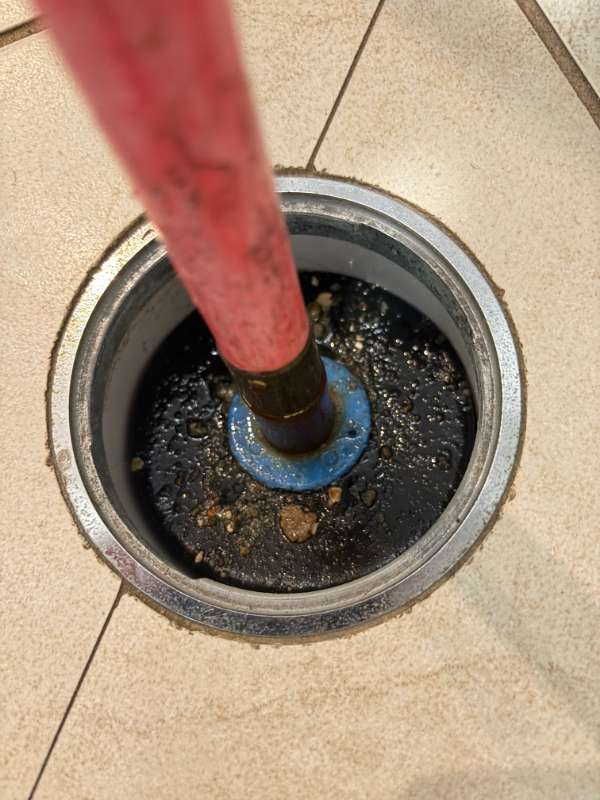
Sand-filled stormwater pit cleared in a factory complex roadway, Matraville (nearby)
The problem: a stormwater pit in the shared roadway of a factory complex on Beauchamp Road, Matraville, was so full of sand and sediment that it had covered its own outlet pipe. The unit in front of it has a low door threshold, so the next big storm would have sent water towards its entrance.
What we did: we lifted the large grate and dug out the built-up sand and debris by hand until the outlet pipe was clear and the pit was back to its full depth.
The result: the pit drains freely again and the unit's entrance is no longer the low point the water heads for. It's the kind of job worth doing before storm season on any sandy industrial site.
More local work is on our recent projects page.
“Best plumber in Matraville. Unblocked my drains efficiently!”
C S, Matraville (Google review)
Banksmeadow, area by area
- Along Botany Road and the Botany side: older industrial buildings, showrooms and the small number of homes, with older sewer lines and sandy ground.
- Near the port and the foreshore: reclaimed, flat land where stormwater has very little fall and pits fill with sand.
- Industrial estates and factory complexes: shared roadway pits and shared sewer lines, with separate amenities in each unit.
- Larger warehouses and terminals: long yard lines and big roof catchments where a single blocked pit can flood a loading area.
- Next door in Botany, Hillsdale, Pagewood and Matraville: we work in these streets and estates every week.
Blocked drains in factory complexes
In a factory complex or an industrial estate with several units, the drains are usually a mix of shared and private. Each unit has its own amenities and branch lines, which join a shared sewer line along the back or side of the complex, and the roadway has shared stormwater pits. When a toilet blocks in one unit, it can be that unit's branch or the shared line. We find out which, clear it, and give you a short note with photos so the cost goes to the right person, whether that's the tenant, the unit owner or whoever manages the complex.
Floor wastes and wash areas
Workshop floor wastes and wash areas collect grit, sand, metal swarf, rags and oily residue. They're often connected to the sewer through a trap or an arrestor, and they block when the sediment builds up. We clear the waste and the line, and if the area is used for washing vehicles or equipment, we'll talk to you about whether a silt trap or arrestor would stop it happening again. Sydney Water has rules about what can go into the sewer from a business, so we'll point out anything that needs a trade waste approval.
Lunchroom and kitchenette drains
Lunchroom sinks get oil, food scraps, coffee grounds and the rinse from dozens of mugs a day. Over time grease lines the pipe and catches everything else. We clear the line with jetting rather than just pushing a cable through, so the grease is washed off the pipe walls and not just pierced. If your site serves hot food to staff or the public, it will need a grease trap and an approval from Sydney Water, and we can sort out the plumbing for that.
Stormwater on big yards
On a site with a large roof and a concrete yard, stormwater is a bigger job than at a house. Downpipes, yard pits, grated trench drains across driveways and roller doors, and the line out to the council drain all need to be clear. Sand washes in from the yard, leaves come off the roof, and rubbish blows into pits. We clean pits, jet lines, camera them to find breaks, and repair broken grates and pit walls. See stormwater in Banksmeadow.
Keeping your site running while we work
We know a blocked drain is a problem for a business, not just a plumbing job. We'll ask about your hours, deliveries and induction, and plan the work around them. Jobs that need the water off, a driveway closed or a pit opened in a busy thoroughfare can be done early, late or on a Saturday when the site is quiet, as we do for the factory complexes on Beauchamp Road. Tell us what matters most on your site and we'll work to it.
Clearing a blocked sewer line, step by step
- We find the nearest inspection opening or the boundary trap. On some older sites there isn't one, and we'll find the line with our camera and locator.
- The jetter hose goes in with the right nozzle for the job: a penetrating head for a packed blockage, a root-cutting head for roots.
- We work the hose up the line until the blockage breaks and the water flows, then flush the whole line.
- The camera goes in to check the full length of pipe and find the cause.
- We flush the toilets and run the sinks to confirm everything drains, then show you the footage.
- If the line needs repair, you get options with a fixed price for each.
Preventing repeat blockages
- Put clear signs in amenities: only toilet paper in the toilet.
- Use bins for paper towels and sanitary items, and empty them often.
- Keep oil and food scraps out of lunchroom sinks.
- Sweep yards so sand and rubbish don't wash into pits.
- Have pits and lines cleaned before the storm months.
- Camera older sewer lines every few years to catch problems early.
Drain words explained
- Jetting: clearing a drain with a high-pressure water hose and a special nozzle.
- CCTV inspection: a waterproof camera pushed through a pipe to see inside it.
- Boundary trap: a trap near the boundary of older properties where the private sewer meets the line to the Sydney Water main.
- Inspection opening: a capped access point to the drain for clearing and inspection.
- Overflow relief gully: the grated fitting outside that lets sewage overflow outside rather than inside if the line blocks.
- Sag or belly: a dip in a pipe where water and waste sit.
- Relining: repairing a damaged pipe from the inside with a resin liner, without digging it all up.
Homes in Banksmeadow
Only about 500 people live in Banksmeadow, mostly towards the Botany side, and the homes there have the same plumbing as the streets of Botany: older clay sewers, boundary traps and sandy ground. If you live in one of them, we clear blocked toilets, sinks, showers and sewer lines and check them with our camera, just as we do in Botany. See blocked drains in Botany.
Before you sign a lease or buy a site
If you're moving into a warehouse or factory unit, it's worth knowing the condition of the drains before you sign. We can camera the sewer and stormwater lines, check the pits, amenities and hot water, and give you a plain report on what's working and what needs attention. That's useful when you're negotiating who pays for what.
What happens when you call
Tell us what's going on
Call or send a quick form. A photo of the problem helps us come prepared. No call-out fee.
Options and a fixed price first
We find the cause, explain your options and give you a fixed price for each before any work starts.
Fixed, tested and backed
We do the work, test it, clean up, and back our workmanship with a lifetime labour warranty.
Jobs we finished recently
Why Banksmeadow businesses and homeowners call us
- Based in Matraville, a few minutes from Banksmeadow
- Weekend and early starts when that keeps your site running
- Rated 5.0 from 110 Google reviews
- Options and a fixed price before any work starts
- Lifetime labour warranty on our workmanship
- Licensed plumbers, drainers and gasfitters (Lic. 398171C), with accredited backflow testers on the team
Blocked drain questions from Banksmeadow businesses and homeowners
Do you clear drains in factories and warehouses?
Yes. We clear blocked toilets, urinals, floor wastes, lunchroom sinks, sewer lines and stormwater pits and lines at factories, warehouses, workshops and offices in Banksmeadow and the surrounding industrial areas. We're a few minutes away in Matraville.
Can you come today?
We offer same-day service. Call us early in the day and tell us what's happening, and we'll give you a time.
Can you work outside our business hours?
Yes. If a job needs the water off, a driveway closed or a pit opened in a busy area, we can work early, late or on a Saturday so your site keeps running.
Who pays for a blocked drain in a factory complex?
It depends on where the blockage is. Drains inside a unit usually belong to that unit; shared lines and roadway pits are usually the complex's. We'll tell you where it was and give you a short note with photos.
Why does our sewer keep blocking?
On sandy ground the usual causes are a sagging section of pipe, roots in an older line, or a broken pipe under a driveway. A camera inspection finds the cause so you can fix it rather than clearing it again and again.
Do you use a camera?
Yes. After clearing, we run our drain camera through the line to see why it blocked and show you the footage.
Can you clear stormwater pits full of sand?
Yes. We dig out pits, jet the lines and check them with the camera. If grates or pit walls are broken, we'll give you a price to repair them.
What causes blocked toilets in amenities?
Mostly paper towels, wipes and sanitary items flushed by staff or visitors. Clear signs and bins help a lot.
Do you need to dig up our yard?
Usually not. Most blockages are cleared with jetting, and many damaged pipes can be relined. If a section has to be dug up, we'll explain why and give you a fixed price first.
Can you work with our site induction and safety rules?
Yes. Tell us what your site needs, such as an induction, a permit or a sign-in, and we'll follow it.
Do you still look after homes in Banksmeadow?
Yes. We clear drains for the homes and units on the Botany side of Banksmeadow too.
Do you give a fixed price?
Yes. We explain the options and give you a fixed price for each before any work starts.
More plumbing in Banksmeadow: our Banksmeadow plumber page, stormwater, sewer repairs, pipe relining and backflow testing. Nearby: blocked drains in Botany and Hillsdale. Guides: blocked drains guide, drain jetting and CCTV drain inspection.