Pipe relining in Randwick 2031
Many Randwick homes are connected to the sewer with terracotta pipe laid a century ago. The joints have cracked and opened, and the big figs, plane trees and backyard gums that make Randwick so green have sent their roots into every gap. In terrace rows, sewer lines often run under the house itself or join a neighbour's line before they reach the main, so digging isn't an option. Relining seals the damaged sections from the inside. We come up from Matraville, camera the line, and show you exactly what's needed.
How relining works
Relining puts a new pipe inside the old one. After the drain is jet cleaned and inspected with a camera, a liner soaked in resin is fed into the damaged section and inflated against the inside of the old pipe. The resin cures and hardens, leaving a smooth, sealed lining that bridges cracks, open joints and root entry points. The old pipe stays where it is and acts as a host for the new one.
Patch relining
A short liner seals one cracked joint or damaged section.
Full-length relining
A liner runs the whole length between two access points.
Junction repairs
Damaged connections where branches meet the main line.
Jet cleaning
High-pressure water clears roots and debris before lining.
CCTV inspection
A camera shows the damage and confirms the result.
New inspection openings
Access added where an old line has no way in.
When relining is worth considering
- The same drain blocks again and again, even after it's cleared.
- The camera shows roots coming through joints or cracks.
- A joint has shifted and leaves a step that catches waste.
- The line runs under the house, a terrace floor, sandstone footings or a neighbour's yard.
- The line runs under something you don't want dug up: a driveway, paving, a heritage garden.
- A camera check before buying found damage.
Why Randwick pipes need relining
Century-old terracotta
Randwick is one of Sydney's oldest suburbs, and many of its sewers are original terracotta pipe in short lengths. After many decades, the joints have cracked, opened or shifted. Every joint is a weak point.
Big trees
Figs, plane trees and gums line Randwick's streets and fill its backyards. Their roots find the gaps at clay joints and grow into a mat that catches waste. Cutting them out clears the drain for a while; they come back through the same gaps until the joints are sealed.
Lines under terraces
In terrace rows, the sewer often runs under the house from the back to the front, or joins a neighbour's line before reaching the main. Digging would mean lifting floors or working on someone else's property.
Sandstone and slopes
Randwick sits on sandstone ridges, and streets fall steeply towards Coogee and Clovelly. Pipes laid through rock and on slopes can crack where the ground moves or where they were bedded poorly.
Patched lines
Federation houses often have long clay sewer runs that have been patched by several plumbers over the years, with sections of PVC joined to clay. Each join is a possible weak point.
Randwick homes and relining
| Home type | Typical drains | Common faults |
|---|---|---|
| Terraces and semis | Clay under the house, sometimes shared with a neighbour | Roots, displaced joints, no inspection opening |
| Federation houses | Long clay runs to the street, patched over the years | Roots, cracks, poor joins between clay and PVC |
| Interwar flats | Shared clay or early PVC lines | Roots, grease, displaced joints |
| Newer homes | PVC joined to older clay near the boundary | Damage in the old section |
Our relining process
- Talk it through: how often it blocks, which fixtures are affected, any past work.
- Find a way in: an inspection opening, the gully, the boundary trap, or a new opening.
- Jet clean the line to remove roots and debris.
- Camera inspection: we record the pipe and show you the damage.
- Give you options, each with a fixed price, before any work starts.
- Install the liner and let it cure.
- Camera again so you can see the finished lining.
Reline or dig?
| Situation | Relining usually suits | Digging usually suits |
|---|---|---|
| Cracked or root-damaged joints | Yes | Rarely |
| Pipe under a house, terrace floor or sandstone | Yes | Only if collapsed |
| Pipe fully collapsed or crushed | No | Yes |
| Pipe badly sagging | Sometimes | Often |
| Short damaged section | Patch reline | Possible if easy to reach |
| Whole line in poor condition | Full-length reline | Possible in open garden |
See our pipe relining guide.
What affects the cost
- How many sections need lining, and how long they are.
- Pipe size and material.
- Access: whether there's an inspection opening or one needs to be added.
- Bends and junctions along the line.
- How much cleaning is needed first, especially with heavy roots.
You get a fixed price for each option before any work starts.
Who's responsible?
- You: the private drain from your home to the point where it joins the sewer, including a shared section in some terraces.
- Owners corporation: shared drains in a block of flats.
- Sydney Water: the sewer main and, in many cases, the connection to it.
See our sewer responsibility guide.
A quick check you can do
- Find your overflow gully. If it's spilling or the water sits high, there's a blockage downstream.
- Run a tap and listen for gurgling in other fixtures.
- Watch the toilet: does the water rise high before draining?
- Look for soggy or sunken ground along the line.
- Note how often it happens.
Signs it's urgent and when it can wait
- Call straight away if sewage is coming up through the gully, a floor waste or the toilet.
- Call soon if drains are slow everywhere, or the gully keeps filling.
- Book a time if a drain blocks every few months, or you'd like a camera check before buying.
A recent drain job nearby
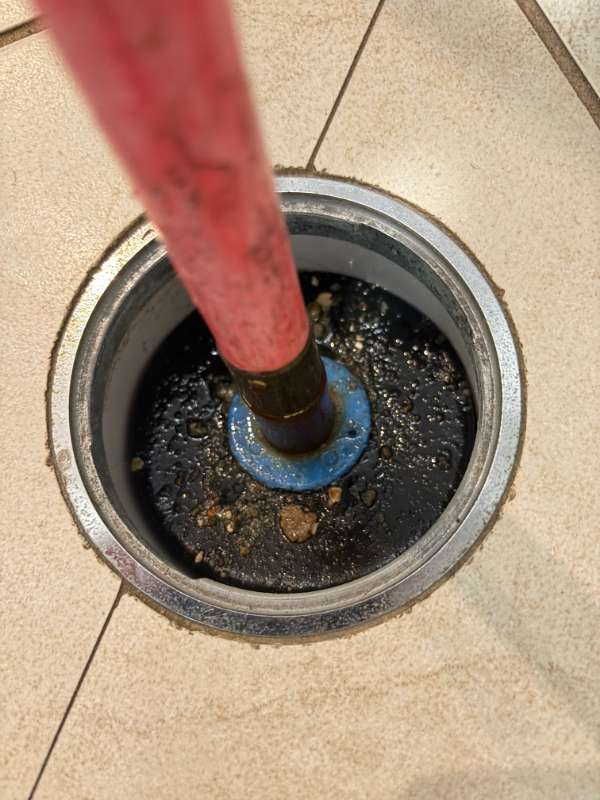
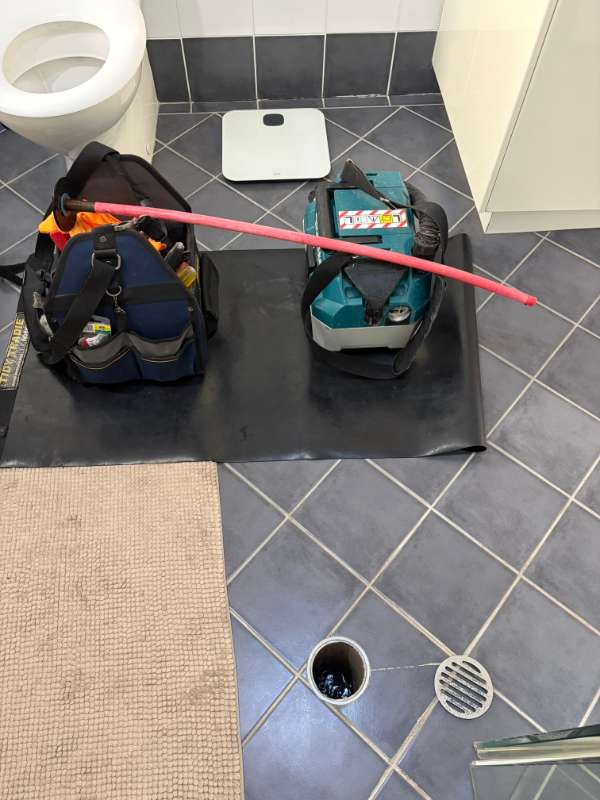
Here's a recent drain job nearby in Maroubra, where we cleared the drains and floor wastes with the jetter.
Blocked drains and floor wastes jetted clear, Maroubra (nearby)
The problem: a Maroubra home had slow, blocked drains and floor wastes, and some leaking taps.
What we did: we laid a protective mat to keep the floor clean, cleared the drains and floor wastes with high-pressure jetting, and repaired the leaking taps in the same visit.
The result: the drains flow freely again and the owners didn't need a second call-out.
“Best plumber in Matraville. Unblocked my drains efficiently!”
C S, Matraville (Google review)
More local work is on our recent projects page.
Relining across Randwick
- Around the Junction: newer homes on old clay connections.
- Near the hospital and university: walk-up flats with shared lines.
- Towards Centennial Park and the racecourse: Federation houses with long clay runs and big trees.
- On the slopes towards Coogee and Clovelly: terraces with sewers under the house.
- In the heritage conservation areas: homes where digging up gardens and paths isn't an option.
Relining under terraces
In a Randwick terrace, the sewer usually starts at the back, where the kitchen, laundry and bathroom are, and runs under the house to the front and out to the street. In some rows, it joins the neighbour's line first. Digging under a terrace means lifting floors, and digging next door means working on someone else's property. Relining avoids both. We find a way in, often through the overflow gully or the boundary trap, or by fitting a new inspection opening at the back, then jet clean, camera and reline the damaged sections from inside.
Shared lines in terrace rows
Where two or more terraces share a sewer line before the main, a blockage or crack in the shared section affects everyone connected to it. We camera the whole line, show you which part is shared and which is yours, and give you footage and a short note to share with your neighbours. Relining a shared section is quiet and tidy, so there's little disruption for anyone.
Adding an inspection opening
Many older Randwick homes have no inspection opening on the sewer. Clearing a blockage then means working through a toilet or floor waste, which is slower and messier. When we fit a new inspection opening at a convenient spot, the next clearing, camera inspection or relining is quicker and cheaper. It's often done at the start of a relining job. See sewer inspection openings.
Roots and the trees you want to keep
Randwick's big trees are part of its character, and many are protected. Relining means you don't have to remove a tree to protect your drain. Once the joints are sealed, roots growing near the pipe can't get inside. If a large root has crushed a section, that section may need digging, but the rest can usually be relined.
Relining through sandstone
On Randwick's sandstone ridges, some sewers were cut through rock. Digging them up is slow and expensive. Relining works from inside, so the rock stays where it is. Where a pipe has cracked because the rock or ground around it moved, the liner bridges the crack and seals it.
What a relining day looks like
On the day, we arrive with the jetter, the camera and the relining gear. We set up at the access point, protect the area, and let you know when you'll need to avoid running water. The line is jetted clean and cameraed again to confirm the exact position of each damaged section. The liner is measured, cut and wet out with resin on site, then fed into the pipe and inflated against the old pipe wall. Once it's cured, we camera the line again and show you the result. Most patch jobs are done in a day.
Why the camera comes first
Without a camera, it's easy to guess wrong. A drain that blocks every few months might have one root-filled joint that a single patch will fix, or damage along its whole length. A camera shows exactly where the problems are, so you only pay for the work the pipe needs. You'll get the footage to keep. See our CCTV drain inspection guide.
Reading the camera footage
We'll show you the footage and explain what you're looking at. Roots look like fine hairs or thick clumps at a joint. A displaced joint shows as a step or dark gap. A crack runs along or around the pipe. A belly is a dip where water sits. Knowing what you have helps you decide whether to act now or keep an eye on it.
Blockages that keep coming back
A drain that blocks every few months is telling you something. Each time it's cleared, the roots come back because the gap that let them in is still there. Paying for repeat clearing adds up, and each blockage risks an overflow at the gully or inside the house. Relining the damaged sections usually ends the cycle. If you've had the same drain cleared two or three times in a year, a camera inspection is worth it.
Pipe materials in Randwick homes
Most older Randwick drains are terracotta clay, but some homes have cast iron under the floor, and many have had sections replaced with PVC. Liners bond well to clay, cast iron and PVC, and they bridge the joins between different materials. The camera shows us what's in your line, and we choose the relining approach to suit.
Planning ahead with an older drain
Not every crack needs fixing straight away. If the camera shows minor cracking with no roots, we may suggest checking again in a couple of years. If roots are starting to get in at a few joints, patch relining those joints now is usually cheaper than waiting until the line blocks badly. We'll give you an honest view of what needs doing now and what can wait.
Before you buy in Randwick
If you're buying an older Randwick home, a CCTV drain inspection is a sensible check. Building inspections usually don't cover underground pipes. The camera shows the condition of the private drain, any roots or cracks, whether the line is shared with a neighbour, and whether repairs are likely soon.
Stormwater relining on the slopes
Randwick's streets fall steeply towards Coogee and Clovelly, and stormwater lines carry a lot of water fast in heavy rain. When old clay or concrete stormwater pipes crack, roots and soil get in, and water backs up into the yard or under the house. Relining the cracked sections restores the line's capacity. See stormwater plumbing.
Sewer smells and gurgling
A sewer smell inside or outside the house, or gurgling from a basin or floor waste, can be a sign of a cracked pipe, a dry trap or a vent problem. Cracked clay under a terrace floor can let smells into the subfloor and rooms above. We check traps and vents first, then camera the drain. See sewer vent pipes.
If a relined drain slows down later
A relined section is sealed and smooth, so roots can't get back in through it. Other parts of the line that weren't relined can still develop problems, and any drain can block with grease or wipes. If a relined drain slows down, call us. We'll camera the line, find the cause and fix it. Our relining work is backed by our lifetime labour warranty.
Questions worth asking about relining
- Will you show me the camera footage before and after?
- Which sections need relining, and which don't?
- Is a patch enough, or does the whole line need doing?
- What happens at junctions where other pipes join, or where my line meets a neighbour's?
- What warranty comes with the work?
Looking after relined pipes
- Don't put fats, oils or grease down the sink.
- Only flush toilet paper; wipes cause blockages.
- Keep an eye on your overflow gully after heavy rain.
- Keep inspection openings clear and easy to find.
- Consider a camera check every few years on sections that weren't relined.
Relining in heritage areas
Parts of Randwick are heritage conservation areas, with original front gardens, tessellated paths, sandstone walls and established trees. Digging a trench through any of them to replace a sewer is costly and can damage features that are hard to replace. Relining avoids that. The work happens underground from an access point, often at the back of the house, and the front of the property stays exactly as it was. If an access point is needed at the front, we place it discreetly.
Relining in walk-up flats
In Randwick's interwar walk-ups, drains often run under the building, a concrete path or a car park, shared by several flats. Relining from an access point outside the building avoids disruption for every resident. Shared drains are usually the owners corporation's responsibility. If you own a flat and keep getting blockages, we can tell you whether the problem is in your own branch or the shared line.
Whatever you decide
You'll have the footage, a clear explanation and a fixed price for each option before any work starts. There's no pressure to go ahead on the day. Many owners take the footage away, think it over and call us back when they're ready.
Why Randwick homeowners call us
We come up from Matraville and work on drains in Randwick terraces, Federation houses and flats every week. We know how old the pipes are, how often they run under houses and next door, and how to reach them without digging. We camera first, show you the damage, and back our relining work with a lifetime labour warranty.
Relining and your neighbours
On Randwick's closely built streets, relining is the neighbour-friendly option. There's no trench across the yard, no pile of soil and rock on the footpath, and no heavy machinery in a narrow lane. If your drain connects close to a neighbour's or shares a section with theirs, we'll explain what we found and provide footage you can share, so everyone can agree on what needs doing. If you're not sure where your drain runs, a camera inspection with a locator answers that, and we can mark the line on a sketch for the future.
Whatever your drain needs, the aim is a sewer you don't have to think about, with the work done neatly and your home left as we found it.
Relining words explained
- Liner: the resin-soaked sleeve that forms the new pipe.
- Patch: a short liner that seals one section.
- Junction: where a branch line joins the main drain.
- Displaced joint: where two pipe lengths have moved out of line.
- Inspection opening: a capped access point on the drain.
- Boundary trap: the fitting near the front boundary where many older drains connect to the sewer.
What happens when you call
Tell us what's going on
Call or send a quick form. A photo of the problem helps us come prepared. No call-out fee.
Options and a fixed price first
We find the cause, explain your options and give you a fixed price for each before any work starts.
Fixed, tested and backed
We do the work, test it, clean up, and back our workmanship with a lifetime labour warranty.
Jobs we finished recently
Why Randwick homeowners call us
- Based in Matraville, a short drive up from Matraville
- Rated 5.0 from 110 Google reviews
- Free quotes, with options and a fixed price before any work starts
- Lifetime labour warranty on our workmanship
- Licensed plumbers, drainers and gasfitters (Lic. 398171C)
Pipe relining questions from Randwick homeowners
What is pipe relining?
A resin liner is installed inside the old pipe and hardens to form a new, sealed pipe without digging.
Will relining stop tree roots?
Yes. The lining seals the joints and cracks roots use to get in.
My sewer runs under my terrace. Can it be relined?
Usually, yes, from an access point outside the house.
My line has no inspection opening. Is that a problem?
We can add one, which also makes future work quicker.
My sewer joins my neighbour's. What happens then?
We camera both sections and explain what's shared and what's yours.
Do you need to dig?
Usually not.
Can every pipe be relined?
No. A fully collapsed pipe needs digging. The camera tells us.
Will I see the damage first?
Yes. We show you the footage before any work.
How long does it take?
Most patch relining jobs are finished in a day.
Does relining make the pipe narrower?
Slightly, but the smooth lining usually flows as well or better.
Can you check a drain before I buy?
Yes. A CCTV inspection shows its condition.
What warranty do I get?
Our workmanship carries a lifetime labour warranty.
More plumbing in Randwick: our Randwick plumber page, blocked drains, leak detection and hot water. Nearby: pipe relining in Matraville and Malabar. Guides: pipe relining guide and tree roots in pipes.