Toilet repairs in Banksmeadow 2019
On a work site, a toilet out of order isn't a small thing. If a factory unit has one toilet, nobody can use the amenities until it's fixed. If a change room has six, the queue at the five that work gets longer and the faulty one usually gets worse. Toilets on industrial sites get flushed far more often than at home, take rougher treatment, and get things flushed down them that shouldn't be. We're based a few minutes away in Matraville, and we fix toilets in factory units along Beauchamp Road and in homes across the area.
Toilet problems we fix in Banksmeadow
Running and refilling cisterns
Worn inlet valves and outlet seals replaced so the cistern fills, stops and stays full.
Weak or no flush
Broken buttons, linkages, flush plates and outlet valves repaired.
Leaking pans
Water at the base or the back fixed with new pan collars, flush pipe seals and connectors.
Blocked toilets
Pans and waste lines cleared, and the line checked with a camera if it keeps happening.
Concealed and wall-faced toilets
In-wall cisterns repaired through the flush plate, and wall-faced pans resealed.
Urinals
Constantly flushing, blocked or smelly urinals repaired, with better controls if needed.
Signs your toilet needs repairing
- The cistern hisses or trickles long after a flush.
- Water ripples at the back of the bowl when nobody has flushed.
- The flush is weak, or you have to hold the button down.
- Water appears around the base of the pan or behind it.
- The pan rocks or moves when someone sits on it.
- The bowl fills high and drains slowly after a flush.
- A sewer smell around the toilet that cleaning doesn't fix.
Why toilets fail in Banksmeadow workplaces
Many flushes a day
A toilet used by a shift of workers can be flushed dozens of times a day. Every flush opens and closes the outlet valve and the inlet valve, and every one wears a little. Parts that last for years at home can wear out in months in a busy amenities block.
Things that shouldn't be flushed
Paper towels, wipes, rags, sanitary items and gloves are the main cause of blocked toilets on work sites. They don't break up like toilet paper, and they catch in the pan's trap or further down the line.
Grit in the water
Sand and grit carried in the water supply lodge in inlet valves and stop them closing fully, so the cistern keeps running. It's common after mains work, and on sites with older water services.
Rough treatment
Flush buttons pressed hard, seats slammed, pans used as a step, and boots on the seat all take a toll. Fixings loosen, seals shift and buttons break.
Banksmeadow toilets and what usually goes wrong
| Type of toilet | Where you'll find it | Common faults |
|---|---|---|
| Close-coupled suite | Factory units, older offices, homes | Worn inlet and outlet valves, leaking pan collar |
| Concealed cistern with flush plate | Newer offices and showrooms | Running cistern, broken plate or button linkage |
| Wall-faced pan | Newer amenities and homes | Seal behind the pan leaking, hard to see |
| Accessible toilet | Larger workplaces | Grab rail and seat fixings loose, valve wear |
| Urinal | Change rooms and amenities | Constant flushing, scale in the waste line |
How we repair a toilet
- Tell us what's happening and which toilet, so we bring the right valves and seals.
- Isolate the water at the toilet's valve, or at the meter if that valve has seized.
- Find the fault: the inlet valve, the outlet valve, a seal, the pan connector, or a blockage.
- Repair it with new parts, or replace the suite if it's cracked or worn out.
- Test it with several flushes and check for leaks.
- Check the others in the amenities while we're there.
A recent toilet job nearby
Here's a recent toilet repair in Matraville, just up the road from Banksmeadow.
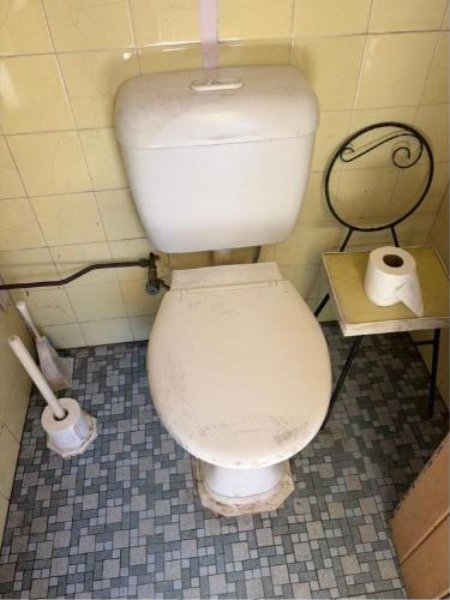
Leaking toilet seals and a tight washing machine hose fixed, Matraville (nearby)
The problem: a Matraville home had a leak in the laundry and a toilet that was leaking.
What we did: the laundry leak was coming from the washing machine hose, which was so tight that the machine could barely be moved. We fitted new 2-metre stainless braided hoses. At the toilet, we took the pan off and found both the flush pipe seal and the pan collar seal were leaking, so we replaced both and refitted the toilet.
The result: both leaks were fixed and tested, and the longer hoses mean the washing machine can be pulled out for cleaning without straining the connections.
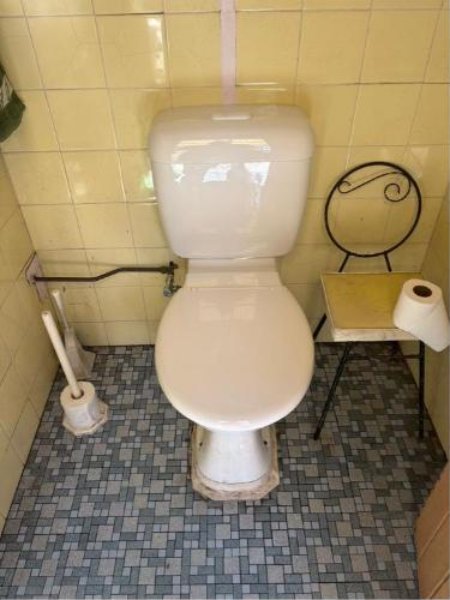
Toilet leaking at the back repaired, Chifley (nearby)
The problem: a toilet in a Chifley home was leaking at the back.
What we did: we tracked down where the water was getting out and repaired the leak at the back of the toilet.
The result: the toilet works without leaking and the floor stays dry.
More local work is on our recent projects page.
Quick fix or long-term fix?
| Problem | Quick fix | Long-term fix |
|---|---|---|
| Running cistern | New inlet valve or outlet seal | Fit a strainer if grit keeps causing it |
| Leaking at the base | New pan collar and seals | Refit the pan securely so it doesn't move |
| Blocking often | Clear the blockage | Signs and bins; camera the line if it continues |
| Cracked pan or cistern | None | Replace the suite |
| Urinal flushing all day | Repair the control | Fit a sensor control |
What affects the cost
- The type of toilet: concealed and wall-faced toilets take longer.
- Parts: common valves are in the van; some brands need ordering.
- Whether the pan has to come off.
- How many toilets need work.
- Timing: outside your business hours.
You get a fixed price before any work starts.
Who's responsible?
- The site owner or tenant: toilets and urinals in the building. Check your lease for who pays.
- Factory complexes: toilets in each unit usually belong to that unit; blockages in a shared line may be the complex's.
Quick checks you can do
- Put food colouring in the cistern and wait half an hour without flushing. Colour in the bowl means the outlet valve leaks.
- Lift the lid and watch it fill: if water keeps running into the overflow, the inlet valve isn't shutting.
- Check the floor around the pan for damp.
- Press on the pan gently to see if it moves.
- Check the isolation valve turns.
Signs it's urgent and when it can wait
- Call straight away if a toilet is overflowing and won't stop, or sewage is coming up in a floor waste.
- Call soon if the site's only toilet is out of action or the cistern runs constantly.
- Book a time if the flush is weak or a pan is a little loose.
Concealed cisterns
Toilets with the cistern built into the wall look tidy and are easy to clean, which is why they're in many newer offices and showrooms. When one runs or won't flush, the parts are reached by removing the flush plate. We repair most brands, including Geberit, through that opening, so the wall doesn't need to be opened. Concealed cisterns have their own isolation valve inside the wall cavity, which we check and replace if it has seized.
Wall-faced pans
Wall-faced pans sit flush against the wall with the connection hidden behind. When the seal behind fails, water can leak into the wall or along the floor without being obvious. If there's a damp patch beside a wall-faced toilet, or a smell, the seal is the first thing we check.
Accessible toilets
Accessible toilets in larger workplaces have higher pans, grab rails, and buttons and taps placed for people who need them. Loose grab rails and seats are a safety issue, not just a nuisance. We repair the plumbing, refit seats and check that rails are secure, and if fixtures need replacing, we'll fit ones that keep the toilet accessible.
Urinals
Urinals waste water when their controls fail and smell when they don't flush or when scale builds up in the waste line. We repair cistern and flush valve controls, fit sensor controls that only flush when needed, and clear scale from urinal waste lines.
Banksmeadow, area by area
- Industrial estates off Botany Road: factory units with one or two toilets in each unit.
- Warehouses and logistics yards: change rooms with several toilets and urinals.
- Offices and showrooms: concealed cisterns and wall-faced pans.
- The Botany side: homes and units with older close-coupled suites.
- Next door in Botany, Hillsdale and Matraville: we fix toilets here every week.
Toilet words explained
- Inlet valve: fills the cistern and shuts off when full.
- Outlet valve: releases water to flush the pan.
- Pan collar: the rubber seal between the pan and the waste pipe.
- Flush pipe seal: the seal between the cistern and the pan on some suites.
- Concealed cistern: a cistern hidden in the wall behind a flush plate.
- Wall-faced pan: a pan that sits flush against the wall.
Homes in Banksmeadow
For the homes and units on the Botany side of Banksmeadow, we repair running cisterns, leaking pans and blocked toilets, and fit new suites, just as we do in Botany. See toilet repairs in Botany.
Inside a cistern: what wears out
Most toilets on Banksmeadow sites have the same few parts doing all the work. The inlet valve, connected to the water supply by a braided hose, fills the cistern and closes when a float rises to the right level. The outlet valve, at the bottom of the cistern, lifts when someone presses the button and drops back onto its seal to stop the flush. The button or flush plate is linked to the outlet valve by a rod, cable or air line. Between the cistern and the pan, or the pan and the waste pipe, rubber seals keep the water where it should be. Any one of those parts can fail, and each failure looks a little different.
| What you notice | Usual cause |
|---|---|
| Water trickling into the bowl all the time | Outlet valve seal worn or dirty |
| Water running into the overflow inside the cistern | Inlet valve not shutting, or float set too high |
| Cistern fills very slowly | Inlet valve blocked with grit, or isolation valve part closed |
| Button does nothing or needs holding | Broken linkage or outlet valve |
| Water on the floor after flushing | Flush pipe seal or pan collar leaking |
| Bowl fills high, drains slowly | Partial blockage in the pan or the line |
Toilets in a factory unit with one toilet
Many small factory units in Banksmeadow's industrial estates have a single toilet and basin for everyone who works there. When that toilet fails, there's nowhere else to go. Tell us when you call that it's your only toilet. We'll do our best to get there quickly, and we carry the common inlet valves, outlet valves, seals and pan connectors so most repairs can be done on the first visit.
Replacing a toilet suite
If a pan is cracked, a cistern is leaking through its body, or parts for an old suite can't be found, it's time for a new one. We remove the old suite and its base, fit a new isolation valve and pan collar, install the new suite and seal it, then test it. On a work site, we'll suggest a suite that suits heavy use: a strong pan, a reliable dual-flush cistern and a seat with solid hinges. See toilet replacement.
Smells around a toilet
A sewer smell around a toilet that cleaning doesn't shift usually has a plumbing cause. The pan collar may have moved and be letting sewer air out, the wax or rubber seal on a wall-faced pan may have failed, or a floor waste nearby may have dried out and lost its water seal. In change rooms, a urinal waste line full of scale can also smell. We find which it is and fix it, rather than masking the smell.
Clearing a blocked toilet, step by step
- We check whether only the toilet is affected, or other fixtures too. If the floor waste or the shower is also slow, the blockage is further down the line.
- Nearby floor wastes and drains are plugged so the pressure goes where it's needed.
- We clear the pan with a plunger or a toilet auger, which reaches through the pan's trap without scratching it.
- If the blockage is in the line, we go in from the nearest inspection opening with our drain machine or jetter.
- We do a flood test and a paper test: a few flushes with toilet paper to confirm it all goes through.
- If it has blocked before, we put a camera through the line to look for damage or a dip.
Most blocked toilets are cleared in one visit. If something solid has lodged in the pan, such as a phone, a toy or a tool, the pan may need to come off to retrieve it.
Upstairs toilets and mezzanines
Many factory units have amenities on a mezzanine or upstairs office level, with the toilet waste running down through the unit below. When an upstairs toilet leaks at the pan collar, water can run down the inside of the wall or through the ceiling below. When it blocks, the waste stack can back up into a downstairs fixture. We fix the toilet, check the stack, and if water has got into a ceiling, we'll tell you what we found so it can be dried out and repaired properly.
Saving water on a site with many toilets
- Fit dual-flush cisterns when replacing old single-flush suites.
- Fix running cisterns as soon as they're noticed.
- Use sensor or timed controls on urinals.
- Do the food colouring test on every toilet twice a year.
- Read the water meter regularly so a running toilet shows up before the bill does.
What to tell us when you call
- How many toilets are affected and whether any still work.
- Whether the toilet is running, leaking, blocked or not flushing.
- The type of toilet: a suite with a visible cistern, a concealed cistern behind a flush plate, or a urinal.
- The brand, if it's on the cistern or flush plate.
- When the amenities are quietest.
A photo of the toilet and the flush plate helps us bring the right parts the first time.
Isolation valves and braided hoses
Every toilet should have a small isolation valve on the wall or floor, connected to the cistern by a braided hose. On older amenities, the valve has often seized from years of not being turned, and the hose has corroded or kinked. At one factory unit we visited on Beauchamp Road in Matraville, the toilet's isolation valve wouldn't shut at all, so the water had to be turned off at the meter before we could start. We replace seized valves and old hoses whenever we're working on a toilet. It's a small cost, and it means the next repair can be done without shutting off the whole building.
Toilets and the water bill
If your water bill has gone up and nobody can explain it, the toilets are the first place to look. A cistern that leaks into the pan wastes water around the clock, including nights and weekends when the site is closed. Because the water goes straight to the sewer, there's no puddle to give it away. A food colouring test on each cistern and a meter reading with everything off will usually tell you within an hour whether a toilet is the cause.
Before a new tenant moves in
If you're moving into a factory unit, or a tenant is about to move into yours, it's a good time to have the amenities checked. We can test every toilet and urinal, replace worn valves and seals, fix loose pans and seats, and confirm the isolation valves work, so the new tenant starts with amenities that work properly and nobody argues later about who caused what.
On that same job the inlet valve had failed, the braided hose had corroded and the outlet seal was worn, so we replaced all four parts together. Replacing worn parts as a set costs a little more on the day than fixing only the one that failed, but it saves a second call-out a few weeks later when the next tired part gives up.
What happens when you call
Tell us what's going on
Call or send a quick form. A photo of the problem helps us come prepared. No call-out fee.
Options and a fixed price first
We find the cause, explain your options and give you a fixed price for each before any work starts.
Fixed, tested and backed
We do the work, test it, clean up, and back our workmanship with a lifetime labour warranty.
Why Banksmeadow businesses and homeowners call us
- Based in Matraville, a few minutes from Banksmeadow
- Weekend and early starts when that keeps your site running
- Rated 5.0 from 110 Google reviews
- Options and a fixed price before any work starts
- Lifetime labour warranty on our workmanship
- Licensed plumbers, drainers and gasfitters (Lic. 398171C), with accredited backflow testers on the team
Toilet repair questions from Banksmeadow businesses and homeowners
Do you repair toilets in factories and warehouses?
Yes. We repair toilets and urinals in factory amenities, warehouse change rooms, workshops and offices in Banksmeadow and nearby.
Can you come today?
We offer same-day service. Tell us if it's your site's only toilet.
Why does our toilet keep running?
Usually a worn inlet valve or outlet seal, often from grit in the water or heavy use. We replace the parts and test it.
Why is water around the base of the toilet?
Usually a failed pan collar or flush pipe seal. We take the pan off, replace the seals and refit it.
Can you fix a concealed cistern without opening the wall?
Usually yes. We reach the parts through the flush plate opening.
Our toilets keep blocking. Why?
Mostly paper towels, wipes and sanitary items. Signs and bins help. If it continues, we'll camera the line.
Can you fix urinals?
Yes. We repair controls, fit sensor flushes and clear scale from waste lines.
Should we repair or replace an old toilet?
If it's cracked, or parts aren't available, replace it. Otherwise a repair is usually fine.
Can you work before or after our shifts?
Yes. We can work early, late or on a weekend so the amenities stay available.
Can you check all the toilets on site?
Yes. We can test every toilet and urinal and fix what's needed in one visit.
Do you still look after homes in Banksmeadow?
Yes. We fix toilets for the homes and units on the Botany side of Banksmeadow too.
Do you give a fixed price?
Yes, before any work starts.
More plumbing in Banksmeadow: our Banksmeadow plumber page, taps and toilets, tap repairs and blocked drains. Nearby: toilet repairs in Botany and Hillsdale. Guides: leaking toilets, blocked toilets and toilet replacement.