Toilet repairs in Malabar 2036
Malabar has every kind of toilet, from the original pans in older cottages near Long Bay to concealed cisterns in the rebuilds up the hill. They fail in different ways, and the fix that suits one doesn't suit another. Some faults are just a worn washer or seal. Others, like a toilet that gurgles every time it rains, point to the sewer outside. Our workshop is in Matraville, next door, so we're a short drive away when yours starts playing up.
Common toilet problems we fix
- Running toilet: water trickling into the bowl long after the flush, or the cistern refilling on its own every so often.
- Leak at the base: water appearing on the floor around the pan, or a stain spreading on the tiles.
- Leak behind the toilet: drips from the inlet hose, the stop tap or the connector where the pan meets the wall.
- Weak flush: waste not clearing in one go, or needing two flushes.
- Button problems: a button that sticks, doesn't return, or only works if you hold it down.
- Slow refill: the cistern taking minutes to fill after each flush.
- Gurgling or bubbling in the bowl when other drains run.
- A loose or rocking pan that moves when you sit on it.
Why toilets play up in Malabar homes
Older cottages with original pans
Many of Malabar's older cottages still have toilets fitted decades ago, sometimes with an old-style cistern and a pan connected to the sewer through a rigid joint. Parts for some older cisterns are hard to find, and pan connectors set in mortar crack as the house moves. We can often repair them, but when the parts no longer exist or the pan is cracked, a new suite is the better option.
Concealed cisterns in rebuilds
Rebuilt homes and new duplexes in Malabar often have in-wall cisterns hidden behind the tiles, with a flush plate on the wall. They look good and they're reliable, but when the inlet valve or flush valve wears, the only access is through the flush plate opening. We carry the right tools and parts for the common brands and work through that opening without disturbing tiles.
Mains pressure and hard-working parts
High water pressure makes the inlet valve work harder and wear faster. If several toilets in your home have needed new inlet valves, or your taps bang when they close, the pressure may be too high. A pressure limiting valve at the meter protects every fitting in the house.
Sewer lines that struggle
A toilet that gurgles, or one that flushes slowly when it's been raining, is often telling you about the sewer outside, not the toilet. Older Malabar homes commonly drain through clay pipes that have roots or sand in them. See sewer repairs in Malabar.
Homes left empty
Some Malabar homes sit empty for weeks at a time over summer. Rubber seals in a cistern that hasn't been flushed for a while can dry out and start leaking once it's used again. If a toilet starts running after a break, the seal is the usual suspect.
Toilets in different Malabar homes
| Home type | Typical toilet | What usually fails |
|---|---|---|
| Original cottages near Long Bay | Older close-coupled or separate cistern, rigid pan connector | Old seals and valves, cracked connectors, parts no longer made |
| Updated cottages | Close-coupled dual-flush suite on an older floor | Inlet valves, flush valves, base seals on uneven floors |
| Brick homes up the hill | Mix of original and replacement suites | Leaks behind the pan, worn buttons, weak flushes |
| Rebuilds and duplexes | In-wall cistern with flush plate, wall-faced pan | Inlet and flush valves inside the wall, flush plate mechanisms |
| Homes with a second toilet in the laundry or outside | Older suite, used less often | Dried-out seals, seized stop taps, corroded fittings |
How we fix a toilet
- Ask the right questions when you call: running, leaking, weak flush, or gurgling? Which kind of cistern? That way we bring the right parts.
- Find the cause. We check the inlet valve, flush valve, seals, connectors and the stop tap, and look at how the toilet drains.
- Give you options: replace the worn part, rebuild the cistern, or replace the suite. Each has a fixed price.
- Repair with quality parts that suit your cistern, not a one-size-fits-all kit.
- Test it properly: several flushes, a check for leaks at every joint, and the refill timed.
- Leave it clean, with the floor around the toilet dry.
Running toilet repairs
Inlet valves and outlet seals replaced so the cistern fills once and stops.
Leak repairs
Base seals, pan connectors, inlet hoses and stop taps fixed.
Concealed cistern repairs
In-wall cistern valves and flush plates serviced through the access opening.
Flush button repairs
Sticking and broken buttons and mechanisms replaced.
Toilet suite replacement
Old or cracked toilets replaced with a new suite. See toilet replacement.
Blocked toilets
Blockages cleared, and the line checked if it keeps coming back. See blocked toilets.
Repair the part or replace the toilet?
| Situation | Repair | Replace |
|---|---|---|
| Running toilet, cistern in good condition | New inlet valve or outlet seal | Not needed |
| Old cistern with parts no longer made | Sometimes, with an adapted part | Often the better choice |
| Cracked pan or cistern | No | Yes |
| Leak at the base, pan sound | Reseat with a new seal or connector | Not needed |
| Weak flush on a very old suite | Can help a little | A modern suite flushes better on less water |
| Concealed cistern faults | Replace the valves through the access opening | Rarely needed |
What affects the cost
- The type of cistern: an exposed cistern is quicker to work on than an in-wall one.
- Parts: standard valves and seals, or brand-specific parts for a concealed cistern.
- The pan connection: a seal swap is quick; a cracked mortar joint takes longer.
- The floor: uneven or damaged tiles under the pan can mean extra work to seat it properly.
- Whether the sewer is involved: a gurgling toilet might need a drain clear or camera inspection.
You get a fixed price for each option before any work starts.
Who's responsible?
- You: the toilet, cistern, stop tap, hoses and the drain from the toilet to your private sewer line.
- Sydney Water: the sewer main. If a whole row of homes has toilets backing up at once, the problem may be in the main. Call Sydney Water.
- Shared lines: if your toilet and a neighbour's drain through the same private pipe, a blockage there affects both, and the repair is usually shared.
A quick toilet check you can do
- Dye test for a silent leak: put a few drops of food colouring in the cistern and don't flush for 20 minutes. If colour shows in the bowl, the outlet seal is leaking.
- Listen after a flush: if the cistern hisses or refills a few minutes later with nobody using it, the inlet valve or seal is worn.
- Check the stop tap: the small tap on the wall behind the toilet. Turn it off and on gently so it doesn't seize.
- Look at the hose: rust spots, fraying or a bulge on the braided hose mean it's due for replacement.
- Rock the pan gently: if it moves, the fixings or seal need attention before it starts leaking.
Our running toilets and dripping taps guide has more on this.
Signs it's urgent and when it can wait
- Call straight away if the toilet is overflowing, sewage is coming up anywhere, or water is leaking onto the floor and you can't turn it off.
- Call soon if it's your only toilet and it won't flush, or it's leaking at the base.
- Book a time if it's running, slow to refill or the button is sticky. Turn the stop tap off between uses to save water until we get there.
A recent toilet repair nearby
This job was nearby in Chifley, a few minutes south of Malabar.
Leaking toilet repaired, Chifley (nearby)
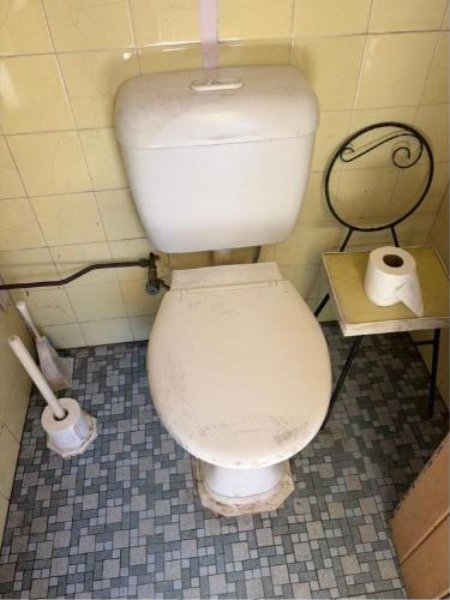
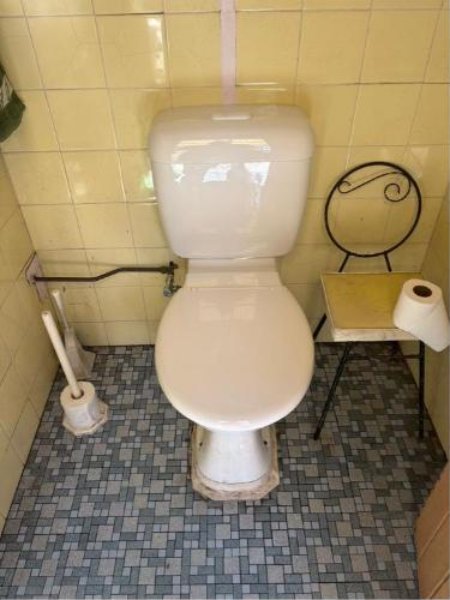
The problem: a toilet at a Chifley home was leaking at the back.
What we did: we tracked down where the water was getting out and repaired the leak at the back of the toilet.
The result: the toilet works without leaking and the floor around it stays dry.
“I called [the team at] Scalici Plumbing Group to clear my blocked drain and fix my leaking toilet in Maroubra. Great company to deal with, highly recommended.”
Chris L., Maroubra (Google review)
More local work is on our recent projects page.
Where your flush goes, and why wipes matter
Malabar has a closer connection to its toilets than most suburbs. Sydney Water's Malabar wastewater treatment plant sits on the headland at the southern end of Long Bay, and it treats wastewater from a large part of Sydney before it's released through deep ocean outfalls offshore. Everything flushed in Malabar takes a short trip there.
Wet wipes are one of the biggest problems for that whole system, and for your own pipes first. They don't break down like toilet paper. In an older clay sewer with a few roots at the joints, wipes catch and build into a blockage that backs up into the toilet. Keep a bin in the bathroom and only flush toilet paper, even if a packet says flushable.
Toilet trouble across Malabar
- Cottages near Long Bay and the beach: older suites and pan connectors, and clay sewers that can make toilets slow or gurgly.
- Around Cromwell Park: low ground, where toilets that misbehave only in heavy rain usually point to water getting into the sewer.
- The slopes up to Anzac Parade: a mix of original and replacement toilets, and higher water pressure on some streets, which wears inlet valves.
- Rebuilds and duplexes throughout: concealed cisterns and wall-hung pans that need the right parts and access.
Before you call: handy things to know
- Is the cistern on top of the pan, on the wall above it, or hidden behind a flush plate?
- What's the brand? It's often on the cistern lid, the flush plate or inside the pan rim.
- Is the problem constant, after each flush, or only when it rains or other drains run?
- Is there water on the floor, and where does it seem to come from?
- A photo of the toilet and the flush plate helps us bring the right parts first time.
Toilet care through the year
- Every few months: do the dye test to catch a silent leak early.
- Twice a year: turn the stop tap behind the toilet off and on so it doesn't seize, and look at the hose.
- Before going away: turn the stop tap off if the house will be empty for a while.
- After coming back: flush each toilet and listen for running. Dried seals often show up then.
- Any time it gurgles: check the overflow gully in the yard, which tells you whether the sewer is struggling.
Choosing a new toilet
If your toilet is past repair, we'll go through options that suit your bathroom. The main choices are the pan style and how the cistern is fitted.
| Style | Good for | Worth knowing |
|---|---|---|
| Close-coupled | Most bathroom upgrades and older cottages | Cistern sits on the pan; easiest to service |
| Wall-faced pan with exposed cistern | A cleaner look without opening walls | Pan sits flush to the wall, easier to clean around |
| In-wall cistern and wall-faced pan | Rebuilds and bathrooms being retiled | Hidden cistern; servicing is through the flush plate |
| Wall-hung pan | Modern bathrooms with a frame in the wall | Floor fully clear for cleaning |
We also check the pan connection: older cottages can have S-trap or P-trap connections that suit some new suites better than others. Getting this right is what stops a new toilet leaking at the base later.
Is it the toilet or the drain?
| What you notice | Likely the toilet | Likely the drain or sewer |
|---|---|---|
| Water trickling into the bowl | Yes: outlet seal or inlet valve | No |
| Cistern refills on its own | Yes: a slow internal leak | No |
| Bowl fills high, then drains slowly | Sometimes a blockage in the pan | Often a partial blockage further down |
| Gurgling when the shower or sink drains | Rarely | Yes: the line is struggling to drain or vent |
| Several toilets slow at once | No | Yes: the problem is in the shared pipe |
| Overflow gully in the yard spilling | No | Yes: the sewer is blocked downstream |
If the clues point to the drain, we'll clear it and, where it keeps happening, put a camera through. There's no point fitting new toilet parts if the real issue is roots in the clay line outside.
Comfort and easy-clean options
When a toilet is being replaced anyway, it's worth thinking about who uses it. A slightly taller pan is easier for older people in the home to sit on and stand up from. Rimless pans have no hidden rim for grime to collect under, which makes cleaning quicker. Soft-close seats stop the bang. Wall-faced pans leave no gaps at the back for dust to settle. None of these change how the toilet is plumbed in much, so they're easy to include in a replacement. We'll talk you through what fits your bathroom and your pan connection.
What a repair visit looks like
We arrive in the time window you've been given, and let you know when we're on the way. We turn off the stop tap, protect the floor, and check the toilet over before touching anything, including flushing it and watching the cistern refill. Once we've found the fault, we explain it, give you the options and price, and only then start. Afterwards we flush it several times, check every joint, and wipe the area down.
Saving water
A running toilet can waste a surprising amount of water, and you pay for it twice: once for the water and once on the sewer usage. A modern dual-flush suite uses far less per flush than an old single-flush toilet. If you're not sure whether a toilet is leaking, check your water meter late at night with every tap off. Our water meter guide shows how.
A leaking toilet and your floor
A slow leak at the base of a toilet can go unnoticed for months, especially on older tiled floors in Malabar cottages where water runs under the tiles rather than across them. In a raised cottage, it can drip onto the timber floor framing below. Signs to look for are loose or drummy tiles around the pan, grout that stays dark, a musty smell in the bathroom, or staining on the ceiling or subfloor under it. If you notice any of these, have it checked early. Fixing the seal is a small job; replacing rotted flooring is not.
Toilet words explained
- Cistern: the tank that holds the flush water.
- Inlet valve: the valve that refills the cistern and shuts off when it's full.
- Flush valve or outlet seal: the seal that holds water in the cistern until you flush.
- Pan: the bowl.
- Pan connector: the seal or fitting joining the pan to the sewer pipe.
- Concealed or in-wall cistern: a cistern built into the wall behind a flush plate.
- S-trap and P-trap: the shape of the pan's outlet, into the floor (S) or the wall (P).
Toilets in homes with rainwater tanks
Some Malabar homes have a rainwater tank plumbed to the toilets, with a pump and a switching device that changes over to mains water when the tank runs low. It's a good way to save mains water, but it adds a few things that can go wrong, and the symptoms look like a toilet fault.
- A cistern that fills very slowly can mean the pump is struggling, the tank filter is clogged, or the switching device is stuck between tank and mains.
- Grit or leaf matter in the cistern wears the inlet valve quickly. A clean first-flush diverter and tank filter protect it.
- A toilet that won't refill at all during a power cut is normal on some set-ups, because the pump needs power. A good switching device falls back to mains.
- Stained water in the bowl is usually tank water, not a fault, but it's a sign the tank or filter needs a clean.
When we're called to a toilet in a home with a tank, we check the pump, filter and switching device as well as the cistern, so we fix the real cause. If you're thinking of connecting your toilets to a tank, we can tell you what's involved. See toilets on rainwater.
Whatever the set-up, the same rule applies: a toilet that runs or refills on its own is wasting water, whether it comes from the tank or the main.
What happens when you call
Tell us what's going on
Call or send a quick form. A photo of the problem helps us come prepared. No call-out fee.
Options and a fixed price first
We find the cause, explain your options and give you a fixed price for each before any work starts.
Fixed, tested and backed
We do the work, test it, clean up, and back our workmanship with a lifetime labour warranty.
Why Malabar homeowners call us
- Based in Matraville, close by in the next suburb
- Rated 5.0 from 110 Google reviews
- Free quotes, with options and a fixed price before any work starts
- Lifetime labour warranty on our workmanship
- Licensed plumbers, drainers and gasfitters (Lic. 398171C)
Toilet repair questions from Malabar homeowners
Why does my toilet keep running?
Usually a worn inlet valve or a perished outlet seal. Both are common, quick repairs on most cisterns.
Can you fix an in-wall cistern without removing tiles?
In most cases, yes. The valves are serviced through the flush plate opening.
Why is water on the floor around my toilet?
It could be the base seal, the pan connector, the inlet hose or condensation. We find which before fixing it.
Why does my toilet gurgle when it rains?
Rainwater may be getting into the sewer, or the line is partly blocked. It's usually a drain problem rather than the toilet.
My cistern is very old. Can you still get parts?
For many, yes. For some older cisterns parts aren't made any more, and replacing the suite is the practical option.
Should I replace or repair my toilet?
If the pan and cistern are sound, a repair is usually best. Cracks, missing parts or a very poor flush point to replacement.
Can you supply a new toilet?
Yes. We can supply and fit one, or install a suite you've already bought.
How long does a toilet repair take?
Most repairs take under an hour once we're there. A new suite usually takes a couple of hours.
Why does my toilet take so long to refill?
A partly blocked inlet valve, a half-closed stop tap or low pressure. We check each.
Is a running toilet costing me money?
Yes. It wastes water around the clock, which shows up on your bill.
My toilet rocks when I sit on it. Is that a problem?
Yes. Movement breaks the seal at the base and leads to leaks. It should be refixed.
Do you fix outdoor or laundry toilets in older homes?
Yes. Second toilets that aren't used often tend to have dried seals and seized stop taps, which we can sort out.
More plumbing in Malabar: our Malabar plumber page, taps and toilets, blocked drains, sewer repairs and leak detection. Nearby: toilet repairs in Matraville and Maroubra. Guides: running toilets and dripping taps, toilet leaking at the base and leaking toilets.